
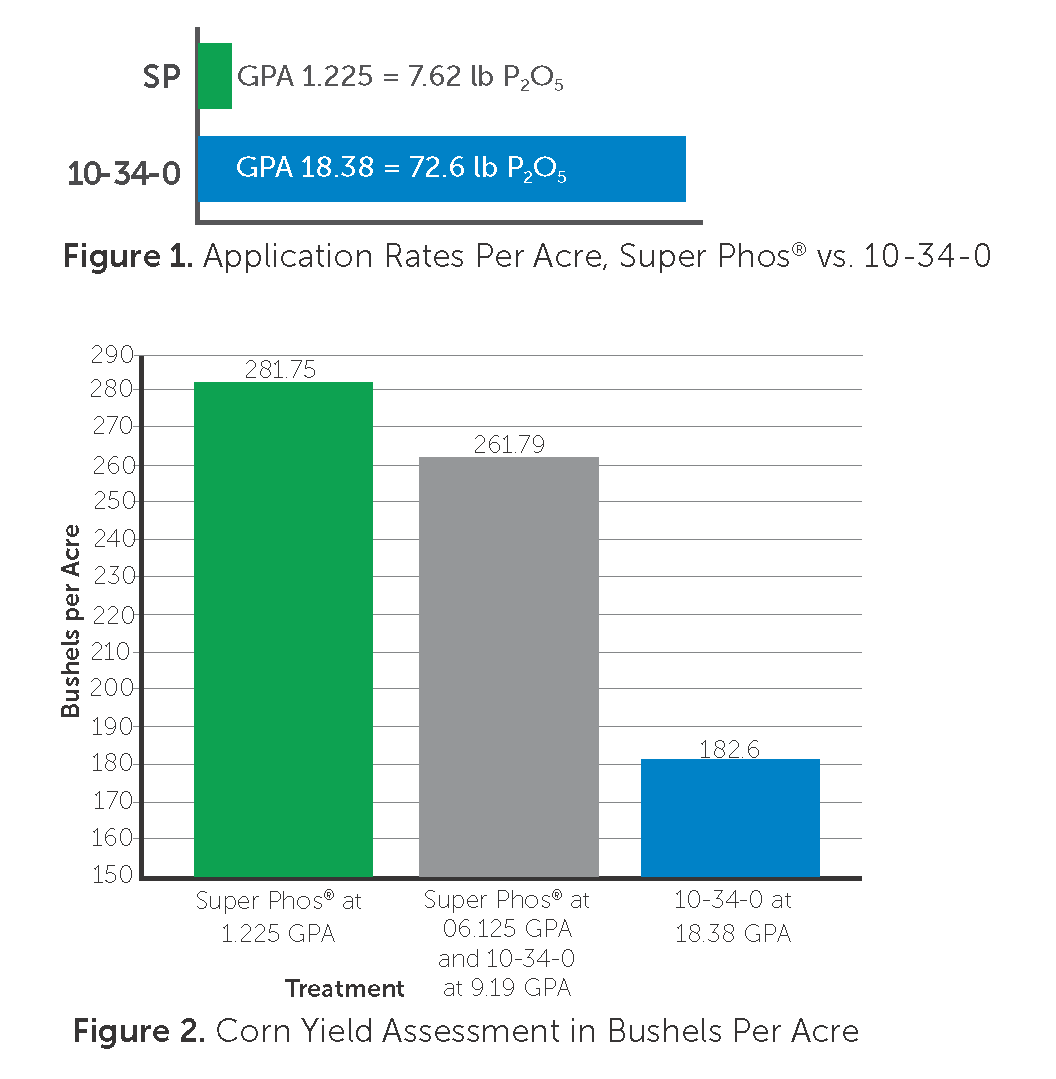
 This field trial assessed the Phosphorus (P) efficacy of Huma Gro® Super Phos® on corn yield in comparison with the standard 10-34-0.
Huma Gro® Super Phos® at 1.225 GPA increased corn yield by 99.15 bu/ac in comparison with 10-34-0 at 18.38 GPA. This demonstrates Super Phos® to be 15 times more efficient than 10-34-0 at delivering phosphorus to corn and, at MSRP at the time of the trial, represented a 40% savings on fertilizer cost.
Achieving higher yield while using much less product (7.62 lb of P2O5 for Super Phos®, vs. 72.6 lb of P2O5 from the 10-34-0)has the added benefit of presenting much less opportunity for phosphorus soil-leaching and runoff into nearby water, thereby protecting the environment. It also facilitates sustainable agriculture through adherence to 4 R Nutrient Stewardship by applying the right source of plant nutrients at the right rate, at the right time, and in the right place.
To learn more about purchasing Huma Gro® products, please click here.

Related Posts

The Right Stuff for Soils and Plants
By Mojtaba Zaifnejad, PhD When applied fertilizers benefit soil health and plant growth, and are readily available to them, it is said that they are bioavailable. The extent of bioavailability of nutrients and fertilizers applied to soil and plants determines their effectiveness in improving soil health and crop yield. In addition to the 4Rs approach,

Introduction to Huma Gro®: Video

Popcorn Farmer Combats Current Farming Challenges
An Interview with Nebraska Farmer Dan Hilger By Jael Batty Popcorn grower Dan Hilger fights weeds, erosion, flooding, and low commodity prices with an innovative approach that improves his soil health. The Nebraska farmer applies Huma Gro® products (biostimulants) to his soil to increase soil organic matter. Organic matter stimulates soil biology to break down