
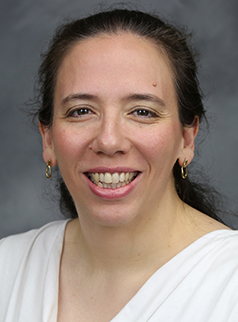
 An article by Heather Jennings, PE, Director of Probiotic Solutions®, has been published in Tri-State Seminars Magazine, the proceedings of the 36th Annual Tri-State Seminar, held on August 9–12, 2021, in Las Vegas, Nev. Ms. Jennings was a featured presenter at the seminar, which provides training and certification classes to educate water professionals from Arizona, California, and Nevada.
In her presentation and the resulting published article, titled “Lagoons, Under the Surface,” Ms. Jennings discussed the results of an in-depth investigation of bioremediation and biological factors involved in reducing sludge at a municipal wastewater treatment facility lagoon system.
A one-year bioremediation plan was implemented for a municipal wastewater treatment facility with 2 primary lagoons in which sludge depths had reached 5–7 feet. The lagoons were at risk of upset and wastewater processing capacity was reduced. Sludge levels were reported for baseline and quarterly sludge judging, supplemented with ATP and DNA analyses of the microorganism biomass. The results of the ATP and DNA analyses pointed out the often-misunderstood fact that wastewater treatment facility lagoon sludge is not inert: it is the most biologically active layer of the water column and can be efficiently controlled and reduced through proper bioremediation interventions. Sludge depth was biologically reduced by an average of 45%. This represented 17,800 dry tons of sludge that did not need to be mechanically removed and hauled to a disposal location, a potential savings of over $6 million.
 The complete article can be found on pp. 28–31 of the 2-2021 issue of Tri-State Seminars Magazine at https://www.kelmanonline.com/httpdocs/files/Tri-State-Seminar/issue2-2021/index.html.

Related Posts

California Approves First 8 Fertilgold Products for CDFA-OIM Status
The California Department of Food & Agriculture (CDFA) has registered 8 Fertilgold® Organics products as Organic Input Materials (OIM) that can be sold in the state. Those products include the following: secondary macronutrients Fertilgold® Ca and Fertilgold® Mg, and micronutrients Fertilgold® B, Fertilgold® Co, Fertilgold® Mo, Fertilgold® MoN, Fertilgold® Zn, and Fertilgold® Micros I (which

This Week In Ag #89
Scary season is upon us. This week our doorsteps will be invaded by legions of mini goblins. Their biggest fear is receiving candy corn in their baskets. But what about farmers? What’s scaring them this Halloween?
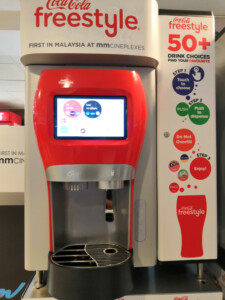
Bargaining for Clean Water: Why Dean Kamen Invented the Coca-Cola Freestyle
By Jael Batty When Kamen asked Coke for help distributing his water purifier, Coke challenged Kamen to develop a better soda fountain first. Dean Kamen, Inventor of Medical Technology The inventor of the Segway, Dean Kamen is known in the scientific community for developing medical equipment. His inventions include a wearable prescription pump for insulin