
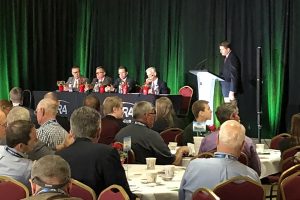
 We at BHN/Huma Gro® were very pleased to be a sponsor for the Arizona Agribusiness Roundtable on December 4 at the PERA Club in Tempe. This year’s roundtable was titled, “A National Perspective on Agriculture: The Farm Bill and You.”
The Agribusiness Roundtable is a collaborative effort by the Arizona Department of Agriculture and the Agribusiness & Water Council of Arizona, Inc. Established to develop a “collective,” proactive point of view about Arizona’s future, this third annual meeting focused discussion on the importance to Arizona and national agriculture stakeholders of export trade agreements, immigration reform for the farm workforce, and proposed regulations for the 2018 Farm Bill.
Guest speakers and roundtable participants were from a number of national agriculture associations, including the National Milk Producers Federation, National Grain & Feed Association, National Cotton Council, AmericanHort, National Cattlemen’s Beef Association, United Egg Producers, Western Growers Association, and the National Pork Producers Council. Also featured were Dr. Barbara Glenn, National Association of State Departments of Agriculture; Dr. Alison Van Eenennaam, UC Davis; Paul Schlegel, American Farm Bureau Federation; Tom Davis, President, Agribusiness & Water Council of Arizona; and Mark Killian, Director, Arizona Department of Agriculture (and member of the BHN Board of Directors).
More information is at https://www.agribusinessarizona.org/agribusiness-roundtable.html.

Related Posts

This Week in Ag #75

Advantages of Micro Carbon Technology®
Bio Huma Netics, Inc. products are manufactured with our exclusive, proprietary Micro Carbon Technology® which is our process of “complexing” small molecules containing carbon to nutrients. These ultra-fine molecules are excellent nutrient carriers that enable more efficient nutrient absorption. This Micro Carbon Technology® makes HUMA GRO® nutrients much more effective and efficient than any other nutrient

Do Constructed Wetlands Improve Water Quality?
By Jael Batty Constructed wetlands, which mimic natural wetlands, treat municipal and industrial wastewater, mine drainage, small business and household greywater, animal wastes, and agricultural and stormwater runoff. They are recommended by regulatory agencies as a best management practice to control urban runoff.