
This Week In Ag #185
For most people, the images of fall include leaves dropping and turning, apple picking, football watching and marshmallows roasting. But for me growing up, one image stands out: Dad sitting in his chair each night sifting through pink tickets.
These were the scale tickets we received from the local country elevator (Dad’s only son would one day marry the granddaughter of that country elevator’s founders, and they’d go on to live happily ever after, but that’s another story). Farmers use these tickets to tally up dry bushels of grain. Decades before GPS, Dad and Uncle Gary could tell you precisely what each strip of a field was yielding; it was all calculated in their heads
We hauled grain in C-60 Chevy trucks, a 2-ton chassis with a 4-speed high and low axle, equipped with a grain box that raised and lowered. Dad’s truck was green with a red box. Uncle Gary’s truck was blue with a red box; he had Gary printed on the driver’s side door and Marilyn on the other, prompting Dad to call him Loverboy (they did have seven kids, so Dad’s nickname may have been accurate). Our trucks had “Nichols Farms” etched on the sides. Back in those days, Illinois law required commercial trucks to display the name of the owner.
From about the moment I could reach the clutch, well before becoming a teenager, I drove that green and red truck to town countless times each fall. Carrying roughly 20,000 pounds of grain. Over narrow bridges, multiple railroad tracks, and through traffic. And I’d take time off school to do it. As I write this, I surely hope the statute of limitations for prosecuting underage drivers has passed.
For every load of grain you drive to the grain elevator, you receive a ticket that serves as your official receipt. When you pull into the elevator (there is often a line of trucks and tractors/wagons waiting), you park on the scale. This records the gross weight. A grain sample is also taken, usually with a probe that swings above the grain box. This measures grain moisture and foreign matter. Once these readings are recorded, you get waved to the pit. There, you dump your grain, then return to the scale, where you are weighed for your tare. Gross minus tare equals total weight. But then you must factor in shrinkage, which is the weight reduction when excess moisture is removed by drying. In the Midwest, most corn is harvested above the standard 15.5% moisture content, so it must be artificially dried to that level, either at a grain elevator or using an on-farm grain system.
When I was a kid, I’d ride with Dad to the elevator and exit the truck after the tare to pick up the scale ticket from the office (and often a bottle or two of pop). Dad always insisted I wait until the office person signaled it was okay. I understand why, but must chuckle now, since back then I weighed less than one bushel of grain.
Mom, Aunt Marilyn and later my wife all worked at the grain elevator during the fall. I have cousins who currently work at elevators. These are the unsung heroes of grain elevators: the ladies who tirelessly work 12-to-14-hour shifts in the office, every day, weighing trucks, printing tickets and managing a multitude of logistical tasks. They make farming look easy.
In our home, my wife and I have a Terry Redlin painting hanging above the fireplace, titled “Bountiful Harvest.” It depicts a country grain elevator and the sense of community around it. For us, it serves as a daily reminder of who we are, where we came from and the life we’ve loved so much.


Related Posts

Proven: Nutrient Uptake In Just One Hour
Case Study: Proven - Nutrient Uptake In Just One Hour In foliar applications, speed matters. In just one hour, SUPER POTASSIUM showed a 22% increase in leaf potassium levels, proving its rapid uptake, even under tight spray windows and unpredictable weather.

BHN Article on Micronutrients in CropLife Magazine
CropLife Magazine currently features an article written by BHN staff, “Micronutrients Are the Key To Better Yields.” The authors provide an overview of micronutrients and their relationship to the soil, common deficiencies, application methods, and the importance of following the 4Rs of Nutrient Stewardship. The article concludes by discussing the importance of developing a Micronutrient Plan
This Week in Ag #44
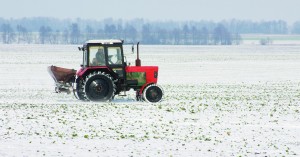
Now’s the time when holiday enthusiasts start dreaming of a White Christmas. But the marshmallow world created by falling snowflakes offers much more than a glistening backdrop for a Hallmark movie. And nobody choruses “Let it snow, let it snow, let it snow” louder than farmers. In the northern states, snow can account for 2/3 of