
This Week In Ag #128
“We’re serving depression food.” That’s how I describe the summer delicacy my wife prepares for social gatherings we host and attend. It’s a creation of cucumbers, peppers, onions and tomatoes – all grown from my garden – soaked in vinegar and sugar. A dish passed down by my grandmother, born out of necessity more so than culinary delight: simple, flavorful vegetables grown and then preserved.
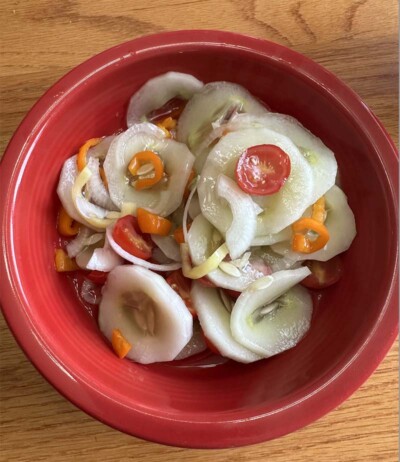
Depression food
Most people automatically assume that my love of farming stems from my paternal side of multi-generational farmers. And they certainly played a big role. But much of my passion for agriculture comes from my Grandpa Vancil. He grew a massive garden. But he didn’t start doing it as a hobby, he did it to survive. The same reason he would fish and hunt. He taught me all those life skills and the patience required to perform them.
You see, Grandpa Vancil lived during the Great Depression. Much of his childhood was spent working in Civilian Conservations Corps work camps set up by the government.
Food was incredibly scarce. So he and his family were forced to grow or catch their own. What they didn’t eat fresh, they preserved by a variety of means.
My grandma canned much of the food they grew. In fact, growing up, I rarely saw store bought canned vegetables at her house. They consumed her canned produce until next year’s garden yielded fresh. And their freezer was also full of fish they caught.
To me, Grandpa and Grandma Vancil will always epitomize “The Greatest Generation”. They endured The Great Depression, he served in WWII as she prayed for his return while working as a real-life Rosie the Riveter. Upon his return from Europe, they raised a family and he got a job working on the railroad. Hard labor to say the least in those days, but he never complained.
Through hard work and longevity their financial situation, like many of their fellow Americans, changed from the dark days of the depression. But their way of life did not. Grandpa continued to plant a massive garden every year of his life. And much of what was not eaten fresh was canned.
Each year, I look forward to picking our own vegetables and making “depression food.” I savor every bite. For me, it’s more than a matter of taste. It’s a tribute to my heroes.

Related Posts
Huma Gro®: Practically Perfect in Every Way for Strawberries
Successful strawberry farming presents many unique challenges. As with every other type of crop, each farm will have its own challenges related to soil, soil tilth, soil pathogens, soil nutrient cycling, nutrient availability, plant vigor, irrigation needs, etc. Combined with those challenges are strawberry farming cultural practices related to continuous cropping and soil fumigation—with the

Bio Huma Netics Provides Innovative Crop Nutrition Products to China
The November 11, 2015 issue of AgroPages features an interview with Justin Smith, “Bio Huma Netics Provides Innovative Crop Nutrition Products to China.” The article discusses our products, our introduction to the China market in 1999, our current distribution network, and the unique opportunities and challenges of China agriculture. To read the article online, go
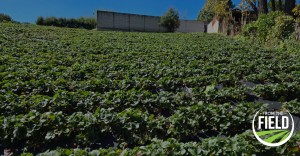
From the Field: Huma® Improves Soil Health and Strawberries in Guatemala
In the highlands of Guatemala, near the capital, is a small stronghold for berries. Strawberry production in Guatemala covers about 3,000 hectares in total, yet it yields nearly 14,000 tons of fresh strawberries annually, with 7,000 tons exported to neighboring countries. During my previous visits to Guatemala, I often passed by local strawberry farms, which