
This Week In Ag #133
If you’ve ever listened to a grain commodities report, you may have heard the terms new crop and old crop. What exactly do they mean? Let’s use corn as an example. Old crop refers to corn that’s in storage and unsold. It was likely harvested the previous fall. It’s usually stored in on-farm grain bins or at a local grain elevator. Prices for old crop corn are often referred to as the current market price. New crop refers to corn that is yet to be harvested. That usually means it will be harvested during the upcoming fall. Corn prices, as well as soybeans, wheat, oats and rice, are based on futures trading at the Chicago Board of Trade. Grain elevators will, in turn, issue their local cash bids based on these prices.
But when you look at CBOT prices and local elevator prices, you’ll usually see a difference. Often, there is a big difference. That’s due to what is called the basis: the local price minus the futures price. At the local elevator on my family farm in Illinois, the current basis is -40 cents (the current December futures price is $4.30, while the local price is $3.90). This is a sign that locally, demand is low and supply is high. Other factors include transportation costs, as elevators must transport the crop to a futures delivery point. Usually, the further inland you are, the weaker the basis. Storage costs and availability can also impact the basis. These are reasons why most large farming operations have on-farm storage and maintain fleets of semi-trucks, so they may haul their grain several miles to terminals located on major waterways.
Most of the time, farmers do not sell their crop directly from the field at the current local price. That’s because during September/October, supply is highest and prices are traditionally lowest. So farmers either store their crop to await a higher price, or they have it already sold based on a previously contracted price. The problem is, neither option is too enticing these days. Corn prices spiked above $5 only once this entire year, on February 18. The usual June rally never happened, nor did any other. Due to undesirable prices, it’s projected that only 5-10% of new crop corn has been contracted for sale this fall, while corn from 2024 remains in many bins.
As if farmers aren’t confused enough, last week’s USDA report did nothing to clarify. The discovery of 1.4 million corn acres pushed total corn acres to 98.7 million, a number not seen in nearly a century, and production to a whopping 16.8 billion bushels – 1.5 billion bushels more than the previous record! Yet both corn and soybean prices saw double-digit gains on Friday? Early harvest reports are not necessarily jiving with record USDA yield projections, due to unusually hot, dry conditions and disease. And grain exports are nearing all-time highs (even as one notable customer with 1.3 billion mouths to feed remains quiet). If none of this makes any sense, then welcome to the business of farming.

Related Posts

EARTH DAY 2020: Celebrating 50 Years
Fifty years ago today, on April 22, 1970, 20 million Americans took to the streets to protest environmental destruction and to celebrate the wonders of Planet Earth. The basic message was that we had to find new ways to live our lives, raise our food, and conduct our businesses that were environmentally friendly and sustainable—that

California Approves First 8 Fertilgold Products for CDFA-OIM Status
The California Department of Food & Agriculture (CDFA) has registered 8 Fertilgold® Organics products as Organic Input Materials (OIM) that can be sold in the state. Those products include the following: secondary macronutrients Fertilgold® Ca and Fertilgold® Mg, and micronutrients Fertilgold® B, Fertilgold® Co, Fertilgold® Mo, Fertilgold® MoN, Fertilgold® Zn, and Fertilgold® Micros I (which
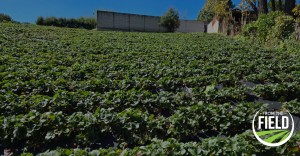
From the Field: Huma® Improves Soil Health and Strawberries in Guatemala
In the highlands of Guatemala, near the capital, is a small stronghold for berries. Strawberry production in Guatemala covers about 3,000 hectares in total, yet it yields nearly 14,000 tons of fresh strawberries annually, with 7,000 tons exported to neighboring countries. During my previous visits to Guatemala, I often passed by local strawberry farms, which

