
When it comes to foliar sprays, timing is everything. Growers often face tight application windows and unpredictable weather. The ability for a nutrient to move quickly into the plant doesn’t just improve efficiency; it helps ensure your application delivers results, even when conditions aren’t perfect.
The Objective:
We designed a simple but powerful trial: Could a foliar application of SUPER POTASSIUM® move into plant tissue within just one hour?
The Trial:
The trial was conducted on sweet corn in Casa Grande, Arizona. A small plot was split into treated and untreated sections, with the treated side receiving a foliar spray of SUPER POTASSIUM at a rate equivalent to two quarts per acre.
One hour after application, leaves were collected, thoroughly washed to remove any surface residue, dried, and analyzed for potassium content in the Huma laboratory.
The Results:
In just one hour, the treated plants showed a 22% increase in potassium levels within the leaf tissue compared to the pre-treatment. No phytotoxicity was observed.
Why This Matters:
Rapid absorption turns every spray into a smart investment. When nutrients enter the plant quickly, you get more than just an efficient uptake; you gain rain-fast protection. This study demonstrates that SUPER POTASSIUM, powered by Micro Carbon Technology, is rapidly absorbed into plant tissue, helping safeguard your investment even when the weather is unpredictable. With Huma, you’re not just spraying, you’re delivering nutrients with confidence.
See the full trial details and data in our complete case study here.

Related Posts
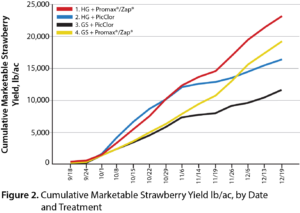
Huma Gro® Nutrient and Fumigation Replacement Program Increases Strawberry Yields 97%
Conducted by: Pacific Ag Research Huma Gro® Products: Ultra-Precision™ Blend (Fresca CA Strawberry Mix), Promax®, and Zap® OBJECTIVE This field trial assessed the effects on strawberry yields of replacing field fumigation with periodic applications of Huma Gro® Promax® and Zap® and replacing a grower’s standard fertilizer program with irrigation-applied Ultra-Precision™ blended liquid Huma Gro® crop

Earth Day 2019: Protect the Pollinators
The theme of this year’s 49th annual Earth Day on April 22 is “Protect Our Species.” One extremely important aspect of this theme to everyone involved in agriculture is protecting the world’s insect pollinators. The global crop production pollinated by bees is estimated to be valued at $577 billion. Pollinators contribute $24 billion to the

Depression Food: A Garden-Fresh Tribute to the Greatest Generation
A heartfelt reflection on a simple summer dish of homegrown vegetables, honoring the resilience, self-reliance, and enduring legacy of Fred's grandparents who lived through the Great Depression.