
 Bio Huma Netics, Inc. (BHN), has hired Mojtaba Zaifnejad, PhD, to be Senior Director of Field Research and Technical Services. In this position he will oversee the company’s agricultural product-use research and field trials for its Huma Gro® and Fertilgold® Organics soil health, crop nutrition, and crop protection brand lines. He will also provide technical support to the sales team and to company clients.
Dr. Zaifnejad brings to this position over 30 years of experience as a crop consultant and a researcher in conventional and organic farming systems. His emphasis has been in diagnosing crop production issues in the areas of plant nutrition, soil fertility and quality, and pest management. During his university years he worked in soil and plant analysis laboratories at Brigham Young University, the University of Nebraska-Lincoln, and the USDA-ARS research laboratory in Beckley, West Virginia in cooperation with Virginia Tech University. Since graduation, he has worked in both greenhouses and commercial field crop production. Dr. Zaifnejad is experienced in working with conventional liquid fertilizers, compost teas, and extracts. For the last two and half years he has been involved in research on plant and soil biostimulants, in addition to biological fertilizer enhancers.
BHN CEO Lyndon Smith stated, “I’ve known Dr. Zaifnejad for years, and I’m so pleased that we have finally convinced him to come work with us. He’s going to be a lot of help to us in designing and carrying out product-use research protocols for our Huma Gro® and Fertilgold® Organics lines. I’m confident that the coordination of both our university-based and grower-based research and field trials is in good hands.”
Dr. Zaifnejad commented, “I feel as though my career trajectory has perfectly placed me for this position at BHN. The more I learn about the products and the company philosophy of working with natural processes to improve agricultural yields, the more I’m convinced that I’m in exactly the right place. I also look forward to helping to strengthen the already good relationships among BHN, its customers, and research facilities.”

Related Posts

SUPER PHOS® and SUPER NITRO® Improve Spring Wheat Grain Yield and Quality
Research by Olga Walsh, PhD, University of Idaho The objectives of this study were (1) to compare the Micro Carbon Technology®-based phosphorus (P) product Super Phos® (SP) with traditional phosphorus (P) fertilizers ammonium polyphosphate (APP), and diammonium phosphate (DAP); and (2) to compare the Micro Carbon Technology®-based nitrogen (N) product Super Nitro® (SN) with the traditional nitrogen fertilizer, UAN. Huma Gro®
Fall Is Fertil Humus® Time
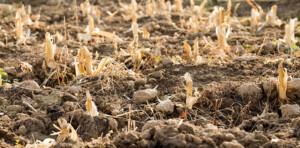
Our Fertil Humus® product, when applied in the fall, can help degrade any crop residue or crop field trash that’s left behind and convert it to humus over the winter.

Micro Carbon Technology®: The Video
Micro Carbon Technology® is a proprietary blend of extremely small organic carbon- and oxygen-rich molecules that act as a source of carbon and provide an ultra-efficient vehicle to move nutrients and other molecules into the plant through the soil and/or the leaves. How does it work? Watch the video.