
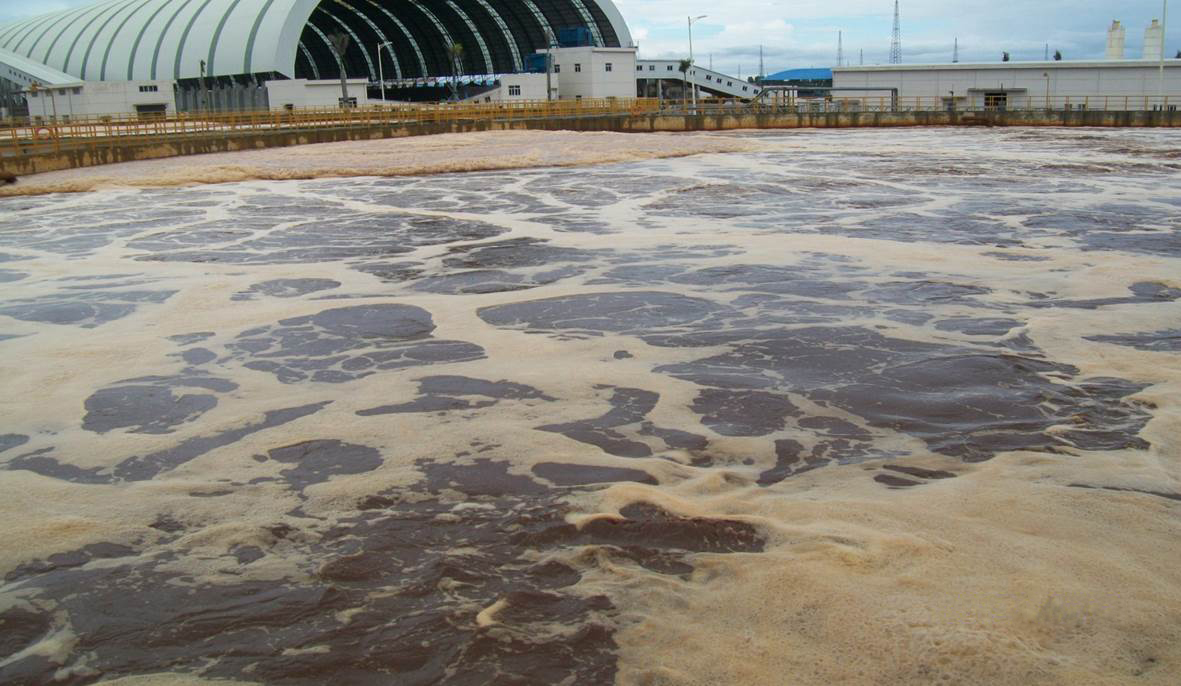
Paper Mill Wastewater Treatment System
Project Summary
A paper mill wastewater treatment facility uses diammonium phosphate to maintain a healthy microbial population. These microorganisms, which break down the organic matter, require the correct concentration of available phosphorus, without which the microorganisms are unable to grow and reproduce.
In an effort to reduce costs while maintaining the wastewater treatment plant’s efficiency, the mill replaced the DAP with Probiotic Solutions® SUPER PHOS®. The daily dose of SUPER PHOS® was 75 kg versus 600 kg per day of DAP.
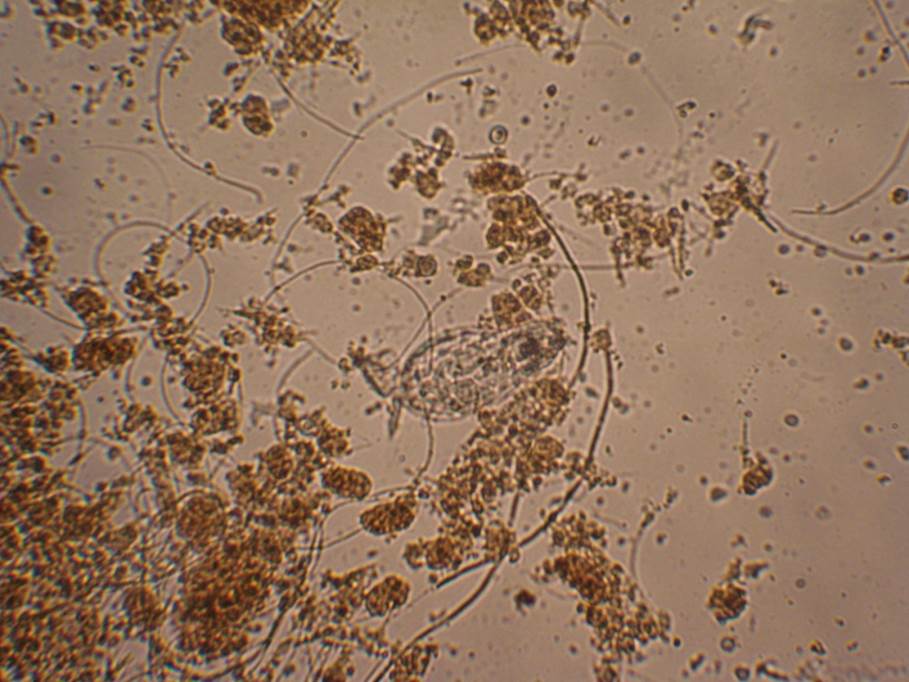
Microbial Microscopical Examination
Conclusion
Replacing DAP with SUPER PHOS® reduced chemicals cost, the required storage space, and the cost of labor associated with moving and dosing the product. Treatment efficiency was maintained even with the significant reduction in the phosphorous dose. Effluent COD was maintained at 200 mg/L. Furthermore, a microscopic analysis of the sludge showed the microbiology to be more active and regrowth was more vigorous following the addition of SUPER PHOS®. In addition, by reducing the quantity of phosphorus being added to the system has reduced corrosion and deposits in pipelines further reducing operation and maintenance costs.
Product Summary
In response to the reactivity of phosphorous in wastewater, Probiotic Solutions® developed a phosphorous product scientifically complexed with Micro Carbon Technology®* called SUPER PHOS®. Over the years this product has proven to save money and improve plant performance by maximizing phosphorous bioavailability with minimum phosphorous input. SUPER PHOS® is an essential component of energy––carrying phosphate compounds (ATP & ADP), nucleic acids, several essential coenzymes, and phospholipids.
SUPER PHOS® starts out as white phosphoric acid that is pre-complexed with organic acids to ensure maximum availability to microorganisms. SUPER PHOS® has proven itself in wastewater applications where maximum performance is required and minimum effluent phosphorous concentrations are demanded.
* The base of all of our Probiotic Solutions® products and the secret to our high efficiency rates is Micro Carbon Technology®. It’s a proprietary blend of very small organic molecules that greatly enhance existing microbial activity in wastewater to reduce sludge, cut down on odor, and control BOD and COD levels.

Related Posts
This Week in Ag #72
How do you just find 1.5 million acres? That’s like finding two Rhode Islands. But that’s what USDA did on Friday, when they upped US corn acreage to 91.5 million, from the 90 million acres estimated in March. Predictably, that sent the market tumbling down. New corn prices are now trading in the $3s. These are

Reaching Crop Milestones
Raising a crop takes more than seed and soil—it takes faith. Just like raising kids, farming is full of stages that bring joy, stress, hope, and awe. From emergence to canopy and tasseling to harvest, each milestone tells a story of patience, persistence, and purpose. Here’s a look at the defining stages that make farming not just a job, but a calling.

BHN Article on Micronutrients in CropLife Magazine
CropLife Magazine currently features an article written by BHN staff, “Micronutrients Are the Key To Better Yields.” The authors provide an overview of micronutrients and their relationship to the soil, common deficiencies, application methods, and the importance of following the 4Rs of Nutrient Stewardship. The article concludes by discussing the importance of developing a Micronutrient Plan