
By Heather Jennings,
Director, Probiotic Solutions®
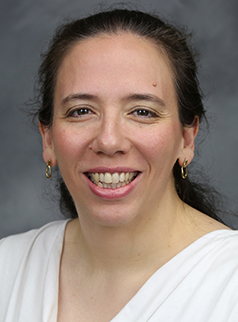 In the last week of August, Probiotic Solutions® hosted a Wastewater Microbiology Course at our headquarters in Gilbert, Arizona. This educational event with Dr. Toni Glymph-Martin, cosponsored by AZ Water Association and Rural Water Association of Arizona (RWAAZ), successfully served its purpose of helping industry professionals learn more about several complex aspects of wastewater.
The hands-on course started with a brief overview of wastewater microbiology and then stepped into intricate topics, such as different types of filamentous bacteria and how to stain for all of them. Dr. Toni explained the difference between bacteria, protozoa, and metazoan, and how they can all be used as indicators of wastewater processes and underlining issues. She also taught participants how to do microscopic counts, including filaments—trust me, just stop counting after you hit 1,000 in each pass of the slide and know you have bacterial foam! For many participants it was their first-time using stains, so it was a fun learning experience for them.
We were excited to have Dr. Toni, who flew to Arizona especially for this course. Dr. Toni is a renowned microbiologist and certified operator and has over 40 years of work experience in the wastewater industry—15 of which as an environmental regulator and 12 years as a certified operator. She started out her career in the medical field but decided to become a “Doctor for the Wastewater Bugs”, and we are grateful that she did! She has taught over 400 technical workshops and has received multiple awards for it.
Dr. Toni and I met through a mutual Rural Water friend, and every time we meet I learn so much from her and her experiences. I had heard about Dr. Toni’s courses for several years before I flew to Arkansas Rural Water to attend one. I was extremely impressed and decided that Arizona Wastewater Operators had to have a chance at her course as well. It was a pleasure to work alongside and support Dr. Toni during the two-day wastewater course here in Arizona. It’s been a fantastic association—she has also been one of our Water Break Podcast guests!
We received extremely positive feedback from the participants after the completion of the course. “It was one of the best seminars/trainings I’ve been to in a very long time.” Jerry Wallace of City of Sierra Vista Wastewater wrote to me in an email exchange. Another attendee, John, stated that “It’s changed how I view microbiology,” and I sincerely agree! Will we bring Dr. Toni back for another training? Yes, but we’ll pick a cooler month than August next year!

Related Posts

Reniform Nematodes: A Hidden Menace in Modern Agriculture
By Mojtaba Zaifnejad, Ph.D.Sr. Director of Field Research and Technical Services,Huma, Inc.® In my previous article on nematodes, I described the general topic of nonparasitic and parasitic nematodes. In this segment the focus will be on a specific plant parasitic nematode – Reniform nematodes (Rotylenchulus reniformis). We will delve into the intriguing world of reniform
This Week In Ag #99
Shopping with a farmer can be quite the experience. It’s one my mother refused to partake in during her entire 40-year marriage. This weekend, I went with my wife to exchange a pair of blue jeans that Santa brought me. As we were looking for my size, a clerk at Boot Barn suggested a different
The Water Break Podcast, Episode 29: Preventing Backflow, Part 2
“Where we bridge the gap between water plant operators and engineers” In episode 29 of the Water Break Podcast, Heather Jennings, PE, discusses fundamental water systems backflow and cross-connection issues with Gary McLaren, Marketing Director and “Backflow Nerd” at HydroCorp, based in Troy, Michigan, and Rich Davison, Engineering Sales at Soderholm & Associates in Madison,