
Location: Louisiana
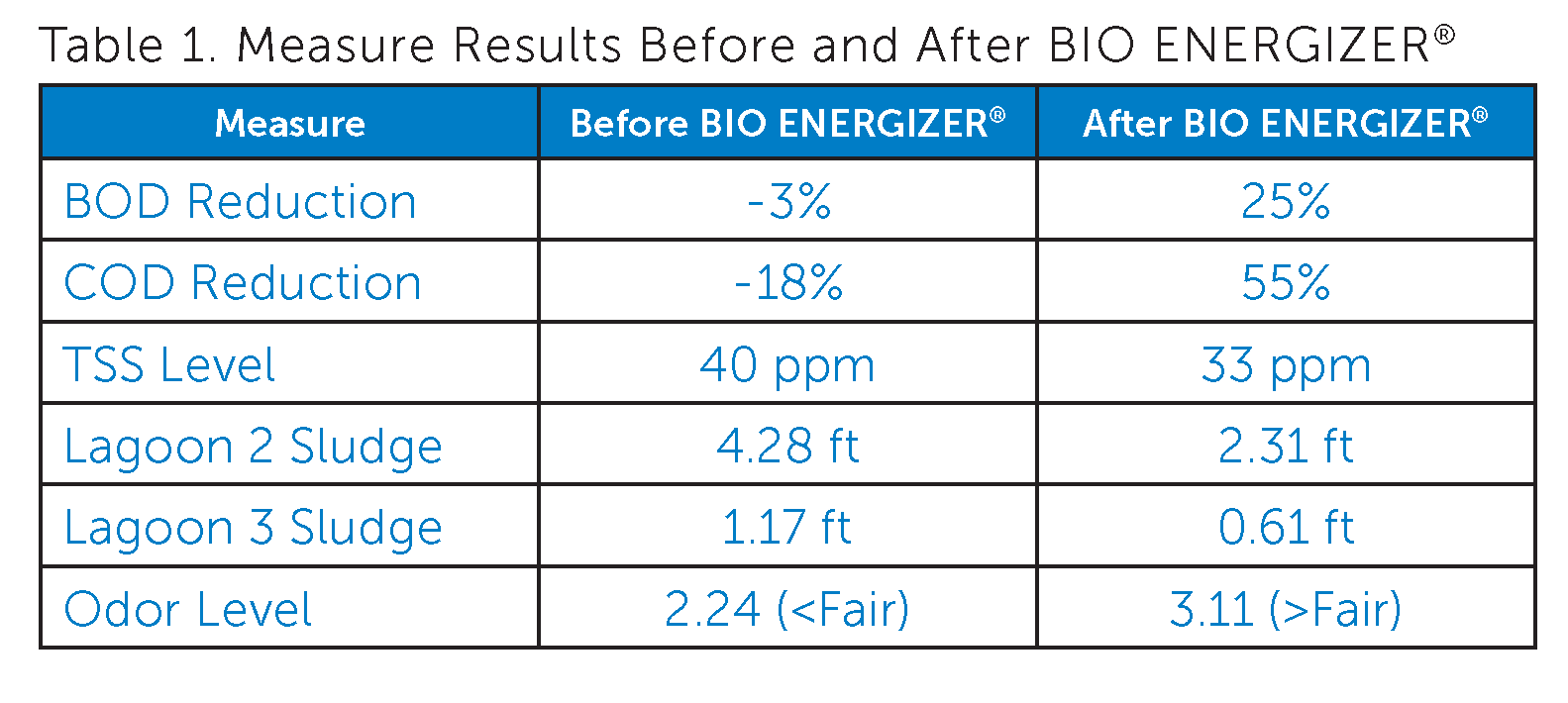
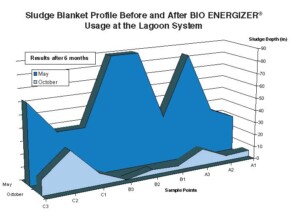
A large sugar refinery struggled with elevated BOD and COD values in its wastewater treatment lagoons due to the sugar refinery process. The lagoon wastewater system capacity was 25 million gallons with an influent of 1.25 million gallons per day. The wastewater system also suffered from accumulating sludge as well as significant odor issues. The sugar refinery had a history of periodically being unable to meet its National Pollutant Discharge Elimination System (NPDES) permitting requirements.
Probiotic Solutions® BIO ENERGIZER® applied to a sugar refinery wastewater lagoon system over 9 months resulted in reduced accumulated sludge, TSS, and odors, with improved BOD and COD reduction.
Read the full report in English online
Read the full report in Spanish online
Download the full report PDF in English
Download the full report PDF in Spanish

Related Posts
BIO ENERGIZER® Reduces Sludge, BOD, and Odor—City in Illinois
A small town in Illinois (pop. 3,500) had a municipal wastewater system that was in need of sludge removal. The sludge accumulation problem had become so problematic that the sludge was visible at the surface. The exposed sludge was causing an odor problem for the nearby residents. In addition, due to the high solids accumulation,
BIO ENERGIZER® Reduces Sludge at Municipal Wastewater Treatment Facility in New Mexico
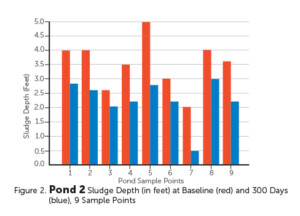
A small town in New Mexico (pop. 1,300) had a municipal wastewater system with a flow rate of 50,000 gallons per day. The system included a series of three lagoons. A recent sludge judge showed Pond 1 had an average sludge depth of 1.9 feet, Pond 2 averaged 3.5 feet, and Pond 3 averaged 2.7

Webinar Video: Lagoons Under the Surface
Webinar video highlights key findings—including $6M in savings—from a year-long bioremediation program for lagoon sludge reduction at a municipal wastewater treatment plant. In this 31-minute video, Heather Jennings, PE, Director of Probiotic Solutions®, and Diego Lopez, Chief Plant Operator for the City of Lemoore, Calif., Wastewater Treatment Plant discuss highlights from the year-long study of