
TURFPLEX IV
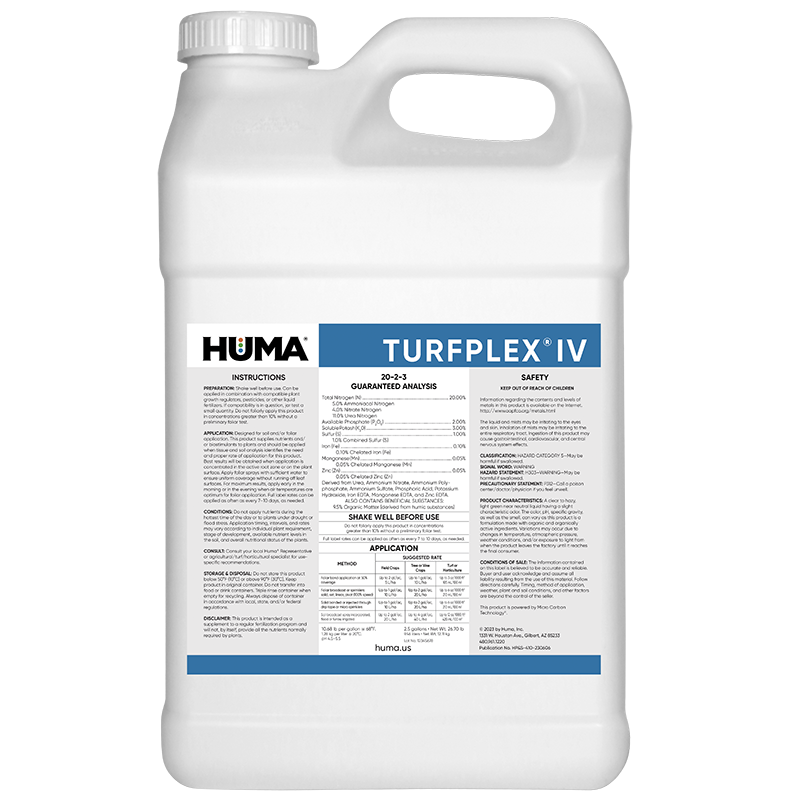
Benefits of Use:
- More consistent and sustained turf color and texture
- Increased stress tolerance
- More efficient nutrient uptake without leaf burn
- Better stimulation of root growth in seedlings and transplants
Deficiency Symptoms—When to Apply:
- Plant stress caused by nutrient deficiencies, insects, disease, weather, chemicals, or mechanical damage
- Leaf symptoms: Yellow-to-brown leaf edge, pale green leaves, leaf tips dying
- Root symptoms: Shallow rooting
FAQs
Related Case Studies

Huma® Liquid Sili-Max® Improves Wheat Yield at Much Higher Efficiency Than Conventional Dry Silicon Fertilizers
Objective The objective of this study was to compare, for use in Louisiana wheat production, the efficacy of a liquid silicon (Si) fertilizer (Huma® Sili-Max®) with a commonly used dry Si source (steel slag) and another Si source (wollastonite) often used in research as a suspension. Silica deposition is an important barrier for foliar fungal
Fertil Humus® Soil Amendment Trial for Water Infiltration
Objective This field trial assessed the benefits of moisture infiltration enhancement that may be provided by the product Fertil Humus® at selected rates and timings. Materials & Methods The plot site selected for this trial was located in the southern portion of the Columbia Basin in Washington State. The Russet Burbank potato field was pivot-irrigated

Biostimulant Effect of Humic Acids on Tomato Plants Under Nutritional Stress
Introduction In this study (originally published in Frontiers in Plant Science, May 2021, Vol. 12:660224), the biostimulant properties of a sedimentary shale ore-extracted humic acid (HA) were tested on Micro Tom tomato plants under increasing nutritional stress Materials & Methods A sedimentary lignite ore (Idaho), ground to pass a 1,000 µm sieve, was used as


Related Blog Posts
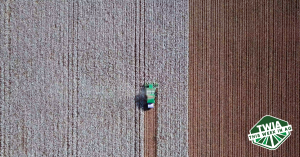
This Week in Ag #86
Yesterday was #WorldCottonDay. That’s a fitting title, considering how creating the world’s most popular fabric is truly a world endeavor. Cotton is a crop mostly grown in Asia and the Americas, whose end products are mostly designed in Europe and mostly manufactured in Asia, and largely consumed in the world’s wealthiest countries (the USA accounts

Fertilgold® Organics Earns OMRI-Listing for 24 Initial Products
Fertilgold® Organics, a brand of organic fertilizer products from Bio Huma Netics, Inc. (BHN) headquartered in Gilbert, Ariz., has achieved Organic Materials Review Institute (OMRI) listing for 24 initial products. Of these, 18 OMRI-listed liquid crop nutrition products are based on the company’s proprietary nutrient carrier, Micro Carbon Technology®, which carries nutrients to plants more

The Year the Weeds Disappeared
A look back at 1996, when Roundup Ready soybeans changed weed control, accelerated no-till adoption, and transformed the way farmers thought about efficiency and crop production.
Related Products
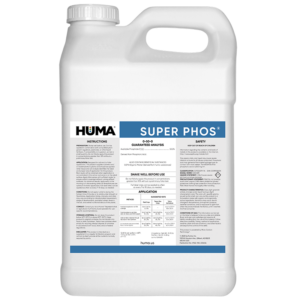
SUPER PHOS
SUPER PHOS®, carbon-complexed with Micro Carbon Technology®, can be foliar-applied, according to label directions, without the risk of phytotoxicity. When...
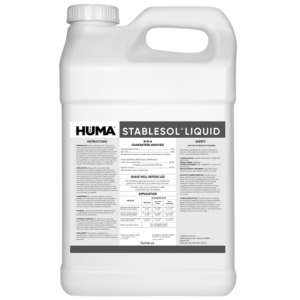
STABLESOL LIQUID
STABLESOL® LIQUID is an activated liquid humic-acid source derived from a highly oxidized, naturally occurring carbon and mineral deposit. STABLESOL LIQUID treats...

OM 6 mm(-)
Huma® OM 6 mm(-) is a natural humic and fulvic acid product processed from naturally occurring, oxidized lignite. It provides a...