
OM CALCIUM
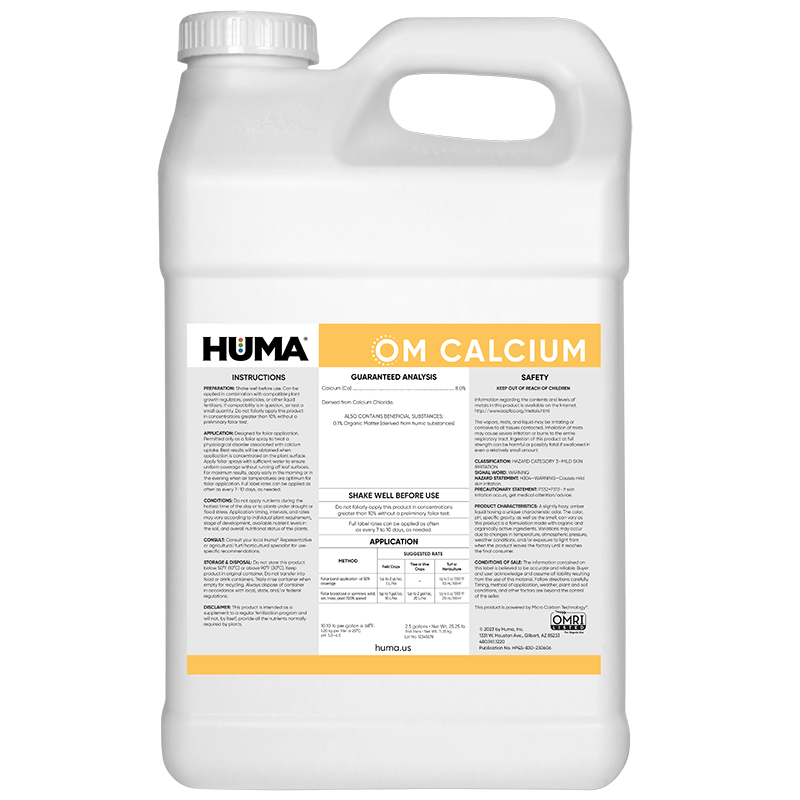
Benefits of Use:
- Effectively treats calcium deficiency symptoms
- Provides quick crop response and can be applied just prior to actual crop need
- Can be applied foliarly (according to label directions) without risk of phytotoxicity
- Can be effectively tank-mixed with other organic crop inputs
- Reduces susceptibility to environmental stresses
- Promotes early root growth
- Increases stalk strength and reduces lodging in grain crops
- Increases shelf life and reduces shipping and storage disorders in fruits and vegetables
- Promotes maturity and improves fiber quality in cotton
- Enhances nodulation in legumes
- Promotes maturity and viability in seed crops
FAQs
Related Case Studies

Huma® Organic Fertilizers Easy to Use, Improve Yield on Organic White Corn
Objective The objective of this field trial was for the grower to evaluate the ease of use and the effectiveness of 4 OMRI-Listed liquid Huma® organic crop nutrition products based on known field deficiencies. Materials & Methods The organic producer provided 2 80-acre plots of organic white corn in eastern Nebraska that was at the
Related Blog Posts

This Week in Ag #19
Rain makes grain. Those words are as old as farming itself. In the nation’s breadbasket – the three I states, which produce 42% of our corn and 37% of our soybeans – there’s concern over the lack of rain. That triggered a major movement in the grain market. Drought officially grips 100% of the I

Dreaming of a USDA Christmas
USDA’s newly announced $12 billion relief package is meant to serve as a bridge for U.S. farmers facing mounting financial pressure. However, with rising input costs, trade disruptions, and a reliance on record subsidies, many growers will spend their checks before they even arrive.

This Week in Ag #69
As we celebrate National Dairy Month, my thoughts are with Jack & Frances Watt, my old neighbors (when you live in the country, a “neighbor” can reside within at least 5 miles of you) who were dairy farmers. They were among the hardest working, kindest people I’ve ever known. Vacations were a foreign concept to
Related Products
38 SPECIAL
38 SPECIAL®, carbon-complexed with Micro Carbon Technology®, is designed for a wide range of uses and can be applied to...

OM IRON
Carbon-complexed with Micro Carbon Technology®, OMRI-Listed® OM IRON is an organic iron nutrient derived from ferrous sulfate (Fe 5.0%, with...
FERTIL HUMUS
FERTIL HUMUS® carbon-complexed with Micro Carbon Technology® has the nutrients necessary to feed beneficial fungal activity in the soil and...