
This Week In Ag #125
Just step outside. It’s brutal. You’ll instantly know it’s “sweating season” across the South and much of the Midwest. Sure, temperatures are hot, consistently now in the upper 90s across the Delta. But it’s the humidity that instantly gets your attention and triggers sweat glands overload. The dew point – aka “the misery index” – indicates the temperature where dew forms: the higher the dew point, the more moisture is in the air. The National Weather Service defines dew points above 75 degrees as “oppressive.” That’s where we’ve consistently been across the Delta; most days reaching the upper 70s.
But humans aren’t the only ones sweating it out these days. So is corn. Much like us, corn has a natural cooling mechanism where it releases moisture from its leaves. A single corn stalk can emit four cups of water each day. That’s more sweat than I release while running a 5k! Although corn loses water as it cools, this transpiration process is vital in keeping the crops healthy and productive. As water is pulled up from the roots, it is transported throughout the plant and released through tiny pores in the leaves called stomata. In addition to transporting water, nutrients are also carried and dissolved in vital tissues throughout the plant.
One acre of corn can release up to 4,000 gallons of water each day. People in areas with high concentrations of corn can actually feel it, as those local heat indexes will rise due to the humidity produced by cornfields. Corn and soybean fields across the Corn Belt serve as a giant oxygen-producing, carbon-inhaling machine. Under the summer sun, and aided by crop nutrients and irrigation, there’s an amazing amount of photosynthesis going on from Ohio to Nebraska. Satellite images reveal fluorescence levels from the Corn Belt are currently 40% greater than those of the Amazon rainforest.

Related Posts
This Week in Ag #36
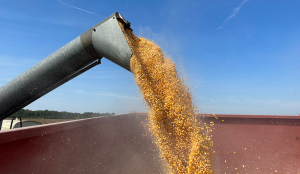
#Harvest23 is in full swing. You probably have a sense of what farmers are currently doing. But what are farmers currently thinking about? Well, at this time of the year… A LOT!

This Week in Ag #87
Seasonal migration isn’t just for the birds. Or the snowbirds heading to Arizona. Some of nature’s most majestic and essential creatures are now making their way southward: butterflies. These winged beauties are prolific pollinators of crops, landscapes, wildflowers and gardens. Three-quarters of all food crops worldwide are somewhat or heavily dependent on pollinators such as butterflies. Monarch

Micro Carbon Technology® for a Greener, Cleaner World
Probiotic Solutions® products are manufactured with our exclusive, proprietary Micro Carbon Technology® that consists of very small carbon-rich molecules. These ultra-fine molecules help efficiently reduce biosolids, improve settleability and promote dissolved oxygen.