
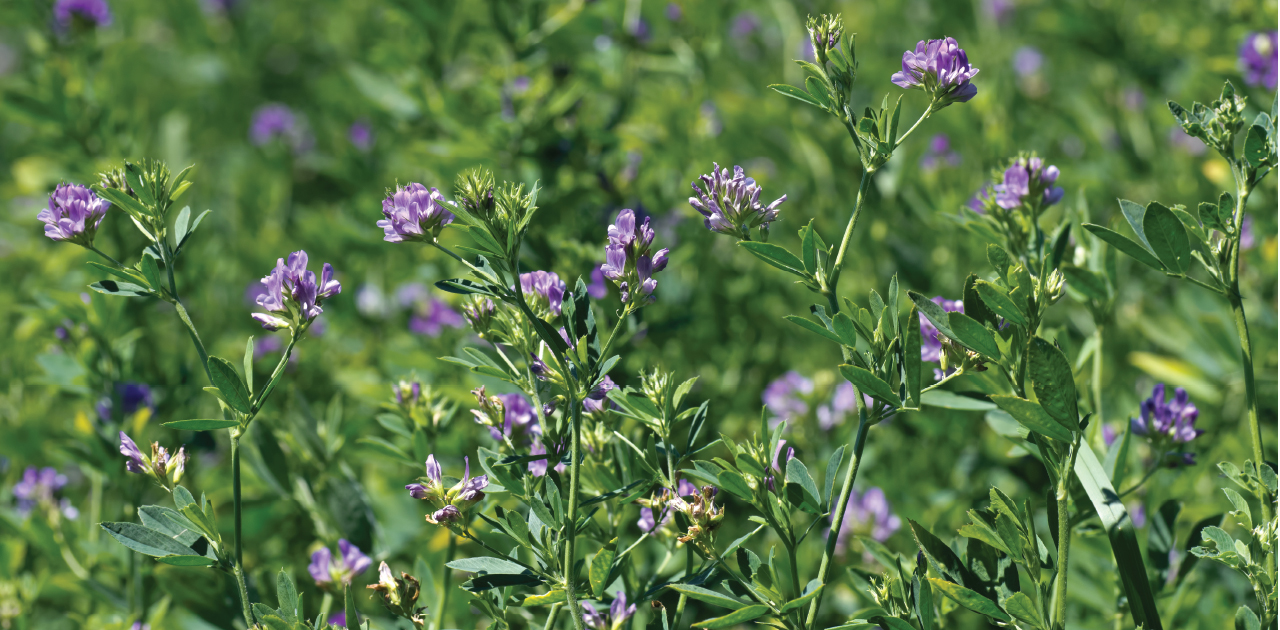
 A new article from Dr. Mike Stewart in Plant Nutrition Today (a publication of the International Plant Nutrition Institute), reminds us that “Sulfur (S) is an important component of a complete and balanced crop nutrition program and has justifiably gained more attention in recent years. Crop consultants and decision-makers are well advised to pay attention to S nutrition and the various factors that influence its availability and level of need.”
High-yielding forage crops such as alfalfa and hybrid bermudagrass remove more S than most grain crops and tend to be relatively responsive.
According to the article, soils containing less than 2% organic matter are most commonly S deficient, and coarse-textured soils are more likely to need S than finely textured soils.
Dr. Stewart states that, “Sulfur serves many functions in plant. It is used in the formation of amino acids, proteins, and oils. It is necessary for chlorophyll formation, promotes nodulation in legumes, helps develop and activate certain enzymes and vitamins, and is a structural component of 2 of the 21 amino acids that form protein.”
Read the entire article at https://www.ipni.net/publication/pnt-na.nsf/0/E751326443B50E4C85258133006F4513/$FILE/PNT-2017-Summer-02.pdf.
____________________________________________________________________
Huma Gro® offers a liquid 10% Sulfur plant nutrition product derived from ammonium sulfate and complexed with Micro Carbon Technology® that can be soil applied or foliarly applied at the appropriate plant growth stage. Click here for our Sulfur product technical bulletin, or contact your local Huma Gro® sales representative for purchasing or more technical information.

Related Posts

BHN 2018 World Conference
The biannual Bio Huma Netics, Inc. (BHN), World Conference was held November 6–9, 2018, at the DoubleTree by Hilton Conference Center in Gilbert, Arizona. The BHN World Conference was attended by 72 Huma Gro®, Huma Gro® Turf, and Probiotic Solutions® product distributors and users representing 18 countries. Conference attendees were welcomed by BHN President and

The Huma Gro Farmer Podcast: Episode 10—Growing Premium Potatoes – Blog