
SILI-MAX
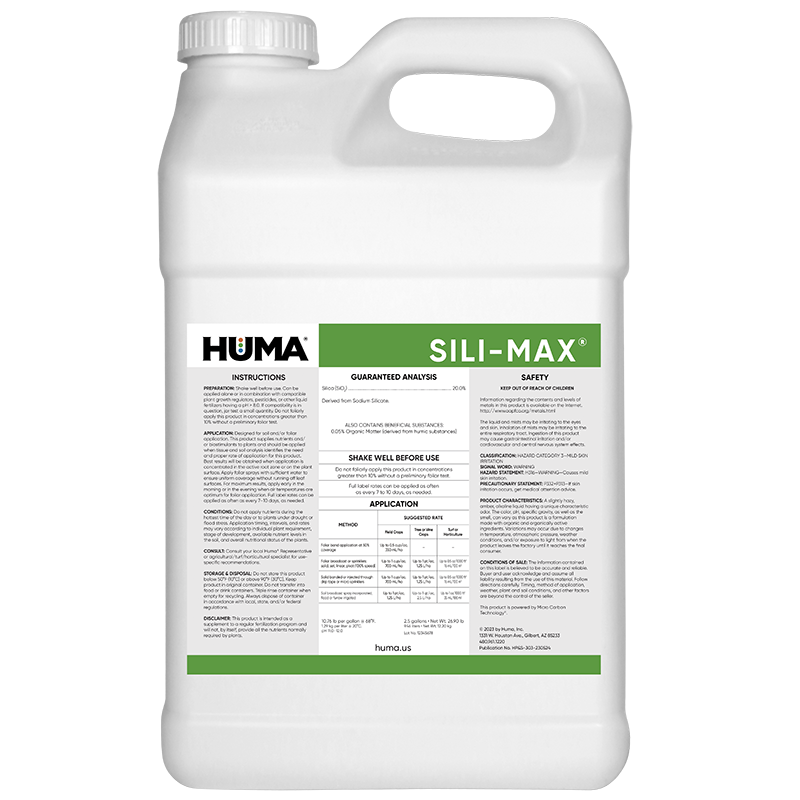
Benefits of Use:
- Essential in grains, grasses, and turf for stronger heads, shoots, and blades
- Increases the strength and rigidity of the plant cells
- Strengthens cell walls to prevent flopping or lodging
- Reduces the tendency of crops and turf to wilt during the initial stages of drought
- Increases resistance to environmental stresses
Deficiency Symptoms—When to Apply:
- Weak plant cell structure
- Inadequate silica levels in tissue or soil analysis
FAQs
Related Case Studies

Huma® Liquid Sili-Max® Improves Wheat Yield at Much Higher Efficiency Than Conventional Dry Silicon Fertilizers
Objective The objective of this study was to compare, for use in Louisiana wheat production, the efficacy of a liquid silicon (Si) fertilizer (Huma® Sili-Max®) with a commonly used dry Si source (steel slag) and another Si source (wollastonite) often used in research as a suspension. Silica deposition is an important barrier for foliar fungal
Related Blog Posts

This Week in Ag #48
The popular TV series Yellowstone, along with the western lifestyle craze, has certainly romanticized ranching. It seems like everyone wants to be a rancher, until there’s real-world ranching stuff to do. This week’s bone-chilling Midwestern weather brings back memories. Notice I didn’t say fond memories. When you have livestock, they require care every day. Utility tractors

This Week in Ag #36
#Harvest23 is in full swing. You probably have a sense of what farmers are currently doing. But what are farmers currently thinking about? Well, at this time of the year… A LOT!

This Week In Ag #94
On Thursday we celebrate #WorldSoilDay. Along with water, soil is Earth’s most precious resource. That’s because 95% of our food comes from soil. The importance of nurturing soil can be traced back to Biblical times. Jesus himself spoke of the importance of seeds falling on good soil. While soil health has become a buzzword in today’s
Related Products
BORON
Huma's BORON is carbon-complexed with Micro Carbon Technology®, ensures efficient and effective uptake of boron, which is required for cell...
JACKPOT
JACKPOT® , carbon-complexed with Micro Carbon Technology® , is a concentrated formulation of potassium and boron that feeds the metabolic processes necessary...

X-TEND B
X-TEND® B is a concentrated Micro Carbon Technology® product with high levels of organic acids and nutrients. This product is...