
As we get closer to closing up harvest season, what about harvesting the unharvested crop? Crop Residues unmanaged can be problematic if not broken down, but can be a great tool in soil health. As crop residues break down, they can be a fantastic source of nutrients, carbon, and protecting soils and building soil organic matter and microbiology. How do we better utilize crop residues? How can we aid in their decomposition for improving soil health? FERTIL HUMUS® is the answer!
Crop Residue Management Program
Solution: FERTIL HUMUS (24-0-0 with Fe, Mn, Zn) liquid stubble digester/soil enhancer creates an environment to break down stubble/stover into humus.
Application: Spray directly to the soil or stubble/stover anytime following harvest (the sooner the better).
Rate: 1-2pt/ac broadcast application ($7.00 – $14.00/ac MSRP)
Objectives:
Feed the Soil
• Carbon-based, excellent nutrient recycler
• Promote biological diversity and activity
• Accelerate microbial populations by providing the top food source for beneficial fungus
• Rapidly shift from bacteria to fungal dominated organisms
• Buffer harsh chemicals and degrade toxic compounds in the soil
• As microbe diversity and populations increase, soil resilience to abiotic and biotic stress decreases
• Ideal for use with manure, breaks down manure to dramatically increase bioavailability
• Can replace cover crops in areas where cover cropping is not viable
Fertilizer Savings
• Release N, P, K, and carbon tied up in the crop residue
• Increases recycling of carbon and nutrients tied up in organic matter
• Aids in the decomposition of organic residues in soils, converting them to humus and nutrients
• Catalyst for strengthening the microbial activity in the rhizosphere for the next crop
• Builds organic matter
Promote Minimum and No-Till Practices
• Ultimate composter: maintains stubble/stover benefits over winter by protecting the soil; turns stubble/stover into finished compost prior to spring planting by composting residue all winter long
• Eliminates stubble bunching during a planned spring tillage pass, eliminating the need to run a disk in the fall
• High N content aiding in proper C:N ratios
• Strengthens water penetration and water holding capacity
• Rapidly improves soil structure and compaction issues
• Soils warm up quicker in the spring, may reduce the need to till the soil in the spring
Recycle last year’s nutrients for this year’s crop
FERTIL HUMUS will recycle and unlock 25-30% more of the stubble nutrient content (especially Carbon) contained in the stubble/stover from the previous crop – making more of those nutrients available this season. Corn stalks* from a 200 bu/ac crop can contain about 100 lb/ac of N, 50 lb/ac of P and 210 lb/ac of K. Soybean residue* from a 60 bu/ac crop contains about 34 lb/ac of N, 6 lb/ac of P and 26 lb/ac of K. Wheat straw* from a 60 bu/ac crop contains 33 lb/ac of N, 9 lb/ac of P and 45 lb/ac of K. The trick is capturing these nutrients and making them bioavailable for the next crop. FERTIL HUMUS quickly breaks down the stover/stubble and captures the nutrients in the soil, where they can be consumed by the following year’s crop. Applying FERTIL HUMUS in the fall means you can significantly reduce your NPK fertilizer rates the following year.
Reduce the need to disk stubble in the fall – Eliminate 0.63 gal of diesel fuel per acre**. Pulling a disk requires 0.74 gal/ac of diesel fuel, while operating a sprayer requires 0.11 gal/ac. So, you dramatically reduce the expenses and carbon emissions from disking in the fall.
Reduce the need to work the soil in the spring – Eliminate another 0.74 gal/ac of fuel per acre** by not having to run a field cultivator or disk in the spring. Last year’s stover will turn into compost, allowing the planter to operate easily across the soil with little disruption.
In areas where cover cropping is not viable, FERTIL HUMUS can provide many of the same benefits as cover crops. Rain and snow can incorporate the product into the soil.
*Michigan State University
** University of Nebraska
FERTIL HUMUS shows an 8-11 bu/ac yield improvement in Illinois study.
https://huma.us/case-studies/case-studies/fall-soil-application-of-fertil-humus-increases-illinois-corn-yield-and-roi/
FERTIL HUMUS improves water infiltration in Washington potato study.
https://huma.us/plant-soil/case-studies/fertil-humus-soil-amendment-trial-for-water-infiltration/

Related Posts

Reaching Crop Milestones
Raising a crop takes more than seed and soil—it takes faith. Just like raising kids, farming is full of stages that bring joy, stress, hope, and awe. From emergence to canopy and tasseling to harvest, each milestone tells a story of patience, persistence, and purpose. Here’s a look at the defining stages that make farming not just a job, but a calling.
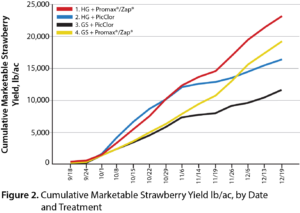
Huma Gro® Nutrient and Fumigation Replacement Program Increases Strawberry Yields 97%
Conducted by: Pacific Ag Research Huma Gro® Products: Ultra-Precision™ Blend (Fresca CA Strawberry Mix), Promax®, and Zap® OBJECTIVE This field trial assessed the effects on strawberry yields of replacing field fumigation with periodic applications of Huma Gro® Promax® and Zap® and replacing a grower’s standard fertilizer program with irrigation-applied Ultra-Precision™ blended liquid Huma Gro® crop

This Week in Ag #16
If the TV show MythBusters ever did a program on farming, there are several common myths about farmers they could bust.