
CURIOSITY
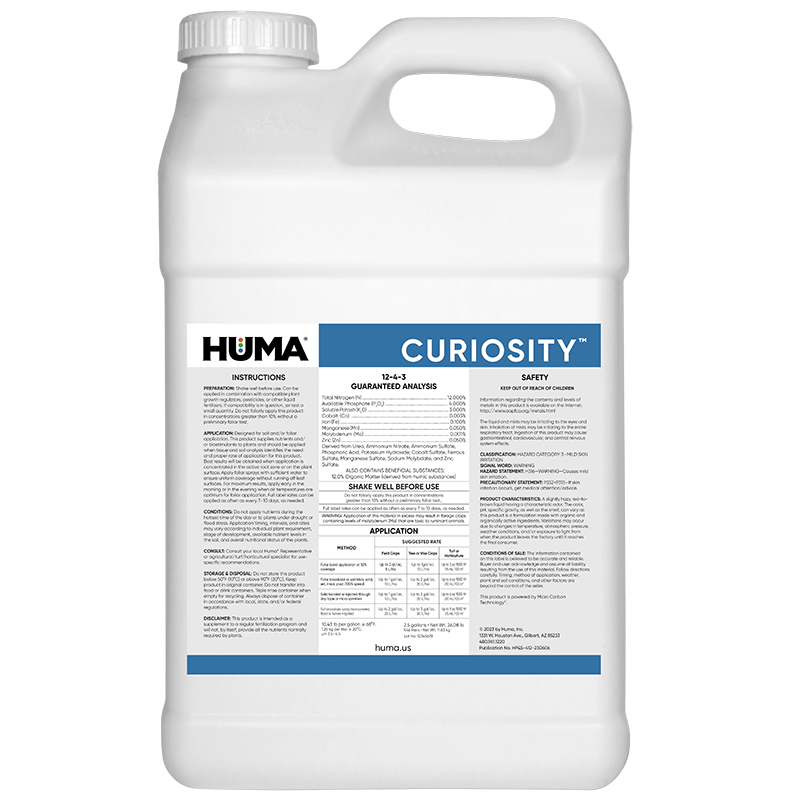
Benefits of Use:
- Improves overall health and vigor by increasing essential nutrient levels and supporting soil microbial activity
- More consistent and sustained turf color and texture
- Simulates root growth
- Increases stress tolerance
Deficiency Symptoms—When to Apply:
- Turf stress caused by nutrient deficiencies, insects, disease, weather, chemicals, or mechanical damage
- Poor nutrient retention in sandy soils
- Discolored turf
- Shallow rooting
FAQs
Related Case Studies
Huma Pro® Mix, pH-Stable Liquid Humic Acid Product, Increases Cotton Lint Yield
Conducted by: Bruce Kirksey, PhD, Agricenter International, Memphis, Tenn. Huma® Product: Huma Pro® Mix Background Scientific research shows that humic and fulvic acids are biostimulants—enhancing nutrient availability and uptake, improving plant root growth and mass, and impacting both crop yield and quality. Humic acid products are not all the same. They are marketed in solid

PROUD 3 Fungicide Replacement
Background Huma® fungicide programs with Micro Carbon Technology® provide growers with effective options that can replace synthetic fungicides with a more sustainable and environmentally friendly approach, while providing excellent control and improving crop health, yield and quality. Objective The focus of this study was to assess if 2 of Huma’s products CROP-GARD® (Growth Manager) and
Fertil Humus® Soil Amendment Trial for Water Infiltration
Objective This field trial assessed the benefits of moisture infiltration enhancement that may be provided by the product Fertil Humus® at selected rates and timings. Materials & Methods The plot site selected for this trial was located in the southern portion of the Columbia Basin in Washington State. The Russet Burbank potato field was pivot-irrigated

Related Blog Posts

It All Has to Start With The Soil
The Soil Health Institute has released a 60-minute documentary, Living Soil, that captures the history — and significance — of the soil health movement. Our soils support 95 percent of all food production, and by 2060, our soils will be asked to give us as much food as we have consumed in the last 500

Making Memories by Making Hay
Making Memories by Making Hay A nostalgic look back at the labor, sweat, and family memories made during hay season — from hand-stacking square bales to the arrival of the game-changing round baler.

The South Is Sweating and So Is The Corn
Just step outside. It's brutal. You’ll instantly know it’s “sweating season” across the South and much of the Midwest. Sure, temperatures are hot, consistently now in the upper 90s across the Delta. But it’s the humidity that instantly gets your attention and triggers sweat glands overload. The dew point - aka "the misery index" - indicates the temperature where dew forms: the higher the dew point, the more moisture is in the air. The National Weather Service defines dew points above 75 degrees as “oppressive.” That’s where we’ve consistently been across the Delta; most days reaching the upper 70s.
Related Products
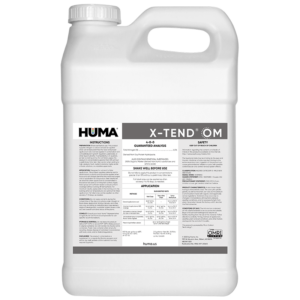
X-TEND OM
OMRI-Listed® X-TEND® OM is an excellent organic source of Micro Carbon Technology®, formulated with organic acids and nutrients to improve...
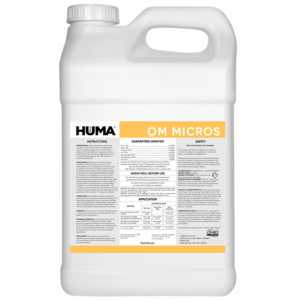
OM MICROS
Carbon-complexed with Micro Carbon Technology®, OMRI-Listed® Huma's OM MICROS is highly stable liquid organic micronutrient formulation that is balanced for...
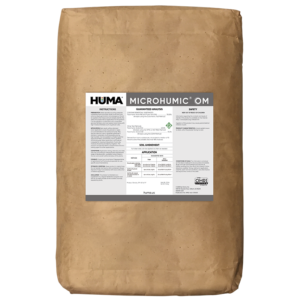
MicroHumic OM
The Organic Solution for Stimulating Seeds, Soil, and Crops OMRI-Listed as both a soil amendment and as a seed treatment,...