
CROP-GARD
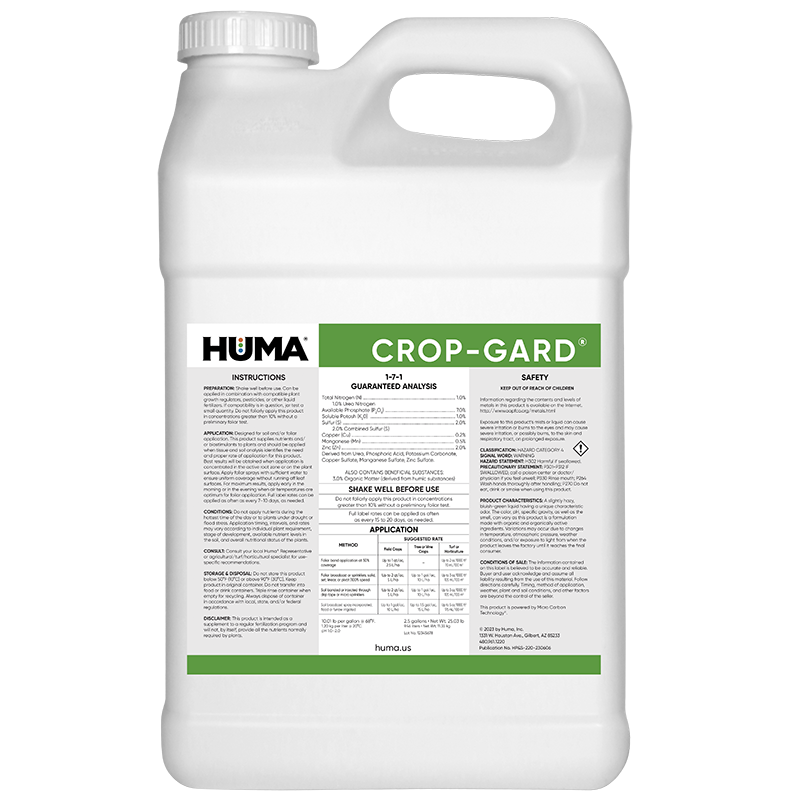
Benefits of Use:
- Enhances natural plant ability to tolerate environmental stresses through improved nutritional balance
- Will tank mix with sulfur-copper fungicidal sprays and most chemical fungicide formulations
- Provides essential plant nutrients
- Can be used to carry any combination of Huma® nutrients
- Minimizes leaf burn or phytotoxicity associated with foliar nutrient sprays
- Usually eliminates the need for wetting agents or sticker spreaders
Deficiency Symptoms—When to Apply:
- Yellowing of leaves
- Plants weakened due to stress/disease
- Poor plant vigor
FAQs
Related Products
ENCAPSALT®
ENCAPSALT® combines nutrients with surfactants based in a Micro Carbon Technology® base that helps diminish salt stress in the root...
OM MANGANESE
Carbon-complexed with Micro Carbon Technology®, OMRI-Listed® OM MANGANESE is an organic manganese nutrient derived from manganese sulfate (Mn 5.0%, with...
VITOL
VITOL®, carbon-complexed with Micro Carbon Technology®, feeds the natural metabolic processes within the plant for vegetative development and fruit sizing....
Related Case Studies

PROUD 3 Fungicide Replacement
Background Huma® fungicide programs with Micro Carbon Technology® provide growers with effective options that can replace synthetic fungicides with a more sustainable and environmentally friendly approach, while providing excellent control and improving crop health, yield and quality. Objective The focus of this study was to assess if 2 of Huma’s products CROP-GARD® (Growth Manager) and
Related Blog Posts

This Week in Ag #54
Farmers love to kick tires, share stories, and due to their curious nature, are always looking to pick up tips for their trade. It’s no wonder the agricultural industry is rife with trade shows. Perhaps the most influential show is Commodity Classic, where the National Corn Growers Association, American Soybean Association, National Wheat Growers Association

This Week in Ag #1
Curly fries, waffle fries, spicy fries or… regen fries? Soon, these may all be choices in the frozen foods aisle, at least if McCain Foods has a say in it. And as the world leader in prepared potato products, purchasing 6.8 million tons of spuds annually, McCain carries a strong voice. Their commitment to sustainability includes a pledge to have regen

Reaching Crop Milestones
Raising a crop takes more than seed and soil—it takes faith. Just like raising kids, farming is full of stages that bring joy, stress, hope, and awe. From emergence to canopy and tasseling to harvest, each milestone tells a story of patience, persistence, and purpose. Here’s a look at the defining stages that make farming not just a job, but a calling.