
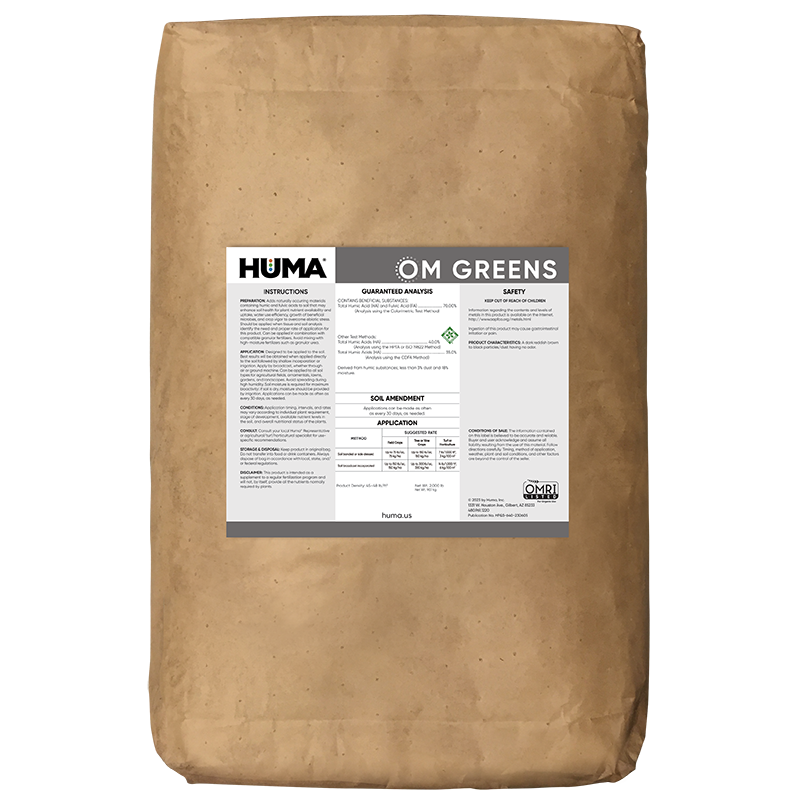
OM GREENS
Benefits of Use:
- Uniform granular size promotes even coverage/distribution of humic substances for sustainable carbon benefit
- Long-term soil organic-matter building
- Increased water penetration
- Increased flocculation of clays
- Promotes conversion of fertilizer into plant-available food
- Increases soil nutrient mineralization
- Sustainable soil microbial activation
FAQs
Related Videos
Huma Minute – What is Humic Acid with Cory Ritter
Huma Mid-West Regional Sales Manager Cory Ritter discusses the different types of humic acids and what they do for your plants.
Learn More
Huma Minute – Humate Application Rates with Cory Ritter
Huma Mid-West Regional Sales Manager Cory Ritter discusses humate application rates and why there is not a one-size fits all rate.
Learn More
Huma Minute – Humic Acid Testing Methods with Cory Ritter
Huma Mid-West Regional Sales Manager Cory Ritter discusses the differences in the various humic acid testing methods.
Learn More
Related Case Studies
Huma® Products on Sugar Cane Result in 14x Less P and 32x Less K Required, Plus Increased Yield and Net Return
Background Humates and plant growth stimulators can positively influence a crop such as sugar cane to produce a higher yield. Objective The focus of this study was to observe how fall application of Huma® products Fertil Soil®, a source of soil nutrients and humates, and Breakout®, which stimulates growth, would affect sugar cane production. The
X-Tend® B With Micro Carbon Technology® Improves Barley Yield and Net Income: Year 3
Background Enhanced Efficiency Fertilizer (EEF) additives can improve crop production. Humates have been shown to improve crop yield. The Huma® EEF additive X-Tend® B is a concentrated Micro Carbon Technology® product derived from humates with high levels of organic acids and nutrients that is formulated to be blended in liquid fertilizers or to be impregnated

Huma® Promax® for Strawberries: A Replacement for Standard Fumigation, Nematicides, and Fungicides
Introduction A field trial to test efficacy of Huma® Promax® as a cropprotection product for strawberries (Fragaria sp.) was applied in a location known to have spring disease problems with either Fusarium or Macrophomina pathogenic fungi. This report is based on a field trial with strawberries conducted by Holden Agricultural Research and Consulting submitted on

Related Blog Posts

The Huma Gro Farmer Podcast: Episode 9—Growing Premium Corn – Blog

The Huma Gro Product Quality Assurance Process

This Week in Ag #85
We’re now five weeks away from a national election. The economy, crime, securing the border and foreign policy are top issues for most voters. But what about farmers? For answers, just look at what they value most: family.
Related Products
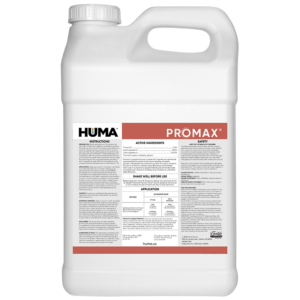
PROMAX
PROMAX® is an OMRI-Listed®, EPA-exempt crop protection product. It is a protective and curative pesticide recommended for control of plant...
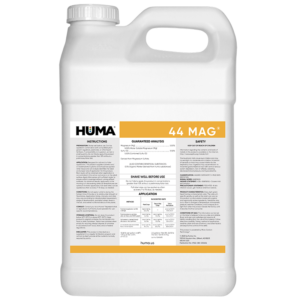
44 MAG
Huma's 44 MAG®, is carbon-complexed with Micro Carbon Technology®, ensures maximum assimilation of magnesium, which is the essential part of...
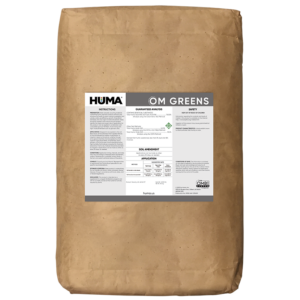
OM GREENS
Huma's OM GREENS is a natural humic and fulvic acid product processed from naturally occurring, oxidized humic substances. It provides a...