
ZAP
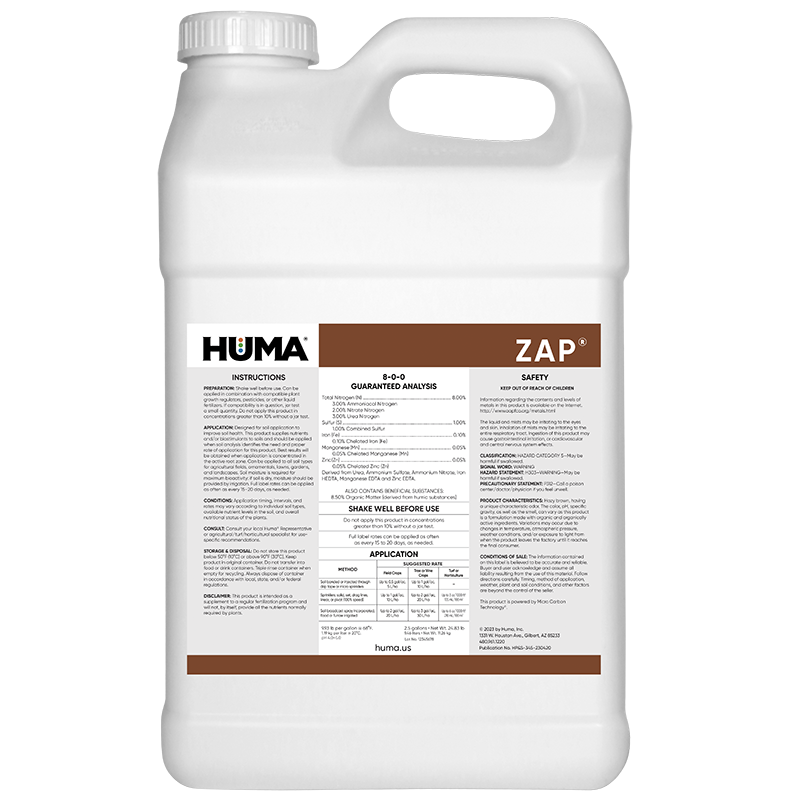
Benefits of Use:
- Improves overall plant vigor
- Enhances beneficial soil microbial activity
- Supports balanced soil biology and increased species diversity
- Helps address microbial challenges associated with cut or leveled soils with reduced fertility
How Zap Works:
- Effect on the Soil Environment Surrounding Roots: ZAP enhances the activity of beneficial microorganisms that suppress soil-borne diseases and plant-parasitic nematodes.
- Effect on the Plant: ZAP promotes stronger root growth, helping reduce susceptibility to secondary root infections.
FAQs
Related Videos
Huma Zap
Huma® Zap® carbon-complexed with Micro Carbon Technology® is an organic-based formulation of nutrients for feeding the native beneficial soil microbial balance. Zap® feeds a strong, vigorous soil biology, which indirectly results in the natural improvement of soil
Learn More
Huma Gro Fumigation Replacement Program for Strawberry Growers
This case study conducted by Pacific Ag Research in Arroyo Grande, Calif. on Portola Strawberries shows that using Huma Gro biopesticide and fertilizers without additional soil fumigation leads to a much higher strawberry yield.
Learn More
All Things Strawberry (Part 2): The Huma Gro Farmer podcast (video)
In Episode 2 of The Huma Gro Farmer podcast, we discuss All Things Strawberry (Part 2) from bud initiation to post-harvest with our strawberry experts: Huma Gro Senior Director of U.S. Domestic Sales Doug Greer,
Learn More
Related Case Studies

Huma® Promax® and Zap® Decrease Charcoal Rot in Florida Strawberry, With Increased Yield and ROI of 10:1
Background Charcoal rot, caused by the soil-borne pathogen Macrophomina phaseolina, can be a significant threat to strawberry production. Two Huma® products, Promax® and Zap®, had previously been shown to be successful in managing soil-borne diseases in strawberries. Objectives The primary objectives of this study were to assess the efficacy of Promax® and Zap® in reducing

Huma® Fertilizer Program Improves Potato Yield by 5%, With 200% ROI
Background Huma® liquid fertilizer programs with Micro Carbon Technology® provide growers with efficient crop nutrients via foliar spray or irrigation at the exact time crops need them. Precision timing of efficient nutrition provides better crop yield and quality. Objective The focus of this study was to assess how the efficient Huma® nutritional products affect potato

Huma® and Zia Pueblo Farm Corn Project
Background Many small-scale farms (1-2 acres each) are established in Zia Pueblo community near San Ysidro, New Mexico. Huma® Inc. was asked to establish an experimental farm in the tribal community that could demonstrate the usage of beneficial agricultural inputs producing high-yield crop and preserving the health of the soil. Huma® humic-based products stimulate plant

Related Blog Posts

This Week in Ag #22
Twenty years ago, I found myself in the position of operating a farm all by myself. My father, who I was farming with, passed away suddenly that January. So in addition to my full-time ag marketing job, I was flying solo across my family farm in western Illinois.

This Week In Ag #96
The greatest event in history took place at a farm setting, in a stable. The first to bear its witness were farmers, the shepherds. Merely coincidences? I think not. Here’s wishing you a Very Merry Christmas!

This Week In Ag #102
All four faces on Mount Rushmore are farmers. Along with being the father of our country, George Washington was a father of regenerative agriculture, implementing intense crop rotation (he grew 60 different crops), cover crop practices, manure management, and grazing from multiple livestock species on his 8,000-acre Mt. Vernon farm. Thomas Jefferson, considering himself “first a
Related Products

BORO-PRO
Huma's BORO-PRO® is carbon-complexed with Micro Carbon Technology®, ensures efficient and effective uptake of boron, which is required for cell...

OM ZINC
Carbon-complexed with Micro Carbon Technology®, OMRI-Listed® OM Zinc is an organic zinc nutrient derived from zinc sulfate (Zn 10.0%, with...

OM CALCIUM
Carbon-complexed with Micro Carbon Technology® (MCT), OMRI-Listed® OM CALCIUM is an organic nitrogen-free calcium nutrient. Calcium is a required nutrient...