
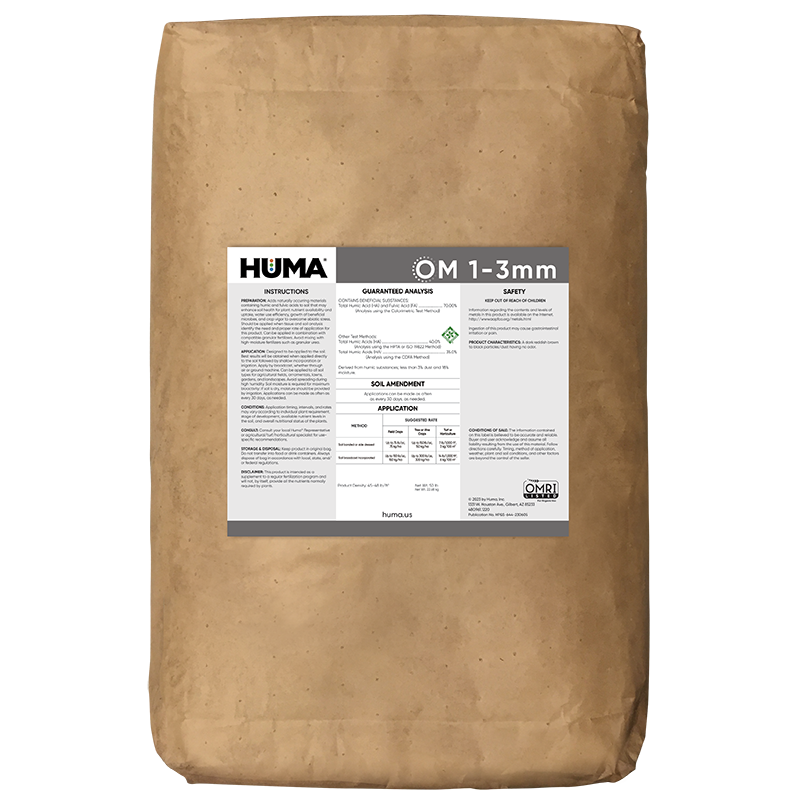
OM 1-3 mm
Benefits of Use:
• Uniform granular size promotes even coverage/distribution of humic/fulvic acid for sustainable carbon benefit
• Long-term soil organic-matter building
• Increased water penetration
• Increased flocculation of clays
• Promotes conversion of fertilizer into plant-available food
• Increases soil nutrient mineralization
• Sustainable soil microbial activation
FAQs
Related Products
OM 2-6 mm
Huma's OM 2–6 mm is a natural humic and fulvic acid product processed from naturally occurring, oxidized humic substances. It provides...
K HUME OM
Huma's K HUME® OM is a natural humic and fulvic acid product processed from naturally occurring, oxidized humic substances. Humic and...
OM 1-3 mm
Huma's OM 1–3 mm is a natural humic and fulvic acid product processed from naturally occurring, oxidized humic substances. It provides...
Related Case Studies

Huma® MicroMate Humic Acid Makes More Blooms, Faster, on Commercial Petunias
Objective Speeding up the maturity timing of flowers and having more flowers on commercial ornamental plants will make them more marketable and help flower growers produce more potted flower plants per year. The focus of this study was to assess the effects of a natural humic product from Huma® called Micromate on the speed of

Huma Pro® Mix, pH-Stable Liquid Humic Acid Product, Increases Corn Yield
Conducted by: Bruce Kirksey, PhD, Agricenter International, Memphis, Tenn. Huma® Product: Huma Pro® Mix Background Scientific research shows that humic and fulvic acids are biostimulants—enhancing nutrient availability and uptake, improving plant root growth and mass, and impacting both crop yield and quality. Humic acid products are not all the same. They are marketed in solid
Fall Soil Application of Fertil Humus® Increases Illinois Corn Yield and ROI
Background Feeding beneficial soil fungal activity can enhance aerobic decomposition of organic matter and build a humus-rich soil that releases nutrients tied up in crop residues. This can positively impact crop yield and lead to a higher return on investment. Objective The objective of this study was to observe how a fall application of Huma®




Related Blog Posts

Fred Nichols’ Insights on Microbiome and the Biologicals Boom
Recently, CropLife interviewed several industry experts, including Huma’s Chief Marketing and Chief Sales Officer, Fred Nichols, to discuss the rapid growth of biological products in agriculture, including biostimulants, biopesticides, and biofertilizers. Fred answered important questions about the microbiome’s role in soil health, industry’s understanding of it, and the new innovations being developed for sustainable farming.

8 Simple Steps to Healthy Crop Soil

Earth Day: “It’s Getting Better All the Time”
Celebrating Earth Day every April 22 is a great time to pause and reflect: How are we, today, treating the environment and the plants, animals, and people who live in it? What have we accomplished in the past year that makes our planet a better, more sustainable place to live and raise our families? What are our goals for future improvement?