
This Week In Ag #172
Happy 250th Birthday, USA! Lest we forget a group of farmers defeated the world’s greatest military empire to win America’s independence.
They were led by one of history’s most inspirational men, George Washington, himself a farmer. General Washington was not just the father of our country; he was a father of regenerative agriculture. He implemented intense crop rotation (he grew 60 different crops), cover crop practices, manure management and grazing from multiple livestock species on his 8,000-acre Mt. Vernon farm.
Fellow future President James Madison may be credited as the “Father of the US Constitution,” but he was also a staunch advocate for the soil. He warned against practices that depleted the soil and touted the virtues of manure and compost. Thomas Jefferson proclaimed him “the best farmer in the world.”
Of the 56 signers of the Declaration of Independence, nine were farmers. The most famous was Thomas Jefferson. He considered himself “first a farmer,” pioneered contour farming across his Virginia hills and experimented with 170 varieties of fruits and 330 varieties of vegetables from around the world. He was a pretty fair author and leader, too.
Benjamin Franklin may be famous for flying kites, but he was also a pioneer in soil fertility. Franklin introduced gypsum as a soil amendment and conducted research on drainage and crop rotation on his 300-acre New Jersey farm. He also introduced several crops to the New World, including timothy, rhubarb, Scotch kale, Swiss barley and several varieties of apples, nuts and trees.
Then there’s John Adams. Now here’s a man close to my heart. He proudly proclaimed: “I begin now to think all time lost that is not employed in farming.”

Related Posts
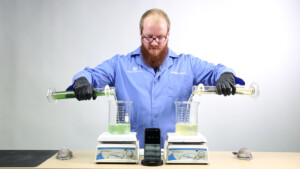
Video: Super Phos + Calcium Mixing Stability Test
English and Spanish subtitles are available. In this video, we demonstrate the unique compatibility of our highly concentrated Super Phos® 0-50-0 product when mixed with calcium. In traditional fertilizers, when phosphorus and calcium are mixed they can precipitate and fall out of solution. The resulting calcium phosphate can clog drip emitters and damage sprayers. Our

Amazing Results with HUMA GRO® on Cotton Farm
See what Russel said about his cotton farm and the results of applying HUMA GRO® SUPER PHOS™ and BREAKOUT® nutrients to the crop. Or see more videos here.
This Week in Ag #28
The recent fertilizer market may be best described by two catch phrases: “wait-and-see” and “just in time.” In the fall of 2021, sky-rocketing energy prices pointed toward looming inflation and an inevitable rise in fertilizer prices. Many savvy growers, including those aligned with the regen ag movement, hedged their bets by purchasing crop nutrients that