
Bio Dredge
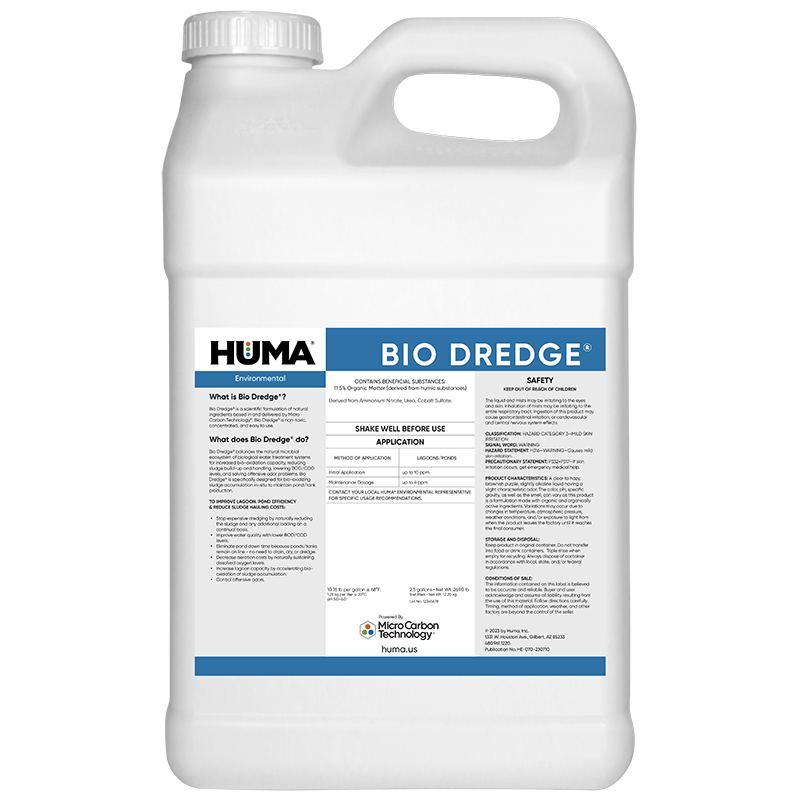
Benefits of Use:
- Stop expensive dredging by naturally reducing sludge and any additional loading on a continual basis.
- Improve water quality with lower BOD/COD levels.
- Eliminate pond down-time because ponds/tanks remain on-line—no need to drain, dry, or dredge.
- Decrease aeration costs by naturally sustaining dissolved oxygen levels.
- Increase lagoon capacity by accelerating bio-oxidation of sludge accumulation.
- Control offensive odors.
FAQs
Related Case Studies

Bio Energizer® Toxicity Testing
Abstract Bio Energizer® is frequently used to facilitate bioremediation of wastewater. A study was conducted by an independent laboratory to measure possible negative effects Bio Energizer® might have on a freshwater test species (rainbow trout). Using EPA-approved methodology to evaluate Bio Energizer®, the lab administered the product at 10 ppm to a test tank and
Lagoon Study Shows Sludge Layer Biologically Active and Responsive to Reduction Using Bio Energizer®
Summary In this study, a one-year bioremediation plan was implemented for a municipal wastewater treatment facility with 2 primary lagoons that were at risk of upset and in which wastewater processing capacity was reduced due to an increased sludge layer. Specific changes in strata microbial life were tracked through ATP and DNA analysis at quarterly
Super Phos® Lowers Papermill Operating Costs in China
Problem The existing wastewater treatment system uses 600 kg/day of diammonium phosphate (DAP) to provide the needed phosphorus concentration to maintain a healthy microbial population to treat wastewater. These microorganisms break down the organic matter being discharged from the paper processing facility. Without the correct concentration of available phosphorus, the microorganisms are unable to grow
Related Blog Posts

NMRWA 2019 Instructor of the Year Award Presented to Probiotic Solutions® Project Engineer, Heather Jennings
By Jael Batty Bio Huma Netics, Inc. congratulates Heather Jennings, Project Engineer for Probiotic Solutions®, who was awarded Instructor of the Year at the New Mexico Rural Water Association (NMRWA) Conference on April 10. Ms. Jennings, who has been training and presenting for five and a half years, teaches basic and advanced wastewater math for

Get the “P” Out of There!
By Heather Jennings, PE Phosphorus is one of the most abundant elements on earth. It’s essential for adenosine triphosphate (ATP), the energy carrier life is built on. But in excess in our lakes and ponds, we see large algal growths occurring. Many times, these algal blooms suffocate the surrounding aquatic life and or produce toxins
Ducks Walking on Water?
by Heather Jennings, PE Bio Energizer® Reduces Sludge Over 40% at Utah Municipal WTP The case study described below was a project that I worked on with a small-lagoon municipal system so overwhelmed with solids that state action was being taken. The ducks on the other side of the lagoon from me literally looked as
Related Products
MICROPLEX N/Nc
Huma's MICROPLEX® N is a liquid suspension of preselected and adapted Nitrosomonas and Nitrobacter microbial strains, specifically chosen for their ability...
Phyto-Max
Huma® Phyto-Max™ is a nutrient complex that creates a healthy green phytoplankton bloom in open water systems. Phyto-Max™ uses a...
MicroPlex® C
Huma® MicroPlex® C is a formulation of aerobic and facultative bacteria, specifically chosen for their ability to rapidly degrade difficult to...