
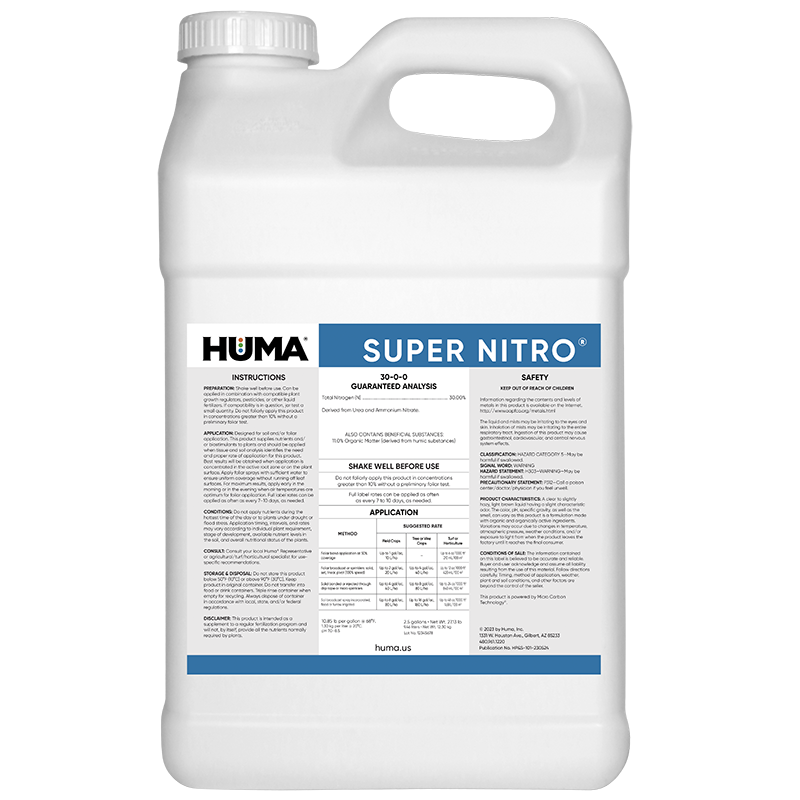
SUPER NITRO
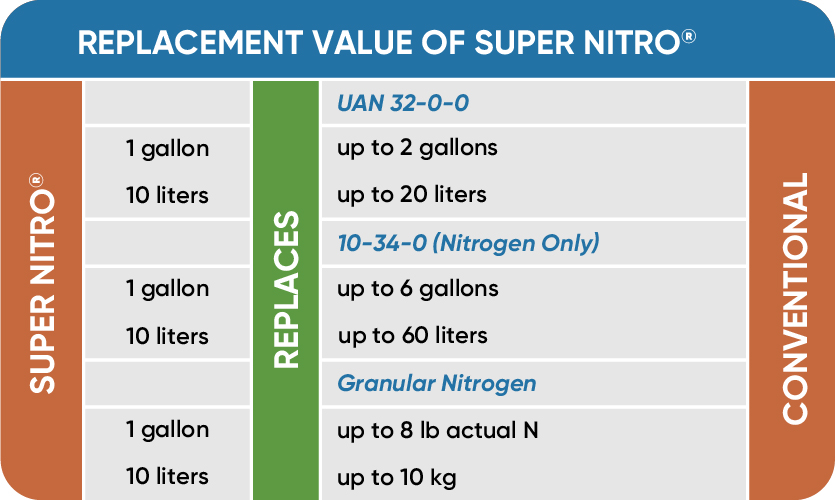
Benefits of Use:
- Resists nitrogen leaching and volatilization to remain water soluble and available to plant roots
- Provides quick crop response and can be applied just prior to actual crop need
- Moves with irrigation water to aid in proper placement
- Can be tank-mixed to improve availability of other nitrogen solutions
- Is non salt-forming
Deficiency Symptoms—When to Apply:
- Chlorosis, usually appearing on older leaves first
- Slow growth and stunted plants
- Lower protein, fewer leaves, and early maturity
- Reduced yield potential
FAQs
Related Case Studies

Huma® and Zia Pueblo Farm Corn Project
Background Many small-scale farms (1-2 acres each) are established in Zia Pueblo community near San Ysidro, New Mexico. Huma® Inc. was asked to establish an experimental farm in the tribal community that could demonstrate the usage of beneficial agricultural inputs producing high-yield crop and preserving the health of the soil. Huma® humic-based products stimulate plant

Huma® Program Increases Marketable Strawberry Yields 19%, With an ROI > $5,000/acre
Objective This field trial assessed the effects of an additional 8 foliar applications of Huma® products throughout the growing season on the yield of Monterey strawberries when compared with the grower’s standard crop nutrition program. Materials & Methods This trial was set up in a complete randomized-block design conducted during the growing season of April
Huma® Program Increases Strawberry Yields 13%, With an Increased Return of > $3,400/acre
Objective This field trial assessed the effects of an additional 4 foliar applications of Huma® products on the yield of Portola strawberries when compared with the grower’s standard crop nutrition program. Materials & Methods This trial was set up in a complete randomized-block design conducted during the growing season of July 18 through November 28
Related Blog Posts

This Week in Ag #2
Are we looking at a fertilizer shortage? Guess it depends on your definition. The availability of fertilizer isn’t a major concern in the US. It really wasn’t last year, either. As a good friend (who I consider to be among the best farmers in the country) told me last winter, “you can get it, it’s

The Year the Weeds Disappeared
A look back at 1996, when Roundup Ready soybeans changed weed control, accelerated no-till adoption, and transformed the way farmers thought about efficiency and crop production.

Crop Insurance Day: The Most Important Deadline in Farming
Today marks one of the most important deadlines in agriculture: Federal Crop Insurance enrollment. Used by more than 90% of commodity growers, this program provides a financial safety net that helps farmers manage risk in an increasingly volatile market. Here’s a closer look at how crop insurance works—and why it plays such a major role in planting decisions and the farm economy.
Related Products
BORON
Huma's BORON is carbon-complexed with Micro Carbon Technology®, ensures efficient and effective uptake of boron, which is required for cell...
38 SPECIAL
38 SPECIAL®, carbon-complexed with Micro Carbon Technology®, is designed for a wide range of uses and can be applied to...

BORO-PRO
Huma's BORO-PRO® is carbon-complexed with Micro Carbon Technology®, ensures efficient and effective uptake of boron, which is required for cell...