
FAQs
Related Videos
Huma Minute – What is Humic Acid with Cory Ritter
Huma Mid-West Regional Sales Manager Cory Ritter discusses the different types of humic acids and what they do for your plants.
Learn More
Huma Minute – Humate Application Rates with Cory Ritter
Huma Mid-West Regional Sales Manager Cory Ritter discusses humate application rates and why there is not a one-size fits all rate.
Learn More
Huma Minute – Humic Acid Testing Methods with Cory Ritter
Huma Mid-West Regional Sales Manager Cory Ritter discusses the differences in the various humic acid testing methods.
Learn More
Related Case Studies

Huma® Improves Alfalfa Soil Biology In the Southwest
Background Industrial agriculture can degrade soil quality for crops by altering the total living microbial biomass of soil. Many practices and beneficial ag products have been introduced to the market to improve soil quality. Some of these products are humic substance-based products. Objective The objective of this trial was to evaluate the efficacy of applying

Zap® Improves Soil Water-Holding Capacity and Soil Structure
Objective Huma® Zap® has been shown to improve crop yield and soil conditions. This report illustrates some of the ways Zap® improves soil characteristics such as water-holding capacity and structure. Materials & Methods In this study, two sets of soil in pots were saturated with either water or 3% Zap® solution. None of the pots
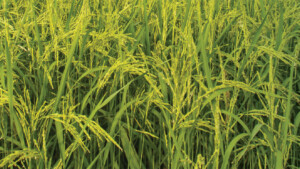
Huma® X-Tend® Compared with Agrotain® on Rice Production in Southern Missouri
Introduction Nitrogen loss through volatilization begins to occur immediately after application unless the urea is stabilized. Agrotain® has been the industry standard for urea stabilization. In 2011, at Shoffner Farm Research, a trial was established to compare Agrotain® and the Huma® product X-Tend® to increase nitrogen use efficiency and rice yield (using the CL 151




Related Blog Posts

This Week in Ag #79
Seeing is believing. And I’m convinced the recent WASDE reports on crop production aren’t lying. Over the weekend we took my son to college. Our scenic journey through farm country – beauty is in the eye of the beholder, after all – took us deep into the Corn Belt. The projected 2024 corn yield in the Prairie State

Corn Records Without Rewards
Corn Records Without Rewards U.S. corn growers are smashing records in acreage and yield, but instead of golden returns, many are facing low prices and soaring input costs. Record bushels don’t always mean record profits.

This Week in Ag #32
Everyone remembers where they were on September 11, 2001. One of my most vivid memories was the week after. I was farming with my dad at the time. He had just started cutting soybeans in a field owned by my wife’s family, situated next to Interstate 74 in western Illinois. I was driving to the
Related Products
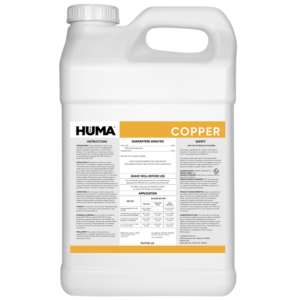
COPPER
Huma's COPPER carbon-complexed with Micro Carbon Technology®, ensures efficient and effective uptake of copper, which is a micronutrient involved in...

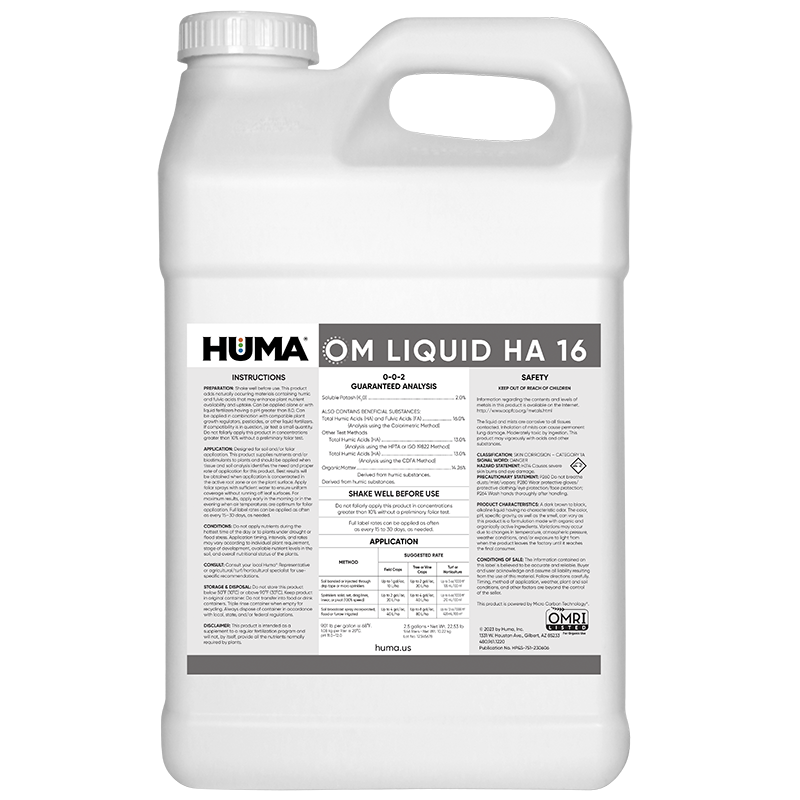
OM LIQUID HA 16
Huma's OM LIQUID HA 16 is OMRI-Listed® for organic farming and carbon-complexed with Micro Carbon Technology®.
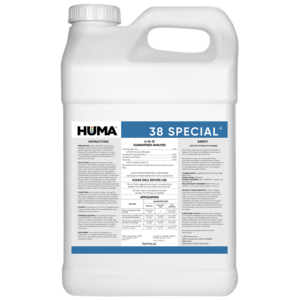
38 SPECIAL
38 SPECIAL®, carbon-complexed with Micro Carbon Technology®, is designed for a wide range of uses and can be applied to...