
ACTIVOL
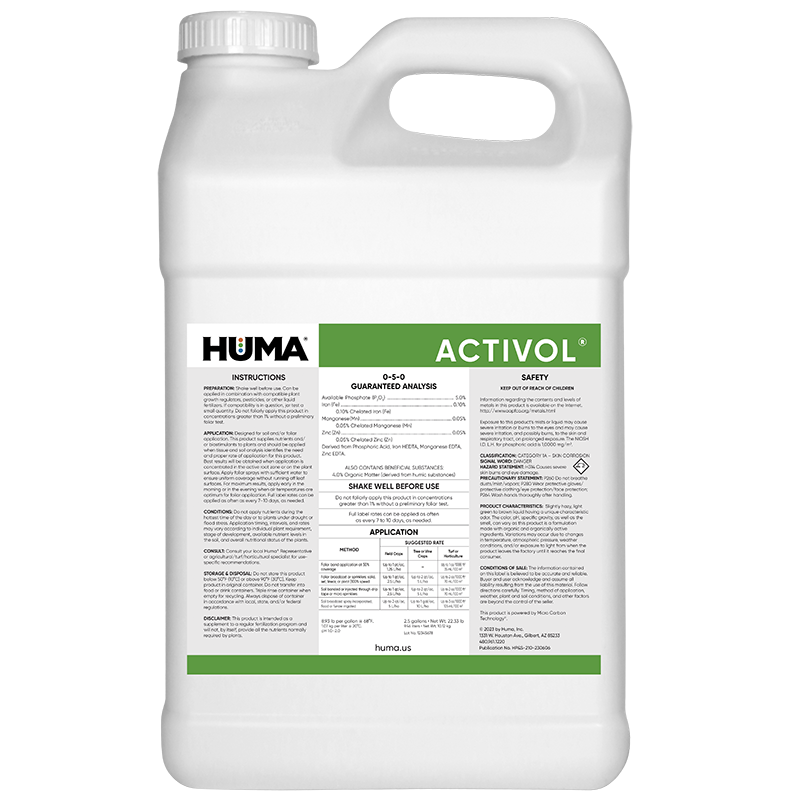
Benefits of Use:
- Enhances natural plant ability to tolerate environmental stresses
- Enhances natural activity to aid plant vigor and strength
- Organically complexes foliar nutrients
- Will tank mix with sulfur-copper fungicidal sprays and other chemical inputs
- Minimizes leaf burn or phytotoxicity associated with foliar nutrient sprays
- Usually eliminates the need for wetting agents
Deficiency Symptoms—When to Apply:
- Plants weakened due to stress/disease
- Nutrients not being absorbed by plant
- Yellowing of leaves
- Early decay of plants
FAQs
Related Case Studies

PROUD 3 Fungicide Replacement
Background Huma® fungicide programs with Micro Carbon Technology® provide growers with effective options that can replace synthetic fungicides with a more sustainable and environmentally friendly approach, while providing excellent control and improving crop health, yield and quality. Objective The focus of this study was to assess if 2 of Huma’s products CROP-GARD® (Growth Manager) and
Huma Pro® Mix, pH-Stable Liquid Humic Acid Product, Increases Corn Yield
Conducted by: Bruce Kirksey, PhD, Agricenter International, Memphis, Tenn. Huma® Product: Huma Pro® Mix Background Scientific research shows that humic and fulvic acids are biostimulants—enhancing nutrient availability and uptake, improving plant root growth and mass, and impacting both crop yield and quality. Humic acid products are not all the same. They are marketed in solid

Huma® Products on Sugar Cane Result in 14x Less P and 32x Less K Required, Plus Increased Yield and Net Return
Background Humates and plant growth stimulators can positively influence a crop such as sugar cane to produce a higher yield. Objective The focus of this study was to observe how fall application of Huma® products Fertil Soil®, a source of soil nutrients and humates, and Breakout®, which stimulates growth, would affect sugar cane production. The



Related Blog Posts

This Week in Ag #5
It’s Commodity Classic week. This is one of the ag industry’s most important shows, and among my favorite times of the year. I’ll be in Orlando for the show, as will Lyndon Smith, Barrett Smith and Michael Gardner. #Classic23 is expected to draw around 5,000 farmers. But what makes this show exceptional is not the number

Video: Super Phos + Calcium Mixing Stability Test
English and Spanish subtitles are available. In this video, we demonstrate the unique compatibility of our highly concentrated Super Phos® 0-50-0 product when mixed with calcium. In traditional fertilizers, when phosphorus and calcium are mixed they can precipitate and fall out of solution. The resulting calcium phosphate can clog drip emitters and damage sprayers. Our

This Week in Ag #24
Yellow airplanes were buzzing over Iowa cornfields like bumblebees over zinnias during my drive to Iowa last week. There was a time when Midwest farmers would grind their teeth at the sight of these crop dusters. It usually meant a neighbor was treating a pest problem with a costly, unplanned aerial application. And that pest problem
Related Products
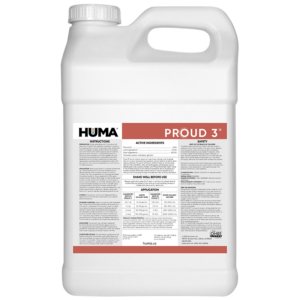
PROUD 3
PROUD 3® is an OMRI-Listed® crop protection product. It is a broad-spectrum insecticide, miticide, and fungicide with on-contact and some...
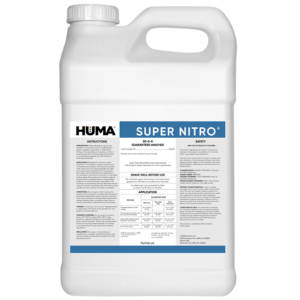
SUPER NITRO
SUPER NITRO®, carbon-complexed with Micro Carbon Technology®, is a nitrogen source that can be foliar-applied, according to label directions, without...
44 MAG
Huma's 44 MAG®, is carbon-complexed with Micro Carbon Technology®, ensures maximum assimilation of magnesium, which is the essential part of...