OM COBALT
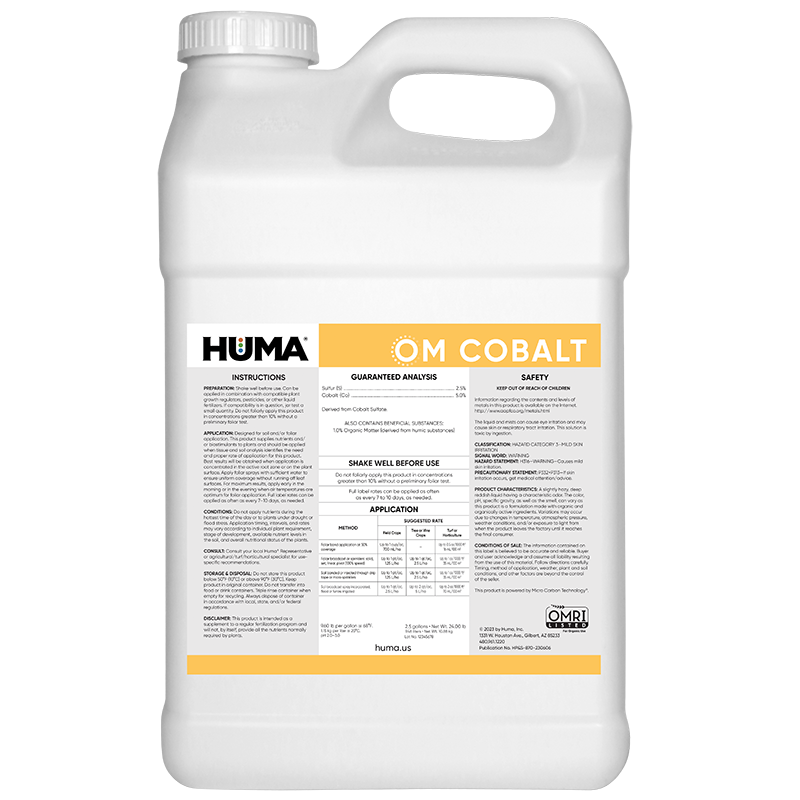
Benefits of Use:
- Effectively treats cobalt deficiency symptoms
- Essential element for nodulation or nitrogen fixation in legumes
- Buffers excessive ethylene concentrations in plant tissue, preventing the production of abscisic acid and premature fruit drop
- May assist in overcoming stress caused by over-application of herbicides and pesticides
Deficiency Symptoms-When to Apply:
- Plant/soil is cobalt deficient
- Plant stress from weather or chemicals
- Limited nodule nitrogen-fixing bacteria in legumes
- Premature fruit drop of crop
FAQs
Related Case Studies
X-Tend® B With Micro Carbon Technology® Improves Barley Yield and Net Income: Year 2
Objective Determine the effect on barley yield of adding Huma® X-Tend® B to split applications of different rates of nitrogen fertilizer. Background Enhanced Efficiency Fertilizer (EEF) additives improve crop production. Humates have been shown to improve crop yield. The Huma® EEF additive X-Tend® B is a concentrated Micro Carbon Technology® product with high levels of
Huma® OM Soil Activator Increases Cotton Yield 20%, With 141% ROI
Background In an earlier in-house research project, it was observed that OM Soil Activator (formerly known as Fertilgold® Soil) caused plants to grow better and improve soil characteristics. The product as then released for field trial status. Objective The focus of this study was to observe if OM Soil Activator could improve cotton yield under

Huma® OM Soil Activator Increases Corn Yield 19%, With 240% ROI
Background In an earlier in-house research project, it was observed that OM Soil Activator (formerly known as Fertilgold® Soil) caused plants to grow better and improve soil characteristics. The product was then released for field trial status. Objective The focus of this study was to observe if Huma® OM Soil Activator, an OMRI-Listed product for



Related Blog Posts

This Week in Ag #37
One of the greatest inventions in history is the combine. The concept of threshing and separating grain in one operation revolutionized our food system, as well as redefined our labor force. Consider that in the mid-1800s, 90% of the US workforce was involved in some aspect of farming. Now it’s under 2%. To think my grandfather harvested corn by hand and threw the ears in a wagon! He used the pull-behind model in the 1940s to harvest small grains (that’s him, Fred Nichols, combining oats on our family farm). My mother still talks about dad wearing a Jesse James style mask while operating their first self-propelled combine without a cab.
This Week in Ag #77
Farmers waiting on a summer market rally must feel like teenagers waiting by the phone to be asked to the dance. Only their prospects are much dimmer. Capitalizing on summer rallies is how many farmers base their marketing plans. When you chart commodity prices throughout this century, highs typically spike during the summer months. That’s

Fall’s Favorite Flower
Mums are a signature sight of fall, filling porches, gardens and landscapes with vibrant blooms. But what makes these flowers thrive as the seasons change? Discover the science, history and growing habits behind fall’s favorite flower.
Related Products
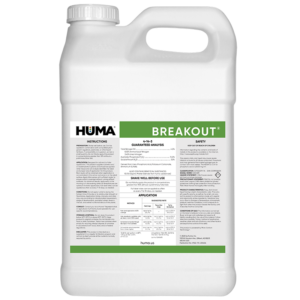
BREAKOUT
BREAKOUT®, carbon-complexed with Micro Carbon Technology®, is designed to feed the natural metabolic process within the plant for enhanced bud...
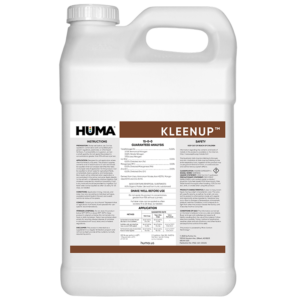
KLEENUP
KLEENUP™ is a nutrient and soil surfactant formulation with Micro Carbon Technology® that creates a favorable soil environment, improves aeration,...
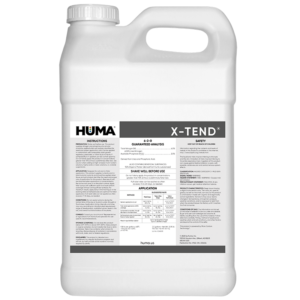
X-TEND
Huma's X-TEND® is an excellent source of Micro Carbon Technology®. It is formulated with organic acids and nutrients to improve...