
KLEENUP

Benefits of Use:
- Promotes breakdown of chemical and petroleum contaminants in soil
- Supports detoxification of plants from chemical residues
- Stimulates healthy root growth
Treats the Following Problems—When to Apply:
- Chemical or toxic compound contamination
- Residue from pesticides or herbicides
- Petroleum-based spills or leaks (oil, hydraulic fluid, etc.)
FAQs
Related Case Studies

Humic Products Increase Iowa Corn Yield
Background Scientific research shows humic and fulvic acids can have a biostimulant effect on plant root growth and mass, nutrient availability and uptake, and crop yield and quality. Objective The objective of this study was to compare and contrast the immediate effects that three types of humic products from Huma®, Inc. have on corn yield.

Recoverable Sugar of Sugar Beets Yield Increased Using Huma® Program – Year 1
Objective This field trial was conducted to observe effectiveness of additional preharvest applications of Huma® products on recoverable sugar of sugar beets and return on investment. Materials & Methods This trial on sugar beet (Beta vulgais vulg. altissima) was conducted in Homedale, Idaho. The crop was seeded on May 8 and was harvested on October

PROUD 4 Demonstrates Broad-Spectrum Control of Plant Diseases
[fusion_builder_container type="flex" hundred_percent="no" hundred_percent_height="no" min_height_medium="" min_height_small="" min_height="" hundred_percent_height_scroll="no" align_content="stretch" flex_align_items="flex-start" flex_justify_content="flex-start" flex_wrap_medium="" flex_wrap_small="" flex_wrap="wrap" flex_column_spacing="" hundred_percent_height_center_content="yes" equal_height_columns="no" container_tag="div" menu_anchor="" hide_on_mobile="small-visibility,medium-visibility,large-visibility" status="published" publish_date="" class="" id="" html_attributes="" spacing_medium="" margin_top_medium="" margin_bottom_medium="" spacing_small="" margin_top_small="" margin_bottom_small="" margin_top="" margin_bottom="" padding_dimensions_medium="" padding_top_medium="" padding_right_medium="" padding_bottom_medium="" padding_left_medium="" padding_dimensions_small="" padding_top_small="" padding_right_small="" padding_bottom_small="" padding_left_small="" padding_top="" padding_right="" padding_bottom="" padding_left="" link_hover_color="" link_color="" border_sizes="" border_sizes_top="" border_sizes_right="" border_sizes_bottom="" border_sizes_left="" border_color=""





Related Blog Posts

This Week in Ag #84
Grandpa Fred never saw me. Despite the fact I was at his house nearly every day for over two decades. That’s because he was blind. From a farm accident. An anhydrous hose burst and shot the gas in his eyes.

Field Trial: X-Tend® Increases Glyphosate Effectiveness
Objective Over the years, some weeds have developed resistance to common herbicides such as glyphosate. To overcome this hurdle, growers may bump up the rates or add other herbicides or products with different mechanisms/modes of action into the tank mix. Such approaches have had mixed results over the long run and have increased the cost

This Week in Ag #10
Football may be a game of inches, but farming is a business of fractional inches. Take planting. Seed placement is paramount to the success of a crop. Farmers spend lots of time calculating the optimum rate and depth to plant their seeds based on genetics, soil type, soil conditions, weather, management practices and the desired output
Related Products

COMOL
Huma's COMOL™, carbon-complexed with Micro Carbon Technology®, ensures efficient nutrient uptake and translocation of phosphorus, cobalt, and molybdenum, which indirectly...
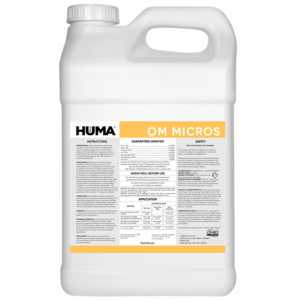
OM MICROS
Carbon-complexed with Micro Carbon Technology®, OMRI-Listed® Huma's OM MICROS is highly stable liquid organic micronutrient formulation that is balanced for...
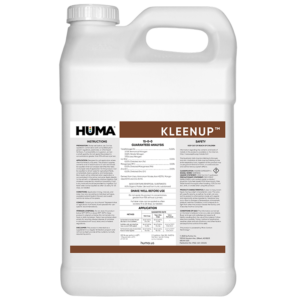
KLEENUP
KLEENUP™ is a nutrient and soil surfactant formulation with Micro Carbon Technology® that creates a favorable soil environment, improves aeration,...