
OM 2-6 mm
Benefits of Use:
- Uniform granular size promotes even coverage/distribution of humic substances for sustainable carbon benefit
- Long-term soil organic-matter building
- Increased water penetration
- Increased flocculation of clays
- Promotes conversion of fertilizer into plant-available food
- Increases soil nutrient mineralization
- Sustainable soil microbial activation
FAQs
The Natural Way to Build Fertile, Productive Soils
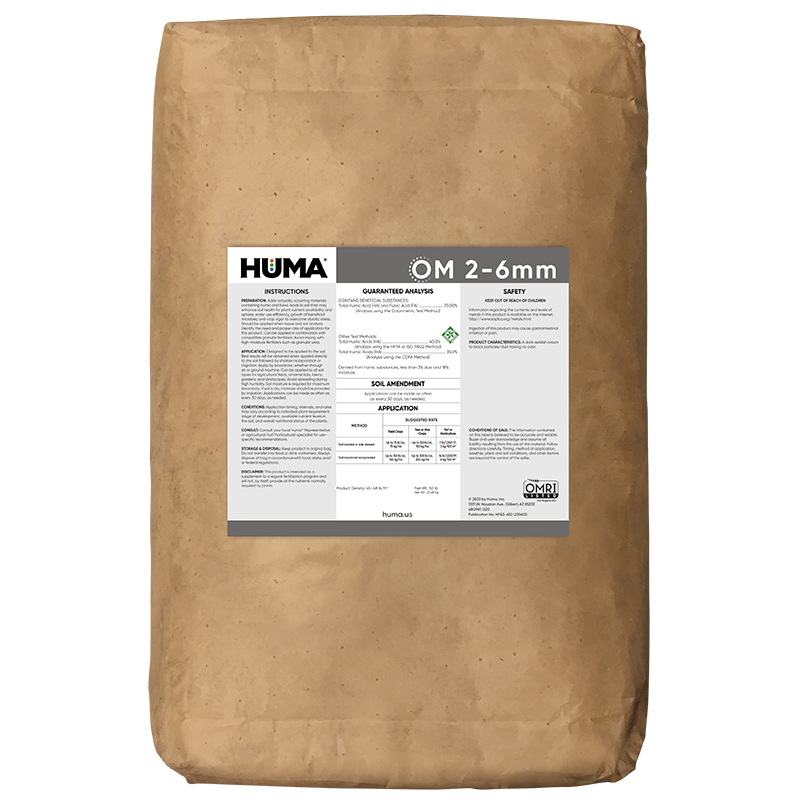
Huma’s OM 2–6 mm is a natural humic product processed from naturally occurring, oxidized humic lignite. It provides a concentrated source of humic substances and is a supplemental source of trace elements. Humic substances add organic matter to soils—which stimulates soil microbial life and soil fertility, enhances plant nutrient availability and uptake, improves root development and root mass and growth, and increases crop quality and yield.
OMRI-Listed® OM 2–6 mm is ground and screened to a uniform crumble (contains less than 3% dust) ideal for mixing with other dry inputs that are not hygroscopic. It can be applied to all soils—broadcast in fall, post-harvest, or early spring—either pre-plant or with seed. Incorporation is not required. It can be applied in bands, either with seed, fertilizer, or after planting.
Guaranteed Analysis
Contains beneficial substances:
Total Humic Acids (HA)………………………………….40.0%
(Analysis using the HPTA or ISO 19822 Method)
Other Test Methods:
Total Humic Acids (HA)…………………………………. 35.0%
(Analysis using the CDFA Method)
Total Humic Acid (HA) and Fulvic Acid (FA)……… 70.0%
(Analysis using the Colorimetric Test Method)
Derived from leonardite; less than 3% dust and 18% moisture.
PHYSICAL PROPERTIES
Form: Dry granule
Appearance: Dark reddish-brown-to-black particles/dust having no odor.
Product Density: 45–48 lb/ft3
Net Weight: 50 lb / 22.68 kg
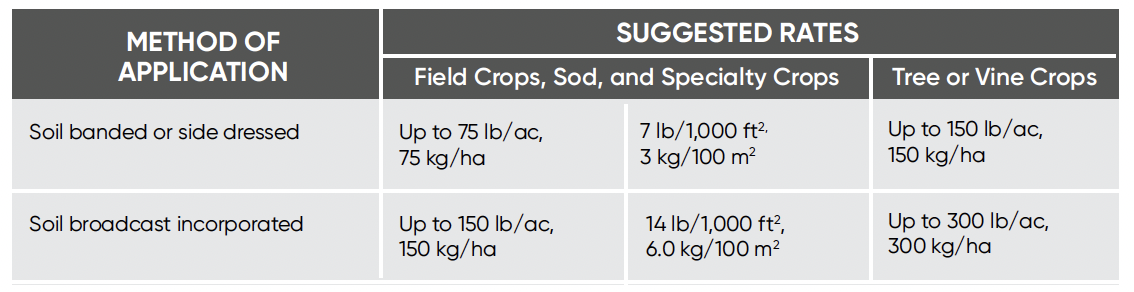
OM 2 6 mm Application Rates Chart
Related Videos
Huma Minute – What is Humic Acid with Cory Ritter
Huma Mid-West Regional Sales Manager Cory Ritter discusses the different types of humic acids and what they do for your plants.
Learn More
Huma Minute – Humate Application Rates with Cory Ritter
Huma Mid-West Regional Sales Manager Cory Ritter discusses humate application rates and why there is not a one-size fits all rate.
Learn More
Huma Minute – Humic Acid Testing Methods with Cory Ritter
Huma Mid-West Regional Sales Manager Cory Ritter discusses the differences in the various humic acid testing methods.
Learn More
Related Case Studies
Huma® Improves Alfalfa Quality In the Southwest
Background All Huma® Inc. products are based on extractions of humic substances and other materials that can stimulate plant growth and improve crop quality. Objective The objective of this field trial was to evaluate the efficacy of applying Huma® products, specifically Encapsalt®, Super Phos®, Max Pak®, 44 Mag,® Vitol®, Super Nitro®, Breakout®, Fertil Soil®, Iro-Max®,

X-Tend® B With Micro Carbon Technology® Improves Barley Yield and Net Income: Year 3
Background Enhanced Efficiency Fertilizer (EEF) additives can improve crop production. Humates have been shown to improve crop yield. The Huma® EEF additive X-Tend® B is a concentrated Micro Carbon Technology® product derived from humates with high levels of organic acids and nutrients that is formulated to be blended in liquid fertilizers or to be impregnated

X-TEND Increases Soybean Yields
Background Huma’s X-TEND® has been applied to dry fertilizer and liquid blends to improve fertilizer effectiveness and to decrease nutrient losses. X-TEND may also be utilized to treat the soil and the plants directly to improve nutrient use efficiency, and act as a biostimulant to improve plant growth, and ultimately look at an increase in



Related Blog Posts

EARTH DAY 2020: Celebrating 50 Years
Fifty years ago today, on April 22, 1970, 20 million Americans took to the streets to protest environmental destruction and to celebrate the wonders of Planet Earth. The basic message was that we had to find new ways to live our lives, raise our food, and conduct our businesses that were environmentally friendly and sustainable—that

Mighty Micronutrients – Q&A with CMO Fred Nichols
Fred Nichols, Chief Sales and Marketing Officer at Huma®, shared his perspective in a recent article on micronutrient technology, published in CropLife. In the article, Fred discusses how advancements in micronutrient formulations are meeting increased demand, improving nutrient availability, and enhancing crop performance. Below are the key topics along with Fred’s insights.

This Week In Ag #100
Farmers grow food. That’s a simple and straight-forward premise. Or is it? We continue to shake our heads at survey results that reveal many consumers think their food comes from the grocery store. But what about the industry itself? If we’re being totally honest, we should ask: are we largely focused on growing food, or producing commodities?
Related Products
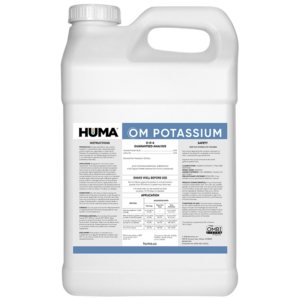
OM POTASSIUM
Carbon-complexed with Micro Carbon Technology®, OMRI-Listed® OM POTASSIUM is an organic potassium product that effectively maximizes potassium uptake by plants....
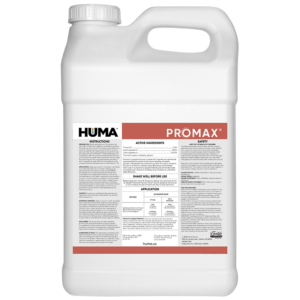
PROMAX
PROMAX® is an OMRI-Listed®, EPA-exempt crop protection product. It is a protective and curative pesticide recommended for control of plant...
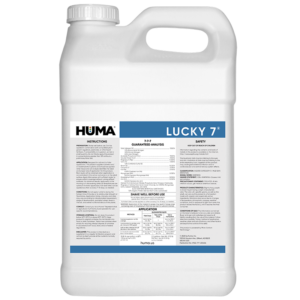
LUCKY 7
LUCKY 7® is a broad-spectrum liquid nutrient formulation carbon-complexed with Micro Carbon Technology®. It's a complete nutrient package containing most macro-...