
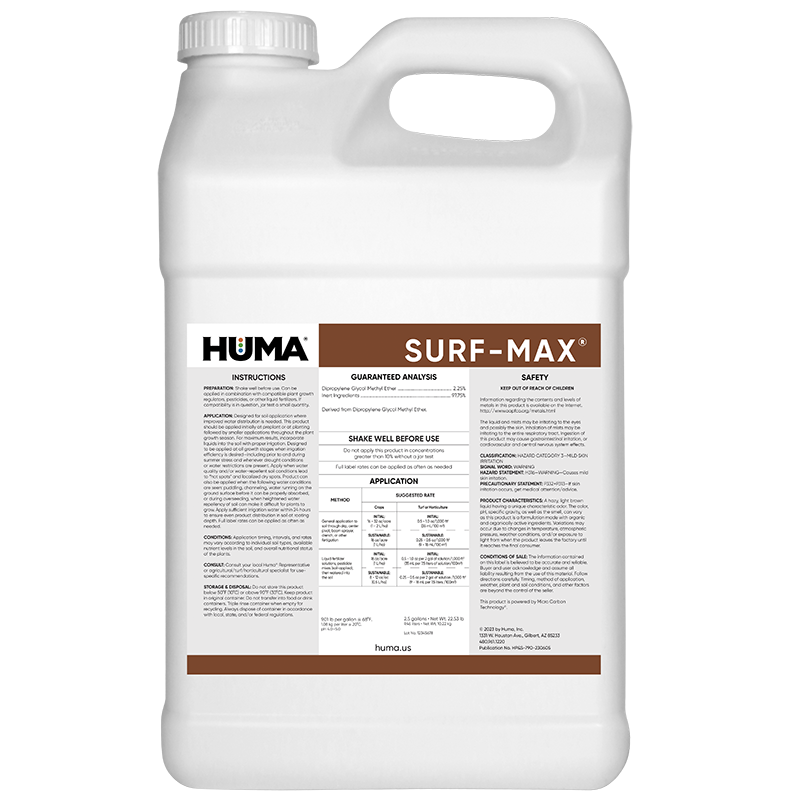
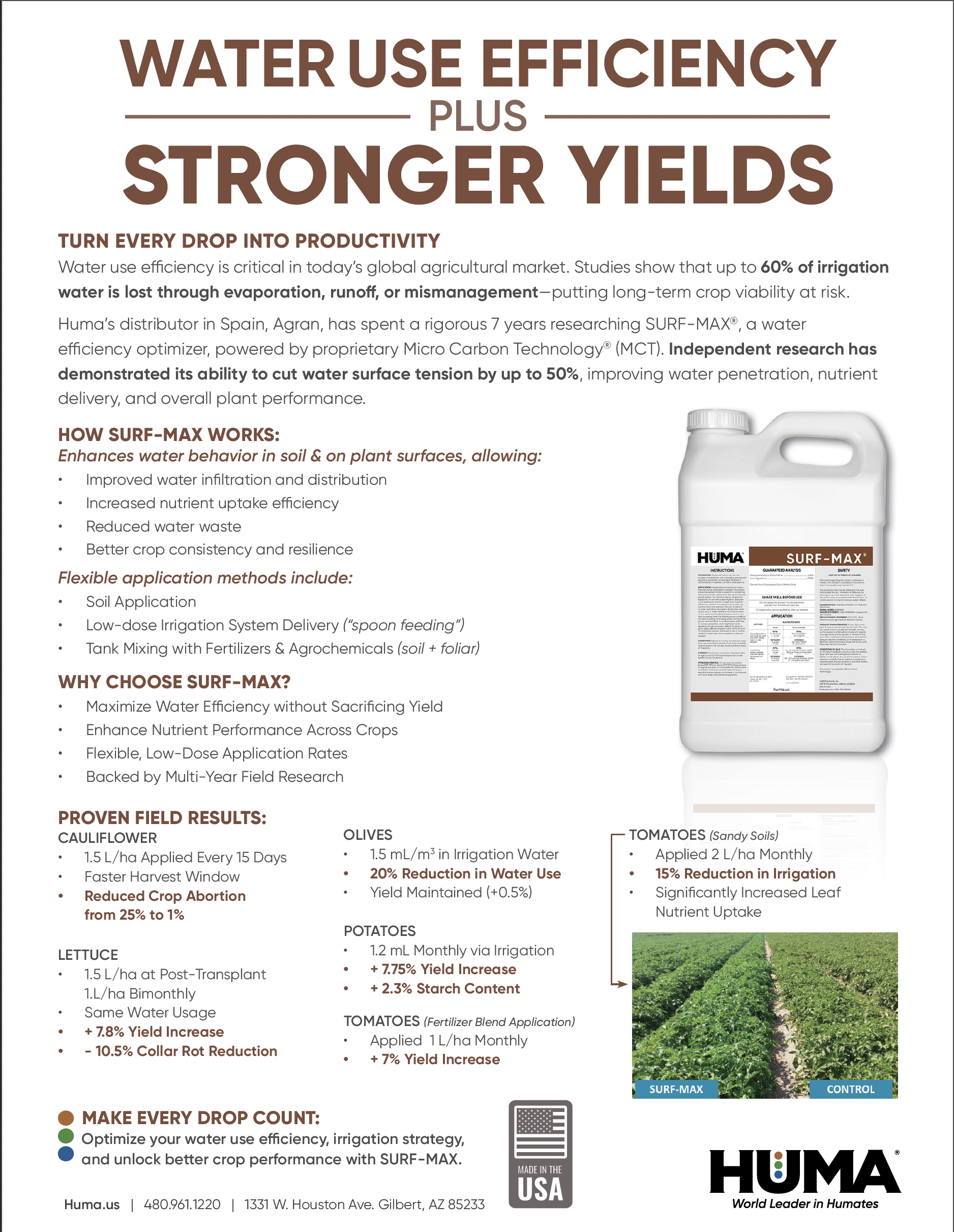
SURF-MAX
Benefits of Use:
- Use up to 25% less irrigation water while attaining better water movement through the soil, more effectively providing moisture and delivering water-carried nutrients.
- Due to the complexed Micro Carbon Technology®, the benefits of carbon are carried directly through the soil to the root zone, enabling plants to more effectively absorb nutrients.
- Surf-Max® is fully biodegradable, non-hazardous, non-phytotoxic, and highly compatible with existing chemistries.
- Great for growers of strawberries, tomatoes, peppers, melons, cotton, potatoes, fruit trees, olives, lettuce, carrots, blueberries, etc.
Deficiency Symptoms—When to Apply:
- Wherever drought conditions or water restrictions are present; when water conservation is important
- When planting in light-sandy, sandy-loam, or hydrophobic soils
FAQs
Related Videos
SURF-MAX – Hydration Bench test
Agronomist Barrett Smith demonstrates how SURF-MAX®, the Huma® water dispersant, can help water rapidly penetrate even compressed discs of coir (coconut) fiber.
Learn More
Soil Surfactant Surf-Max™ Demonstration A-3: Golf Course Hydration
Dr. Johann Buck demonstrates the effectiveness of SURF-MAX™, the Huma Gro® Turf soil surfactant on golf course turf.
Learn More
Soil Surfactant Surf-Max™ Demonstration A-2: Hydration Bench Test
Dr. Johann Buck demonstrates how SURF-MAX™, the Huma Gro® Turf soil surfactant can help water rapidly penetrate even compressed discs of coir (coconut) fiber.
Learn More
Related Case Studies
Huma® Zap® Increases Cotton Lint Yield by 125.8 lb/A, With 67% ROI
Background Application of Zap® to soils in combination with other Huma® fertilizers at various locations previously resulted in crops with improved plant growth and higher yields. Applying Zap® with grower standard products or as a single product application to soil and plants could also impact results. Objective The focus of this study was to observe
Fertil Humus® Soil Amendment Trial for Water Infiltration
Objective This field trial assessed the benefits of moisture infiltration enhancement that may be provided by the product Fertil Humus® at selected rates and timings. Materials & Methods The plot site selected for this trial was located in the southern portion of the Columbia Basin in Washington State. The Russet Burbank potato field was pivot-irrigated
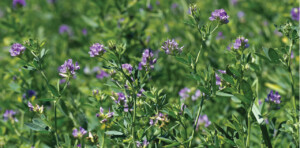
Huma® Improves Alfalfa Soil Biology In the Southwest
Background Industrial agriculture can degrade soil quality for crops by altering the total living microbial biomass of soil. Many practices and beneficial ag products have been introduced to the market to improve soil quality. Some of these products are humic substance-based products. Objective The objective of this trial was to evaluate the efficacy of applying



Related Blog Posts

Every Drop Counts: How Surf-Max® Greatly Reduces Water Usage
Water scarcity is THE issue driving western agriculture. In California, the world’s food basket relies heavily on irrigation to annually grow 9.6 million acres of fruits, nuts and vegetables. As complex water allocations continue to pose significant crop production challenges, growers must make every drop count.
Related Products
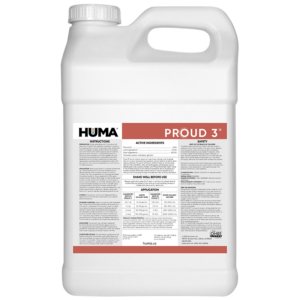
PROUD 3
PROUD 3® is an OMRI-Listed® crop protection product. It is a broad-spectrum insecticide, miticide, and fungicide with on-contact and some...
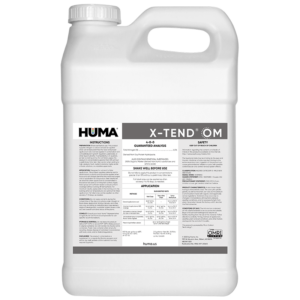
X-TEND OM
OMRI-Listed® X-TEND® OM is an excellent organic source of Micro Carbon Technology®, formulated with organic acids and nutrients to improve...
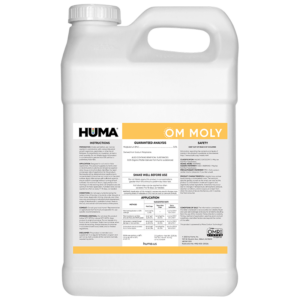
OM MOLY
Carbon-complexed with Micro Carbon Technology®, OMRI-Listed® OM MOLY is an organic molybdenum nutrient derived from sodium molybdate (Mo 5.0%, with...