
This Week In Ag #108
There’s an old saying in farming: “Plant in dust, your bins will bust”. The premise is that dry soils will encourage faster, deeper root growth early in the season, which will lead to more robust root systems and stronger plants throughout the growing season. Conversely, crops planted in ideal moisture conditions may become lazy and their roots remain shallow, causing potential problems later in the season when summer heat and dry conditions often arise. If that old adage is true, then Midwest farmers would be looking at a bumper crop in 2025. Then again, there’s dry, then there’s very dry. That’s how growers from Illinois to Nebraska explained current soil conditions to me during my recent visit to the Midwest. The lack of snow and rain has left many Midwestern fields absent of adequate soil moisture. So what defines “adequate”, in terms of soil conditions ready for uniform germination? Usually about 50% available water capacity. But despite weekend snows, most of the Corn Belt remains far from that. About half of Iowa is in a moderate drought. Most of Illinois is abnormally dry or in moderate drought. Further west, it’s even more grim. Virtually all of Nebraska, Minnesota, and South Dakota (which make up the top 5 corn-producing states, along with Iowa and Illinois) are experiencing significant drought conditions. Keep in mind that different crops require different moisture levels to germinate. Corn seeds need about 30% of their weight in moisture to germinate, while soybeans require 50%. Then there are other factors to consider. Farmers using cover crops may want to opt for early termination via chemical control, to preserve soil moisture, while leaving a mulch to reduce evaporation. And for those considering more no-till, this would seem like the season to do so.
In the South, #Plant25 is underway in many areas. What they are planting, however, is an about-face from what many thought possible just a few months ago. A February market rally has made corn a more attractive option. My seed salesmen friends are projecting corn acres to increase around 25% in parts of the Delta, after similar declines last season. Corn and rice appear to show more favorable economics than soybeans and cotton. In the Midwest, aided by friendlier crop insurance policies, better economics vs. soybeans, and an uncontrollable desire to watch it pop up in rows, we could see a greater shift to corn acres. It’s easier to make a shift to corn than vice versa. When you apply anhydrous ammonia in the fall, you’re basically committing to corn next spring. But if you leave the ground untouched, and even if you apply potash, you have greater options. Modern genetics and equipment make it easier to break from conventional rotations, too, provided the economic incentives are there. I see US corn acres upwards of 94 million and wouldn’t be surprised to see it reach 95 million.

Related Posts

Huma Gro®: Practically Perfect in Every Way for Strawberries
Successful strawberry farming presents many unique challenges. As with every other type of crop, each farm will have its own challenges related to soil, soil tilth, soil pathogens, soil nutrient cycling, nutrient availability, plant vigor, irrigation needs, etc. Combined with those challenges are strawberry farming cultural practices related to continuous cropping and soil fumigation—with the

Celebrating 40 Years
Bio Huma Netics, Inc. (BHN), founded in 1973, is celebrating 40 years of business with a special “thank you” offer for our customers. BHN will be giving 14% discount off of customer’s normal final cost on all Sustainable Soil Fertility Products ordered for 4 months, with orders placed from September 1, 2013 to December 31,
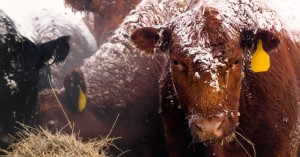
This Week in Ag #48
The popular TV series Yellowstone, along with the western lifestyle craze, has certainly romanticized ranching. It seems like everyone wants to be a rancher, until there’s real-world ranching stuff to do. This week’s bone-chilling Midwestern weather brings back memories. Notice I didn’t say fond memories. When you have livestock, they require care every day. Utility tractors