
MicroPlex® BP
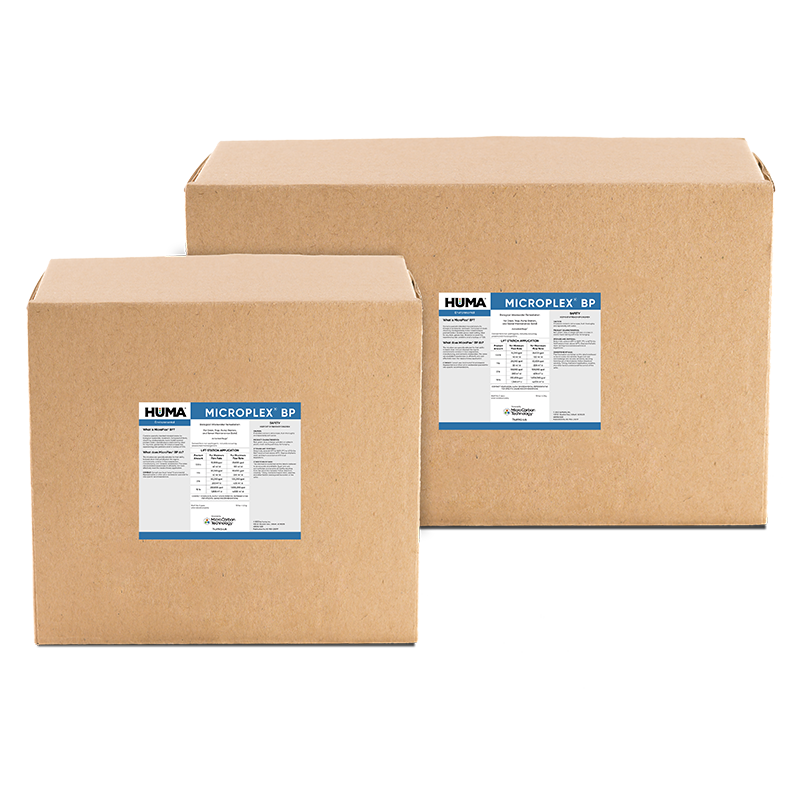
Applications:
- MicroPlex® BP cakes are ideal for installation in any drain, grease trap, lift station, or sewer line experiencing odor problems and/or the buildup of FOG.
- MicroPlex® BP cakes are designed for easy mooring and retrieval via line or rope in such systems. No mechanical or electrical equipment or pumps are needed.
FAQs
Related Products
Phyto-Max
Huma® Phyto-Max™ is a nutrient complex that creates a healthy green phytoplankton bloom in open water systems. Phyto-Max™ uses a...
Carbon-CH™
The Solution for Denitrification and Phosphorus Removal In Wastewater and Contaminated Soils Huma® Carbon-CH™ complexed with Micro Carbon Technology® is an activated...
MicroPlex® AD
Huma® MicroPlex® AD is a unique, balanced blend of micronutrients, microbes, microbial growth enhancers, minerals, vitamins,and neutralizing agents for use in stimulating...
Related Case Studies

Bio Energizer® Reduces Costs and Turbidity in Paperboard Lagoons at Kentucky Papermill Wastewater Facility
Problem A paper mill wastewater facility was treating 940 tons of paper bags, recycled linerboard, and corrugating medium, daily. The mill was interested in improving wastewater operating efficiency and lowering operating expenses over their standard polymer usage. The plant was experiencing filamentous bacteria, solids, and bulking issues in the final clarifier. It was discharging 4,000
Super Phos® Lowers Papermill Operating Costs in China
Problem The existing wastewater treatment system uses 600 kg/day of diammonium phosphate (DAP) to provide the needed phosphorus concentration to maintain a healthy microbial population to treat wastewater. These microorganisms break down the organic matter being discharged from the paper processing facility. Without the correct concentration of available phosphorus, the microorganisms are unable to grow
Bio Energizer® Reduces Sludge 45% In One Year, Saves Municipal Plant $6 M In Dredging Costs
Summary In this study, a one-year bioremediation plan featuring Bio Energizer® was implemented for a municipal wastewater treatment facility with 2 primary lagoons in which sludge depths had reached 5–7 feet. The lagoons were at risk of upset and wastewater processing capacity was reduced. Sludge levels were measured at baseline and quarterly. Sludge depth was
Related Blog Posts

Heather Jennings Is Featured Guest on “Better Together” Podcast
Paper360, a bimonthly magazine for the pulp & paper industry, produces a podcast called “Better Together: Conversations With Innovative Leaders.” At a recent podcast recorded live at SuperCorrExpo in Orlando, Fla., Heather Jennings, Director of Probiotic Solutions and Host of our own Water Break Podcast, was interviewed on the topic of diversity and innovation for

BHN Acquires Warehouse in Tempe
By Lyndon Smith, President and CEOBio Huma Netics, Inc. I’m excited to share that Bio Huma Netics, Inc. (BHN) has acquired an additional building in Arizona. It’s a significant milestone for us that not only testifies to the continual progress we’re making as a company but will also serve as a building block for future

Healthy Bacteria Are Vital to Wastewater Treatment
Bacteria break down organic material in wastewater and form the floc that settles and separates solids from liquids. Controlling F/M ratio–a vital component to creating a favorable environment for wastewater bacteria–can be accomplished through the use of bioremedial products.