
MicroPlex® AD
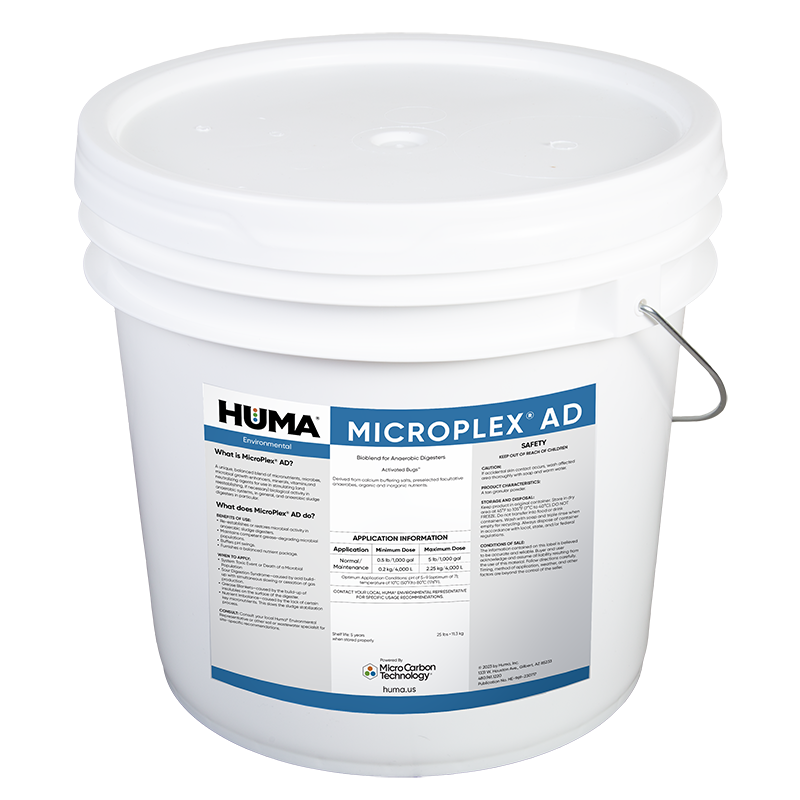
Benefits of Use:
- Re-establishes or restores microbial activity in anaerobic sludge digesters
- Maintains competent grease-degrading microbial populations
- Buffers pH swings
- Furnishes a balanced nutrient package
When to Apply:
- System Toxic Event or Death of a Microbial Population
- Sour Digestion Syndrome—caused by acid build-up with simultaneous slowing or cessation of gas production.
- Grease Blankets—caused by the build-up of insolubles on the surface of the digester.
- Nutrient Imbalance—caused by the lack of certain key micronutrients. This slows the sludge stabilization process.
FAQs
Related Case Studies

Bio Energizer® Reduces Sludge at Small Municipal Facility
Problem A small town in Utah (pop. 1,800) had a municipal wastewater system with a flow rate of 192,000 gallons per day. The system included a series of four lagoons that tapered to a depth of 6 feet, although at this time only Ponds 1 and 2 were being evaluated for treatment as they were
Bio Energizer® Reduces Costs and Turbidity in Paperboard Lagoons at Kentucky Papermill Wastewater Facility
Problem A paper mill wastewater facility was treating 940 tons of paper bags, recycled linerboard, and corrugating medium, daily. The mill was interested in improving wastewater operating efficiency and lowering operating expenses over their standard polymer usage. The plant was experiencing filamentous bacteria, solids, and bulking issues in the final clarifier. It was discharging 4,000
Super Phos® Lowers Papermill Operating Costs in China
Problem The existing wastewater treatment system uses 600 kg/day of diammonium phosphate (DAP) to provide the needed phosphorus concentration to maintain a healthy microbial population to treat wastewater. These microorganisms break down the organic matter being discharged from the paper processing facility. Without the correct concentration of available phosphorus, the microorganisms are unable to grow
Related Blog Posts

The Water Break Podcast Hits 3,000 Downloads
Back in May of 2020, we started talking about doing a water-and-wastewater-focused podcast that Heather Jennings would host. Heather had never done anything like hosting a podcast, and she wasn’t sure that she should. “Do you think anyone would listen?” she asked. We did, and we started mapping out the campaign. Heather insisted that the

Up to 85% Solids Destruction Achieved Using BIO ENERGIZER®
By Heather Jennings, PE The wastewater treatment facility operators at a city in Missouri wanted better digester performance. They needed a better settling sludge and a higher volume of decants, as well as more room to waste sludge within their existing digesters. The options to dispose of the digested sludge were becoming more and more
Get the “P” Out of There!
By Heather Jennings, PE Phosphorus is one of the most abundant elements on earth. It’s essential for adenosine triphosphate (ATP), the energy carrier life is built on. But in excess in our lakes and ponds, we see large algal growths occurring. Many times, these algal blooms suffocate the surrounding aquatic life and or produce toxins
Related Products
FULVI PRO (HE)
FULVI PRO®, complexed with Micro Carbon Technology® (MCT), is an activated liquid fulvic acid carbon source derived from a highly...
MicroPlex® C
Huma® MicroPlex® C is a formulation of aerobic and facultative bacteria, specifically chosen for their ability to rapidly degrade difficult to...
Bio Energizer
Huma® Bio Energizer® is a formulation of complexing agents, organic acids, natural biological stimulants, buffers, nutrients, and energy systems that balance...