
FAQs
Related Videos
Huma Minute – What is Humic Acid with Cory Ritter
Huma Mid-West Regional Sales Manager Cory Ritter discusses the different types of humic acids and what they do for your plants.
Learn More
Huma Minute – Humate Application Rates with Cory Ritter
Huma Mid-West Regional Sales Manager Cory Ritter discusses humate application rates and why there is not a one-size fits all rate.
Learn More
Huma Minute – Humic Acid Testing Methods with Cory Ritter
Huma Mid-West Regional Sales Manager Cory Ritter discusses the differences in the various humic acid testing methods.
Learn More
Related Case Studies

Huma® Program Increases Peanut Yield Under Severe Conditions
Objective This field trial was conducted in order to compare peanut crop yields and return on investment (ROI) obtained when Huma® products were applied in various combinations in comparison with a grower standard program. Materials & Methods This trial on peanut (Arachis hypogaea, Var. GA-12Y) was conducted in Memphis, Tenn., in a randomized complete block

Zap® Improves Soil Water-Holding Capacity and Soil Structure
Objective Huma® Zap® has been shown to improve crop yield and soil conditions. This report illustrates some of the ways Zap® improves soil characteristics such as water-holding capacity and structure. Materials & Methods In this study, two sets of soil in pots were saturated with either water or 3% Zap® solution. None of the pots
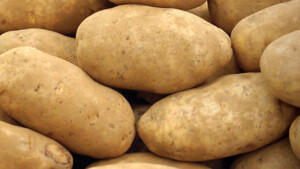
Fertil Humus® Soil Amendment Trial for Water Infiltration
Objective This field trial assessed the benefits of moisture infiltration enhancement that may be provided by the product Fertil Humus® at selected rates and timings. Materials & Methods The plot site selected for this trial was located in the southern portion of the Columbia Basin in Washington State. The Russet Burbank potato field was pivot-irrigated





Related Blog Posts

Crop Insurance Day: The Most Important Deadline in Farming
Today marks one of the most important deadlines in agriculture: Federal Crop Insurance enrollment. Used by more than 90% of commodity growers, this program provides a financial safety net that helps farmers manage risk in an increasingly volatile market. Here’s a closer look at how crop insurance works—and why it plays such a major role in planting decisions and the farm economy.

This Week In Ag #89
Scary season is upon us. This week our doorsteps will be invaded by legions of mini goblins. Their biggest fear is receiving candy corn in their baskets. But what about farmers? What’s scaring them this Halloween?

Strawberry Sweet, Corn Still Sleeping
Strawberry Sweet, Corn Still Sleeping: In celebration of National Strawberry Month, I visited Catesa Farms, where flavor—not shelf life—is the top priority. Meanwhile, back on my own farm, the corn is taking its sweet time to emerge, reminding me that in agriculture, timing is all about temperature—not the calendar.
Related Products
BORON
Huma's BORON is carbon-complexed with Micro Carbon Technology®, ensures efficient and effective uptake of boron, which is required for cell...
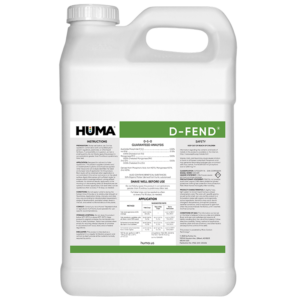
D-FEND
D-FEND®, carbon-complexed with Micro Carbon Technology®, is a foliar formulation of nutrients and refined plant oils that facilitate nutrient uptake...
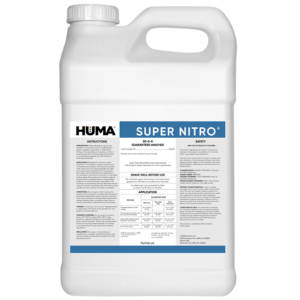
SUPER NITRO
SUPER NITRO®, carbon-complexed with Micro Carbon Technology®, is a nitrogen source that can be foliar-applied, according to label directions, without...