
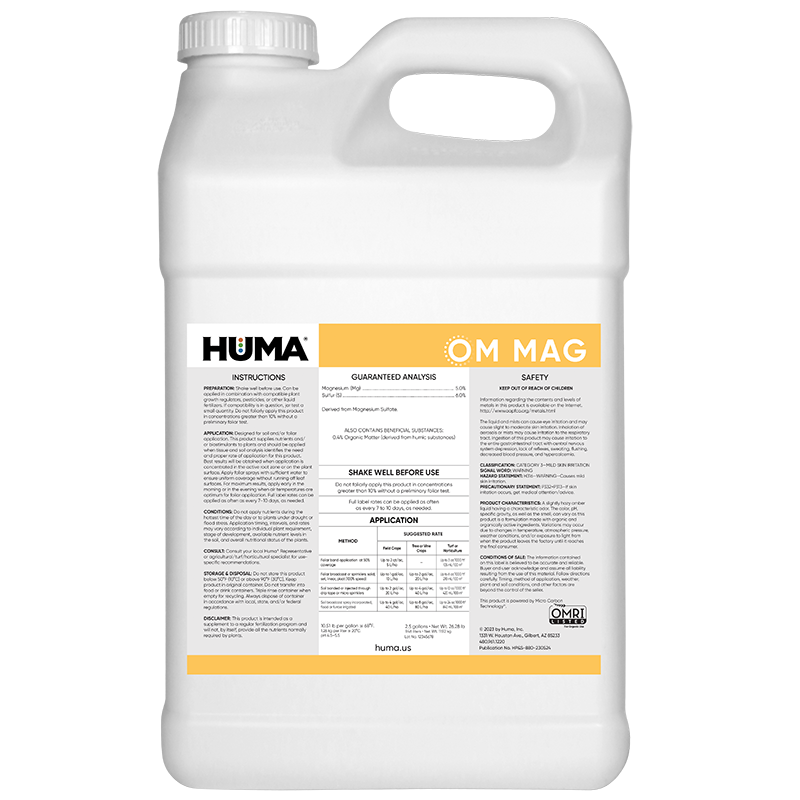
OM MAG
Benefits of Use:
- Effectively treats magnesium deficiency symptoms
- Provides quick crop response and can be applied just prior to actual crop need
- Can be applied foliarly (according to label directions) without risk of phytotoxicity
- Can be effectively tank-mixed with other organic crop inputs
- Resists tie-up in the soil and remains available through the plant root system
- Essential core of the chlorophyll molecule
- Is active in the translocation of starches necessary for sugar formation
- Acts as a carrier for plant phosphorus
- Regulates the uptake of other plant nutrients
- Enhances oil and fat formation
FAQs
Related Case Studies

Huma® Organic Fertilizers Easy to Use, Improve Yield on Organic White Corn
Objective The objective of this field trial was for the grower to evaluate the ease of use and the effectiveness of 4 OMRI-Listed liquid Huma® organic crop nutrition products based on known field deficiencies. Materials & Methods The organic producer provided 2 80-acre plots of organic white corn in eastern Nebraska that was at the
Related Blog Posts

Proven: Nutrient Uptake In Just One Hour
Case Study: Proven - Nutrient Uptake In Just One Hour In foliar applications, speed matters. In just one hour, SUPER POTASSIUM showed a 22% increase in leaf potassium levels, proving its rapid uptake, even under tight spray windows and unpredictable weather.

This Week in Ag #59
“It won’t grow in the bag.” Grandpa never minced words. And that’s how he responded (in frustration) to my dad and uncle whenever they pondered dropping the planter. His philosophy was simple: the moment you can plant, you plant. There’s only so much heat and sunlight Mother Nature offers, so you better take her up on
EARTH DAY 2020: Celebrating 50 Years
Fifty years ago today, on April 22, 1970, 20 million Americans took to the streets to protest environmental destruction and to celebrate the wonders of Planet Earth. The basic message was that we had to find new ways to live our lives, raise our food, and conduct our businesses that were environmentally friendly and sustainable—that
Related Products

PROUD 4
PROUD 4® is an OMRI-Listed® crop protection product. It is a broad-spectrum insecticide, nematicide, miticide, and fungicide with on-contact and...
FERTIL SOIL
Huma's FERTIL SOIL® is carbon-complexed with Micro Carbon Technology® improves soil structure and feeds the beneficial bacteria activity in the...
CURIOSITY
Huma's CURIOSITY™ is complexed with Micro Carbon Technology®, provides a unique combination of macronutrients and micronutrients for grass—and biostimulants designed...