
Z-MAX®
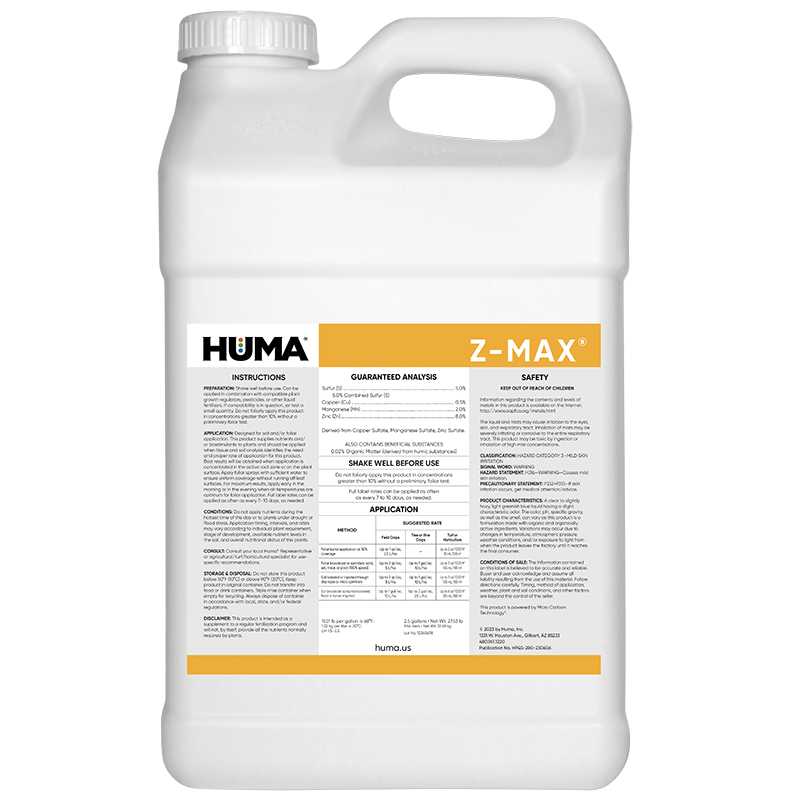
Benefits of Use:
Benefits of Use:
- Micronutrient source and chemical input tank mix partner
- N-P-K booster
- Nutrient buffer for tank mixes
- Improved plant vigor
- Essential components in chlorophyll, plant enzyme systems, protein and carbohydrate metabolism, photosynthesis, respiration, vitamins, and hormones
- Regulation of N-P-K, water, and plant solubles
Deficiency Symptoms-When to Apply:
- Occurs in alkaline, acid, and low organic matter soils
- Stunting, chlorosis, and poor plant vigor
- Sensitivity to disease pressure
- Poor fruit set
FAQs
Related Videos
Nutrient Requirements for Pecan Trees
Pecan grower Josh Bowman of First Fruit Orchards discusses macronutrient and micronutrient recommendations and timing for pecan trees.
Learn More
Huma® Micronutrients and Secondary Macronutrients
Huma liquid micronutrient and secondary macronutrient fertilizers with Micro Carbon Technology (MCT) are extremely efficient. MCT improves nutrient uptake so you can get the most out of your crops. Deliver micronutrients and secondary macronutrients exactly
Learn More
Huma Gro® Agricultural Products Increase Crop Yield in Mid-South US
Huma Gro® fertilizers and crop treatments increase harvest and profit, control soil salinity, and manage crop disease worldwide. Unlike other farm products, Huma Gro® farming products with Micro Carbon Technology® are more efficient. Huma Gro®
Learn More
Related Products
CROP-GARD
CROP-GARD®, carbon-complexed with Micro Carbon Technology®, provides nutrients and refined plant oils for natural plant vigor. CROP-GARD also achieves balanced...
HUMA PRO MIX
HUMA PRO® MIX, carbon-complexed with Micro Carbon Technology®, is an activated liquid humic-acid source derived from a highly oxidized, naturally occurring...
OM GREENS
Huma's OM GREENS is a natural humic and fulvic acid product processed from naturally occurring, oxidized humic substances. It provides a...
Related Case Studies
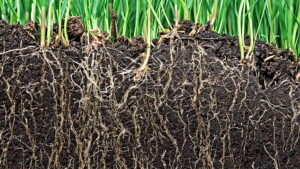
Zap® Improves Soil Biology and Soil Structure
Objective Huma® Zap® has been shown to improve crop yield and soil conditions. This research investigated some of the ways Zap improves soil characteristics such as soil biology and soil structure. Materials & Methods Two sets of soil in containers received two different solutions. The first received 120 ml of only water and the second

Biostimulant Effect of Humic Acids on Tomato Plants Under Nutritional Stress
Introduction In this study (originally published in Frontiers in Plant Science, May 2021, Vol. 12:660224), the biostimulant properties of a sedimentary shale ore-extracted humic acid (HA) were tested on Micro Tom tomato plants under increasing nutritional stress Materials & Methods A sedimentary lignite ore (Idaho), ground to pass a 1,000 µm sieve, was used as
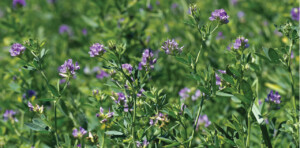
Huma® Improves Alfalfa Soil Biology In the Southwest
Background Industrial agriculture can degrade soil quality for crops by altering the total living microbial biomass of soil. Many practices and beneficial ag products have been introduced to the market to improve soil quality. Some of these products are humic substance-based products. Objective The objective of this trial was to evaluate the efficacy of applying




Related Blog Posts

From the Field: Huma® Improves Soil Health and Strawberries in Guatemala
In the highlands of Guatemala, near the capital, is a small stronghold for berries. Strawberry production in Guatemala covers about 3,000 hectares in total, yet it yields nearly 14,000 tons of fresh strawberries annually, with 7,000 tons exported to neighboring countries. During my previous visits to Guatemala, I often passed by local strawberry farms, which

From Doubt to Record Yields: My April Soybean Story
Dean’s response was predictable: ‘What in the **** are you thinking, Fred? You never plant beans until May!’ Five months later, that same field produced my highest-yielding soybeans ever. Turns out, planting early isn’t crazy—it might just be the smartest move I’ve made.
This Week in Ag #3
There are lots of definitions floating around for regenerative agriculture. But the best and simplest I’ve heard was from Soilcraft. They define regen ag as adding “life.” When you think about it, the practices of no-till/low-till, crop rotation, cover crops, manure and biological products all help create, stimulate, prolong and accelerate more diverse life in the