
FAQs
Related Videos
Huma Minute – What is Humic Acid with Cory Ritter
Huma Mid-West Regional Sales Manager Cory Ritter discusses the different types of humic acids and what they do for your plants.
Learn More
Huma Minute – Humate Application Rates with Cory Ritter
Huma Mid-West Regional Sales Manager Cory Ritter discusses humate application rates and why there is not a one-size fits all rate.
Learn More
Huma Minute – Humic Acid Testing Methods with Cory Ritter
Huma Mid-West Regional Sales Manager Cory Ritter discusses the differences in the various humic acid testing methods.
Learn More
Related Case Studies

Humic Products Increase Soybean Yield In Iowa
Background Scientific research shows humic and fulvic acids can have a biostimulant effect on plant root growth and mass, nutrient availability and uptake, and crop yield and quality. Objective The objective of this study was to compare and contrast the immediate effects that three types of humic products from Huma®, Inc., have on soybean yield.

Humic Products Increase Iowa Corn Yield
Background Scientific research shows humic and fulvic acids can have a biostimulant effect on plant root growth and mass, nutrient availability and uptake, and crop yield and quality. Objective The objective of this study was to compare and contrast the immediate effects that three types of humic products from Huma®, Inc. have on corn yield.

Huma Pro® Stimulates Rhizophagy Cycle of Microbes to Increase Root Growth
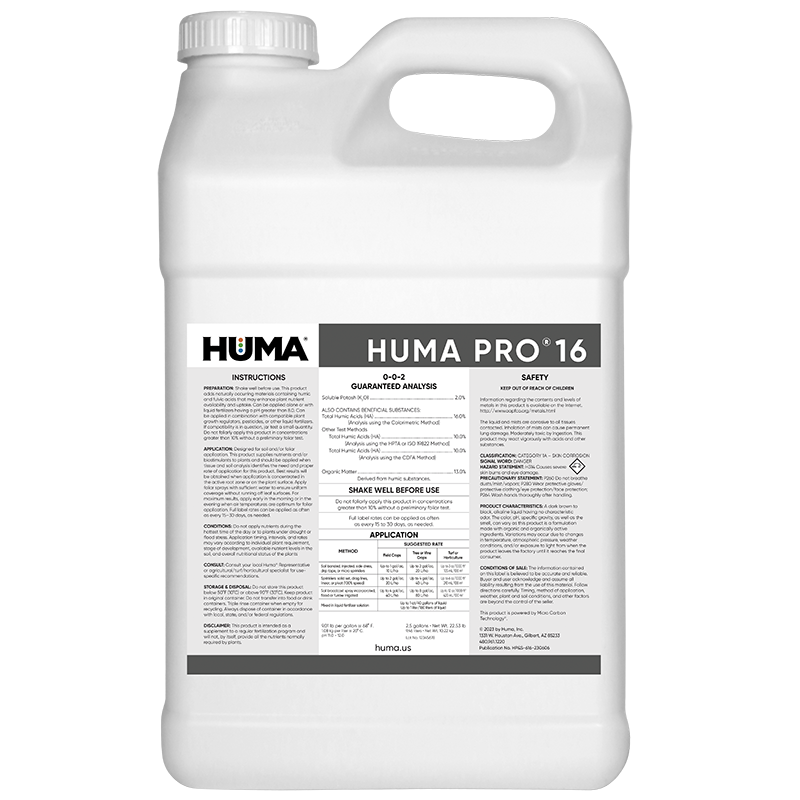
Objective The purpose of this research project was to evaluate how humic acids stimulate microbial activity and initiation of the rhizophagy cycle (in which plants cultivate microbes on their roots and then absorb them to extract their nutrients). Huma® Huma Pro®, a liquid 6% humic acid product, was used as the humic acid biostimulant source.
Related Blog Posts

Research Report: Biostimulant Effect of Humic Acids on Tomato Plants Under Nutritional Stress
In a research study, originally published in Frontiers in Plant Science, May 2021, Vol. 12:660224, the biostimulant properties of humic acid (HA) were tested on Micro Tom tomato plants under increasing nutritional stress. The results confirmed the positive role humic acids play in enhancing nutrient efficiency uptake in plants. A team of scientists from the

BHN Approved to Import Fertilizers to Brazil
Bio Huma Netics, Inc., producer of Huma Gro® and Fertilgold® Organics liquid crop nutrition and protection products, has been granted an unlimited import license to bring fertilizers into Brazil for commercial sale.

Microorganisms: The Living Engine of Soil—Part 2
In Part 2 of this series, we look at Plant-Microbial Interactions.
Related Products
MANGANESE
Huma's MANGANESE, carbon-complexed with Micro Carbon Technology®, ensures efficient and effective uptake of manganese, which is a micronutrient involved in...
KLEENUP
KLEENUP™ is a nutrient and soil surfactant formulation with Micro Carbon Technology® that creates a favorable soil environment, improves aeration,...
ACTIVOL
ACTIVOL®, carbon-complexed with Micro Carbon Technology®, is a concentrated formulation of nutrients and refined plant oils that increases plant tolerance...