
Carbon-CH™
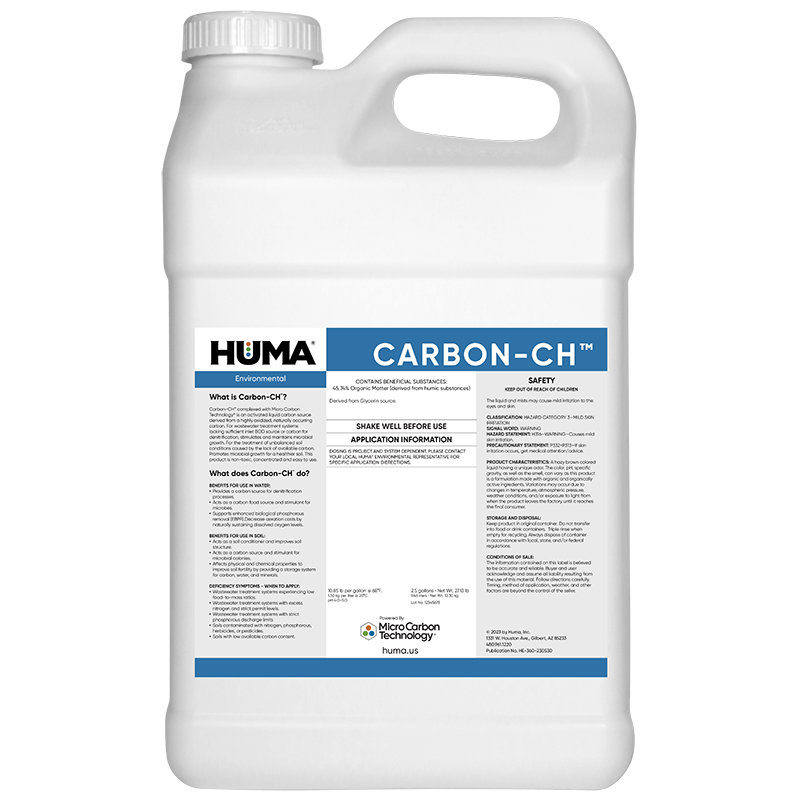
Benefits of Use:
- Provides a carbon source for denitrification processes
- Effective carbon food source (COD/BOD) for systems with high inflow and infiltration (I&I) issues
- Supports enhanced biological phosphorous removal (EBPR)
- Effectively replaces toxic or hazardous carbon sources
- Most rapid microbial acclimation on the market
- Most consistent carbon concentrations on the market
- Lowest carbon degradation on the market
Benefits of Use In Soil:
- Acts as a soil conditioner and improves soil structure
- Acts as a carbon source and stimulant for microbial colonies
- Affects physical and chemical properties to improve soil fertility by providing a storage system for carbon, water, and minerals
FAQs
Related Case Studies

Lagoon Study Shows Sludge Layer Biologically Active and Responsive to Reduction Using Bio Energizer®
Summary In this study, a one-year bioremediation plan was implemented for a municipal wastewater treatment facility with 2 primary lagoons that were at risk of upset and in which wastewater processing capacity was reduced due to an increased sludge layer. Specific changes in strata microbial life were tracked through ATP and DNA analysis at quarterly
Bio Energizer® Toxicity Testing
Abstract Bio Energizer® is frequently used to facilitate bioremediation of wastewater. A study was conducted by an independent laboratory to measure possible negative effects Bio Energizer® might have on a freshwater test species (rainbow trout). Using EPA-approved methodology to evaluate Bio Energizer®, the lab administered the product at 10 ppm to a test tank and
Bio Genesis® Reduces Foam and Increases Stability at Arizona Municipal Wastewater Treatment Facility
Problem A municipal wastewater treatment facility in Arizona uses an activated sludge system with 4 oxidation ditches to treat approximately 9 million gallons per day. The system frequently experiences intermittent foaming and settling issues. The operator was looking for a solution to the foaming and settling issues that would also provide operational stability throughout the
Related Blog Posts

The Probiotic Solutions Product Quality Assurance Process

BHN Acquires Warehouse in Tempe
By Lyndon Smith, President and CEOBio Huma Netics, Inc. I’m excited to share that Bio Huma Netics, Inc. (BHN) has acquired an additional building in Arizona. It’s a significant milestone for us that not only testifies to the continual progress we’re making as a company but will also serve as a building block for future

Where Did the Water Go?
By Jared Alder, MS In England, it is estimated that around 700 million gallons of water—the equivalent of 1,200 Olympics–size swimming pools—is lost every day to leaks in the country’s vast water system. Often the water just rises out to the pavement and runs down the road. Utilities spend countless hours and a great deal of money and other resources trying to locate the sources of leaks, often tearing up roads multiple times in
Related Products
Carbon-G™
The Solution for Denitrification and Phosphorus Removal In Wastewater and Contaminated Soils Huma® Carbon-G™, complexed with Micro Carbon Technology®, is an activated...
MICROPLEX HC
Huma's MICROPLEX® HC is a highly concentrated blend of natural bacteria specifically chosen for their ability to metabolize petroleum hydrocarbons and treat...
MICROPLEX FLP
Huma's MICROPLEX® FLP is a synergistic blend of preselected, adapted microorganisms and enzymes for use in facultative lagoons and ponds receiving municipal,...