
Huma Pro® 16 (HE)
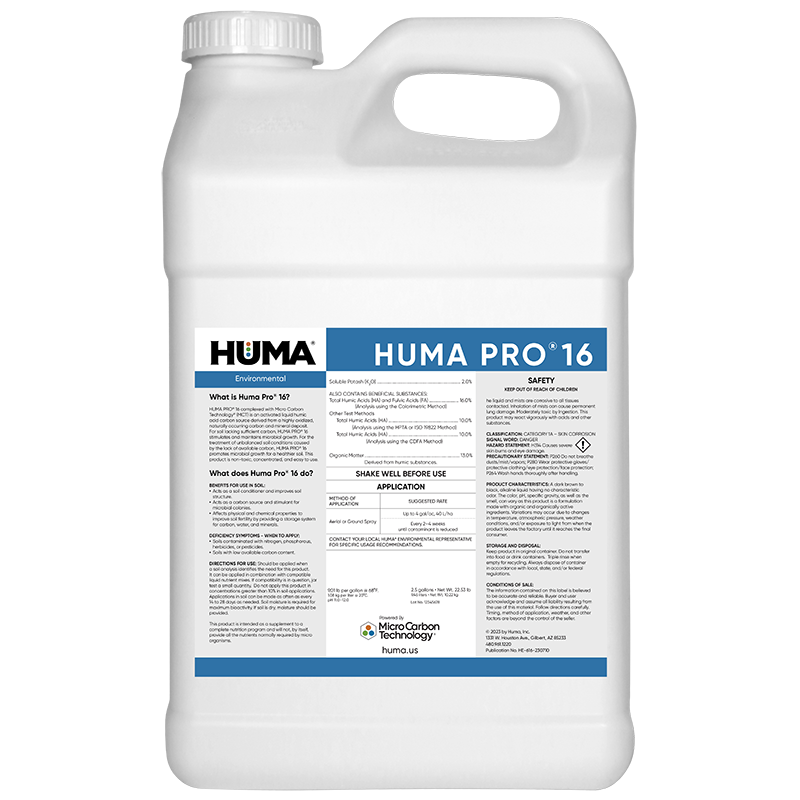
Benefits of Use:
- Acts as a soil conditioner and improves soil structure
- Acts as a carbon source and stimulant for microbial colonies
- Used in agriculture to help achieve soil sustainability
- Affects physical and chemical properties to improve soil fertility by providing a storage system for carbon, water, and minerals
Deficiency Symptoms—When to Apply:
- Soils contaminated with nitrogen, phosphorous, herbicides, or pesticides
- Soils with low available carbon content
FAQs
Related Case Studies

Bio Energizer® Reduces Sludge at Small N.M. Municipal Facility
Problem A small town in New Mexico (pop. 1,300) had a municipal wastewater system with a flow rate of 50,000 gallons per day. The system included a series of three lagoons that tapered to a depth of 13 feet. Pond 1 had an average sludge depth of 1.9 feet, Pond 2 averaged 3.5 feet, and
Bio Energizer® Reduces Sludge at Small Municipal Facility
Problem A small town in Utah (pop. 1,800) had a municipal wastewater system with a flow rate of 192,000 gallons per day. The system included a series of four lagoons that tapered to a depth of 6 feet, although at this time only Ponds 1 and 2 were being evaluated for treatment as they were
Bio Energizer® Reduces Sludge 45% In One Year, Saves Municipal Plant $6 M In Dredging Costs
Summary In this study, a one-year bioremediation plan featuring Bio Energizer® was implemented for a municipal wastewater treatment facility with 2 primary lagoons in which sludge depths had reached 5–7 feet. The lagoons were at risk of upset and wastewater processing capacity was reduced. Sludge levels were measured at baseline and quarterly. Sludge depth was
Related Blog Posts

Municipal Wastewater Solutions
Experience the world’s most efficient wastewater remediation products, for operational stability of municipal wastewater treatment plants.

PS Article Published in Tri-State Seminar Proceedings
An article by Heather Jennings, PE, Director of Probiotic Solutions®, has been published in Tri-State Seminars Magazine, the proceedings of the 36th Annual Tri-State Seminar, held on August 9–12, 2021, in Las Vegas, Nev. Ms. Jennings was a featured presenter at the seminar, which provides training and certification classes to educate water professionals from Arizona,

Healthy Bacteria Are Vital to Wastewater Treatment
Bacteria break down organic material in wastewater and form the floc that settles and separates solids from liquids. Controlling F/M ratio–a vital component to creating a favorable environment for wastewater bacteria–can be accomplished through the use of bioremedial products.
Related Products
MicroPlex® AD
Huma® MicroPlex® AD is a unique, balanced blend of micronutrients, microbes, microbial growth enhancers, minerals, vitamins,and neutralizing agents for use in stimulating...
MicroPlex® AQF
Huma® MicroPlex® AQF is a formulation of aerobic and facultative bacteria and flocculant aids. The microorganisms are specifically chosen for their ability...
ZAP (HE)
ZAP® carbon-complexed with Micro Carbon Technology® is an organic-based formulation of nutrients for feeding the native beneficial soil microbial balance. ZAP...