
Secondary Macro and Micronutrient Products
Secondary macronutrients (Magnesium, Calcium, and Sulfur) and micronutrients (Boron, Chlorine, Copper, Iron, Manganese, Molybdenum, Nickel and Zinc) are known to play many complex roles in plant development and crop yield. In many ways, they hold the key to how well the other nutrients are used. They promote the strong, steady growth of crops that produce higher yields and increase harvest quality—maximizing a plant’s genetic potential. In particular, their presence can have a great impact on root development, fruit setting and grain filling, seed viability, and plant vigor. However, these nutrients are quickly mined out of any soil that is repeatedly farmed, resulting in the need for applying ever-increasing amounts of macronutrients to get the same crop yield.
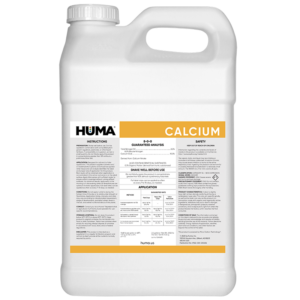
CALCIUM
Huma's CALCIUM, carbon-complexed with Micro Carbon Technology®, ensures maximum calcium uptake and translocation within the plant. Calcium is a required nutrient for cellular strength and growth, plant health, and fruit development.
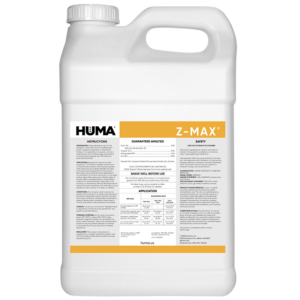
Z-MAX®
Z-MAX®, carbon-complexed with Micro Carbon Technology®, ensures efficient and effective uptake of zinc, sulfur, manganese, and copper to optimize micronutrient nutrition of the plant that can help suppress certain external and internal plant stresses. This highly concentrated micronutrient solution is...
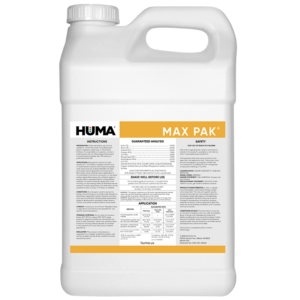
MAX PAK
MAX PAK® is a liquid micronutrient formulation containing a carbon complexed, highly stable source of many important micronutrients. MAX PAK is leaf friendly, salt buffered, and formulated with Micro Carbon Technology® to ensure maximum uptake of nutrients by microorganisms.
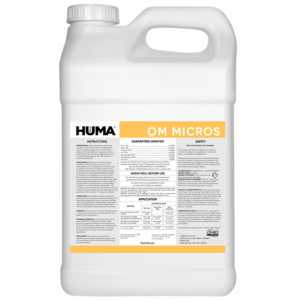
OM MICROS
Carbon-complexed with Micro Carbon Technology®, OMRI-Listed® Huma's OM MICROS is highly stable liquid organic micronutrient formulation that is balanced for proper micronutrient ratios, leaf friendly, and salt buffered. Although only required in small quantities, micronutrients are essential for crop production....
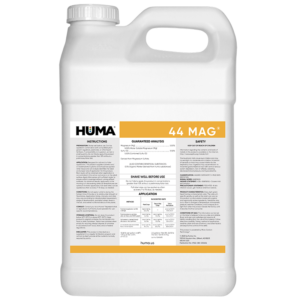
44 MAG
Huma's 44 MAG®, is carbon-complexed with Micro Carbon Technology®, ensures maximum assimilation of magnesium, which is the essential part of the chlorophyll molecule that gives plants their green color.
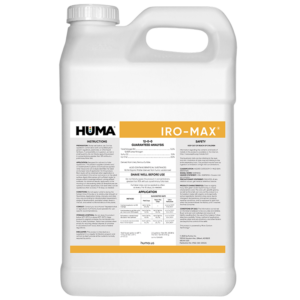
IRO-MAX
IRO_MAX®, carbon-complexed with Micro Carbon Technology®, provides effective and quick iron uptake into the plant. Iron is a key micronutrient involved in photosynthesis that also enables other biochemical processes such as respiration, symbiotic nitrogen fixation, and transfer of ATP within...

BORO-PRO
Huma's BORO-PRO® is carbon-complexed with Micro Carbon Technology®, ensures efficient and effective uptake of boron, which is required for cell division, plant metabolism, cell structure, sugar transport, pollination, and seed development. It enhances pollen viability and pollination in flowering crops...

COMOL
Huma's COMOL™, carbon-complexed with Micro Carbon Technology®, ensures efficient nutrient uptake and translocation of phosphorus, cobalt, and molybdenum, which indirectly encourages production of amino acids, proteins and carbohydrates necessary for cellular division, nodulation of legumes, microbial functions, recovery from plant...

OM MANGANESE
Carbon-complexed with Micro Carbon Technology®, OMRI-Listed® OM MANGANESE is an organic manganese nutrient derived from manganese sulfate (Mn 5.0%, with 2.0% organic matter). Huma's OM MANGANESE ensures efficient and effective uptake of manganese, which is a micronutrient involved in many plant...
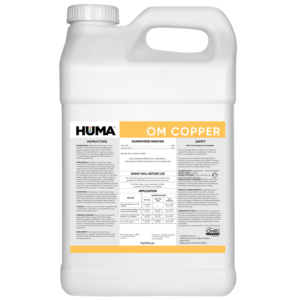
OM COPPER
Carbon-complexed with Micro Carbon Technology®, OMRI-Listed® OM COPPER is an organic copper nutrient derived from copper sulfate (Cu 5.0%, with 4.0% organic matter). Huma's OM COPPER ensures efficient and effective uptake of copper, which is a micronutrient involved in many...

SULFUR
Huma's SULFUR, carbon-complexed with Micro Carbon Technology®®, enables sulfur nutrient absorption by the plant. SULFUR is a major nutrient involved in respiration, photosynthesis, amino acid metabolism, plant growth, and vigor.
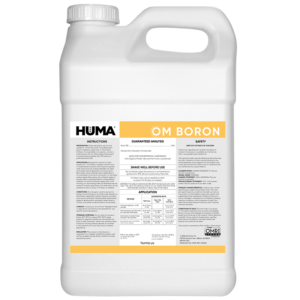
OM BORON
Carbon-complexed with Micro Carbon Technology®, OMRI-Listed® OM BORON is an organic boron nutrient. It ensures maximum assimilation of boron, which is required for cell division, plant metabolism, cell structure, sugar transport, pollination, and seed development. Huma's OM BORON also enhances...
Case Studies

Huma® X-Tend® Increases Glyphosate Effectiveness Against Resistant Weeds
Objective Over the years, some weeds have developed resistance to common herbicides such as glyphosate. To overcome this hurdle, some growers may bump up the rates or add other herbicides or products with different mechanisms/modes of action into the tank mix. Such approaches have had mixed results over the long run and have increased the

Super Potassium on Cotton
Background: Farmers who try to supply K2O needs on the farm don’t have too many options to get K into the plant, especially in deficient soils. A typical application is KCl which contains an excess amount of Chloride which may not be beneficial to the plant and soil microbes. Huma’s Micro Carbon Technology® based Super

Huma Liquid Products on Nebraska Corn
Background: Huma's Micro Carbon Technology based products (Fertil Soil®, Super Phos®, and Vitol®) have been shown to improve germination, plant health and vigor, increase phosphorus availability, and improve farming sustainability and regeneratively. Objectives: The aim of this study was to assess the effect of feeding the soil, roots, and the plant itself with Fertil Soil®,
Featured Blogs

Video: Super Phos + Calcium Mixing Stability Test
English and Spanish subtitles are available. In this video, we demonstrate the unique compatibility of our highly concentrated Super Phos® 0-50-0 product when mixed with calcium. In traditional fertilizers, when phosphorus and calcium are mixed they can precipitate and fall out of solution. The resulting calcium phosphate can clog drip emitters and damage sprayers. Our

Micronutrients Are the Key to Better Yields
Micronutrients play a critical role in plant vigor, yield, and harvest quality. Yet, they are often overlooked when growers develop their nutrient programs. In this article, we provide an overview of what micronutrients are, the roles they play, how availability is affected by soil and other conditions, how to recognize deficiencies, and the important steps to take when developing a micronutrient plan for your crops.