
Max Pak® (HE)
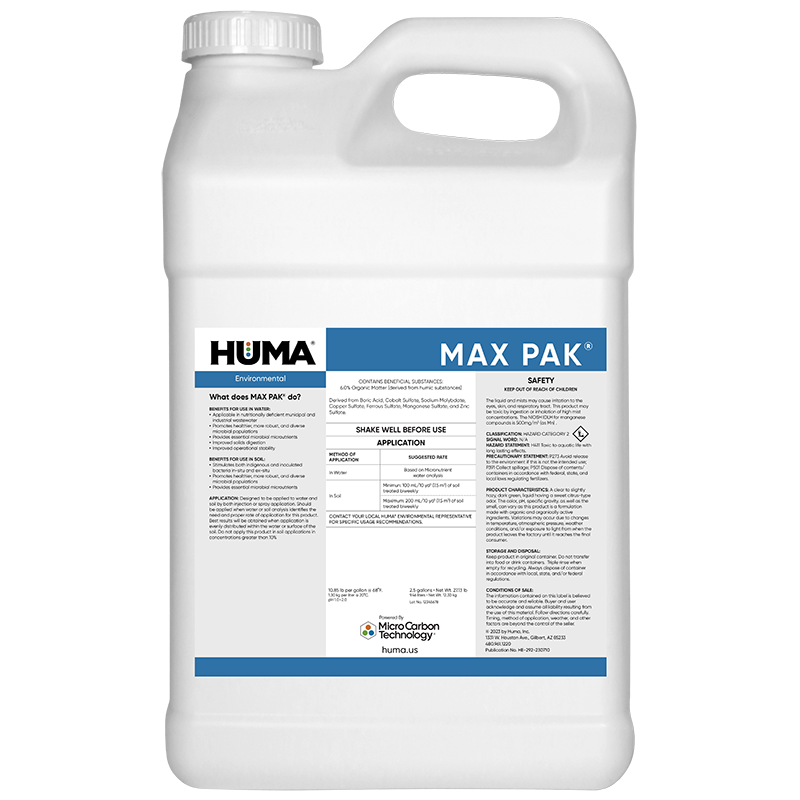
Benefits of Use:
- Stimulates both indigenous and inoculated bacteria in-situ and ex-situ
- Promotes healthier, more robust, and diverse microbial populations
- Provides essential microbial micronutrients
Benefits of Use in Water:
- Applicable in nutritionally deficient municipal and industrial wastewater
- Promotes healthier, more robust, and diverse microbial populations
- Provides essential microbial micronutrients
- Improved solids digestion
- Improved operational stability
FAQs
Related Videos
Related Products
KLEENUP (HE)
Huma® Kleenup™ is a nutrient and soil surfactant formulation with Micro Carbon Technology® that creates a favorable soil environment, improves aeration,...
MICROPLEX OD
Huma's MICROPLEX® OD is a fine powder of preselected absorbents and naturally occurring microbial strains that is formulated for use on...
Carbon-G™
The Solution for Denitrification and Phosphorus Removal In Wastewater and Contaminated Soils Huma® Carbon-G™, complexed with Micro Carbon Technology®, is an activated...
Related Case Studies

Bio Energizer® Toxicity Testing
Abstract Bio Energizer® is frequently used to facilitate bioremediation of wastewater. A study was conducted by an independent laboratory to measure possible negative effects Bio Energizer® might have on a freshwater test species (rainbow trout). Using EPA-approved methodology to evaluate Bio Energizer®, the lab administered the product at 10 ppm to a test tank and
Bio Genesis® Reduces Foam and Increases Stability at Idaho Municipal Wastewater Treatment Facility
Problem A municipal wastewater treatment facility in Idaho uses a small, activated sludge system to treat 35,000 gallons per day (gpd); waste activated sludge (WAS) is removed from the system approximately every 2 to 3 weeks. The system frequently experienced intermittent foaming and settling issues, as well as seasonal impact from grease relating to the
Bio Energizer® Reduces Costs and Turbidity in Paperboard Lagoons at Kentucky Papermill Wastewater Facility
Problem A paper mill wastewater facility was treating 940 tons of paper bags, recycled linerboard, and corrugating medium, daily. The mill was interested in improving wastewater operating efficiency and lowering operating expenses over their standard polymer usage. The plant was experiencing filamentous bacteria, solids, and bulking issues in the final clarifier. It was discharging 4,000
Related Blog Posts

Reduce the Need for New Treatment Plants
Try our Probiotic Solutions® products before considering building a new treatment plant. Probiotic Solutions® products are used successfully in wastewater treatment systems to improve water quality and reduce operating costs.

Wastewater Wednesday: Swansea in Massachusetts Uses Federal Funding for Sewer Expansion

Micro Carbon Technology® for a Greener, Cleaner World
Probiotic Solutions® products are manufactured with our exclusive, proprietary Micro Carbon Technology® that consists of very small carbon-rich molecules. These ultra-fine molecules help efficiently reduce biosolids, improve settleability and promote dissolved oxygen.