
Max Pak® (HE)
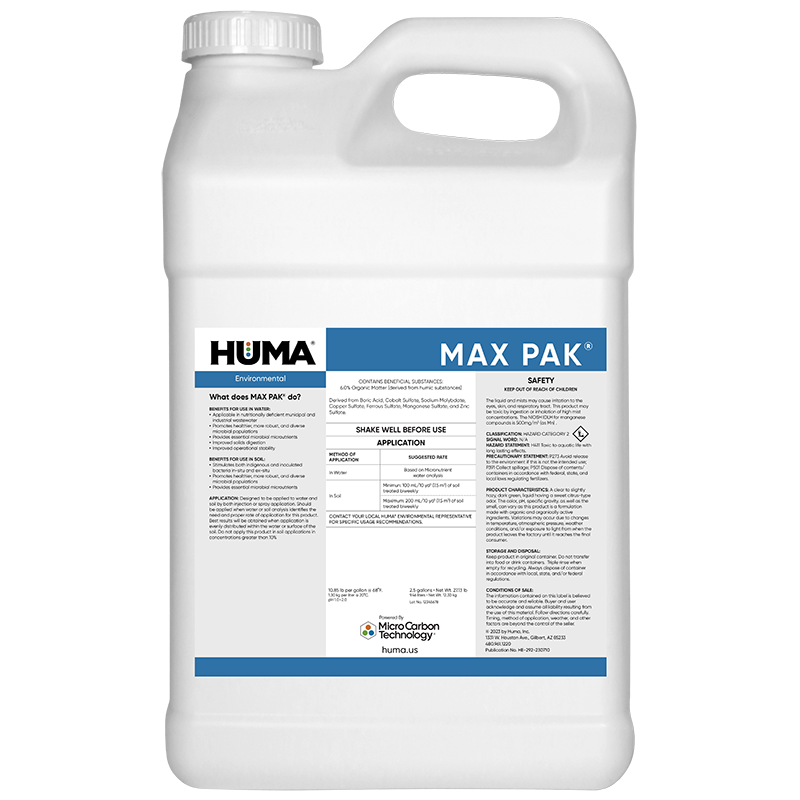
Benefits of Use:
- Stimulates both indigenous and inoculated bacteria in-situ and ex-situ
- Promotes healthier, more robust, and diverse microbial populations
- Provides essential microbial micronutrients
Benefits of Use in Water:
- Applicable in nutritionally deficient municipal and industrial wastewater
- Promotes healthier, more robust, and diverse microbial populations
- Provides essential microbial micronutrients
- Improved solids digestion
- Improved operational stability
FAQs
Related Videos
Related Case Studies

Bio Energizer® Reduces Sludge at Small N.M. Municipal Facility
Problem A small town in New Mexico (pop. 1,300) had a municipal wastewater system with a flow rate of 50,000 gallons per day. The system included a series of three lagoons that tapered to a depth of 13 feet. Pond 1 had an average sludge depth of 1.9 feet, Pond 2 averaged 3.5 feet, and
Bio Energizer® Reduces Sludge 45% In One Year, Saves Municipal Plant $6 M In Dredging Costs
Summary In this study, a one-year bioremediation plan featuring Bio Energizer® was implemented for a municipal wastewater treatment facility with 2 primary lagoons in which sludge depths had reached 5–7 feet. The lagoons were at risk of upset and wastewater processing capacity was reduced. Sludge levels were measured at baseline and quarterly. Sludge depth was
Bio Energizer® Toxicity Testing
Abstract Bio Energizer® is frequently used to facilitate bioremediation of wastewater. A study was conducted by an independent laboratory to measure possible negative effects Bio Energizer® might have on a freshwater test species (rainbow trout). Using EPA-approved methodology to evaluate Bio Energizer®, the lab administered the product at 10 ppm to a test tank and
Related Blog Posts

Wastewater Treatment: A Delicate Balance
By Jared Alder, MS The treatment of wastewater is a delicate balance of chemical, biological, and mechanical processes. Treatment operators need to find a happy medium to provide high-quality treatment, while staying within budgets and all the while ensuring they meet environmental compliance. Operators are expected to deal with a constantly varying treatment system, such
Get the “P” Out of There!
By Heather Jennings, PE Phosphorus is one of the most abundant elements on earth. It’s essential for adenosine triphosphate (ATP), the energy carrier life is built on. But in excess in our lakes and ponds, we see large algal growths occurring. Many times, these algal blooms suffocate the surrounding aquatic life and or produce toxins

MICROPLEX® JS Jump-Starts Summer Camp Wastewater Treatment Plant
Each year a summer camp in Utah becomes inundated with campers. The camp’s wastewater treatment plant goes dormant during the winter months with only occasional flows. The biomass becomes very inactive and in years past became overloaded and upset when the high organic load arrived at the plant at the beginning of the camping season.
Related Products
Encapsalt® (HE)
Huma® Encapsalt® is a soil activator combined with surfactants based in and delivered by Micro Carbon Technology® that help sequester and...
Micatrol®
Huma® Micatrol® is a formulation of complexing agents, organic acids, buffers, nutrients, and energy systems that enhance biological degradation. Micatrol® catalyzes the...
MICROPLEX N/Nc
Huma's MICROPLEX® N is a liquid suspension of preselected and adapted Nitrosomonas and Nitrobacter microbial strains, specifically chosen for their ability...