
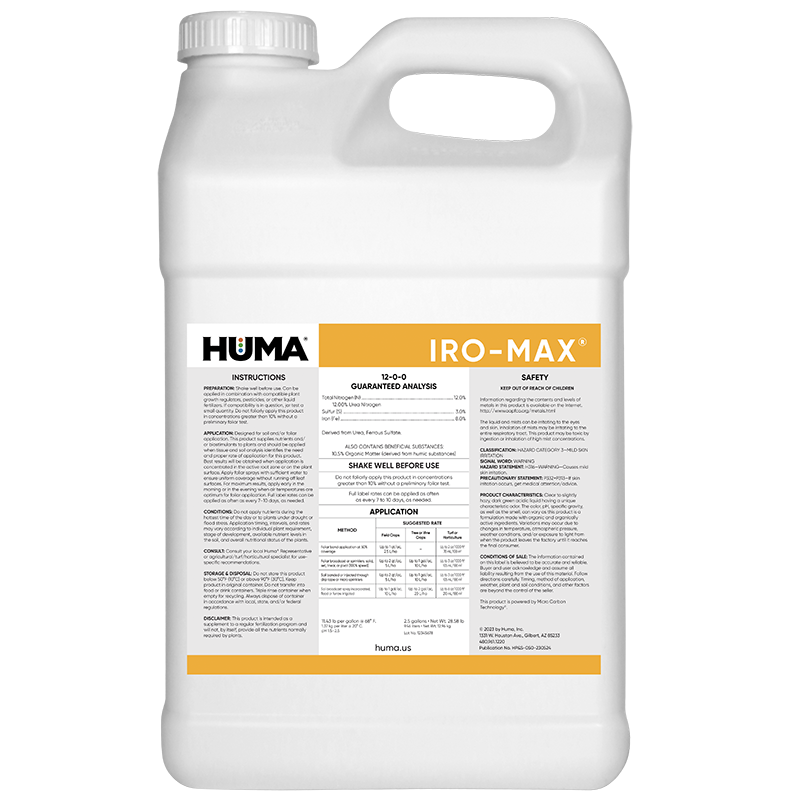
IRO-MAX
Benefits of Use:
- Iron is required by plants for the formation of chlorophyll.
- Iron is a component of enzymes that activate other biochemical processes within plants such as respiration, symbiotic nitrogen fixation, and energy transfer.
- IRO-MAX® relieves chlorotic symptoms of iron-deficient plants.
Deficiency Symptoms—When to Apply:
- Plants develop severe chlorosis, or a yellowing or “bleaching” of leaf tissue with veins remaining green
- Severe iron deficiencies result in stunted growth
- In grain crops, leaves will show chlorotic or yellow striping
- High pH, excess bicarbonate, calcium, magnesium, and/or phosphate
- High levels of nitrate, over-irrigation or poor drainage, poor aeration, plant viruses, root pruning, or nematode damage
- Deficiencies of potassium and calcium
FAQs
Related Videos
Huma® Micronutrients and Secondary Macronutrients
Huma liquid micronutrient and secondary macronutrient fertilizers with Micro Carbon Technology (MCT) are extremely efficient. MCT improves nutrient uptake so you can get the most out of your crops. Deliver micronutrients and secondary macronutrients exactly
Learn More
Related Products
LUCKY 7
LUCKY 7® is a broad-spectrum liquid nutrient formulation carbon-complexed with Micro Carbon Technology®. It's a complete nutrient package containing most macro-...
OM POTASSIUM
Carbon-complexed with Micro Carbon Technology®, OMRI-Listed® OM POTASSIUM is an organic potassium product that effectively maximizes potassium uptake by plants....
MANGANESE
Huma's MANGANESE, carbon-complexed with Micro Carbon Technology®, ensures efficient and effective uptake of manganese, which is a micronutrient involved in...
Related Case Studies
Huma® Breakout® Increases Cotton Yields 20%, With an ROI of 702%
Objective This field trial assessed the effects of 3 foliar applications of Huma® Breakout® at different growth stages during the growing season on the yield of cotton (Gossypium hirsutum, variety PHY312) when compared with the grower’s standard crop nutrition program. Materials & Methods This trial was set up in a complete randomized-block design of 10’

Huma Liquid Products on Nebraska Corn
Background: Huma's Micro Carbon Technology based products (Fertil Soil®, Super Phos®, and Vitol®) have been shown to improve germination, plant health and vigor, increase phosphorus availability, and improve farming sustainability and regeneratively. Objectives: The aim of this study was to assess the effect of feeding the soil, roots, and the plant itself with Fertil Soil®,

OM 3-2-4 and OM Micros Liquid Fertilizers Increase Organic Cantaloupe Yield 120%
Summary In this study of Huma® organic macronutrient (OM 3-2-4) and micronutrient (OM Micros) liquid products compared with a grower’s standard treatment on organic cantaloupes applied under field conditions in Arizona, the Huma® organic treatments powered by a proprietary Micro Carbon Technology® resulted in a 120% yield increase with a 3-to-1 return on investment (ROI).



Related Blog Posts

This Week in Ag #45
“Life.” That was my response when asked “What does soil health mean?” during an interview on The Big Show with WHO Radio last week. Whether it’s accelerating populations of soil microbes and worms, creating diverse biological communities or building biomass and aggregates, healthy soils are full of life. The trick is to stimulate and maintain biology in

A Farmer’s Fourth of July: The Fireworks Waited
This Week In Ag #122: A Farmer's Fourth of July: The Fireworks Waited For many Midwest farm families, the Fourth of July wasn’t about fireworks or cookouts—it was wheat harvest season. In this personal reflection, Fred recalls a time when the combine came first, soybeans followed close behind, and the only bangs came from the grain bin, not the sky.

This Week in Ag #85
We’re now five weeks away from a national election. The economy, crime, securing the border and foreign policy are top issues for most voters. But what about farmers? For answers, just look at what they value most: family.